Decouttere Catherine, Vandaele Nico, De Boeck Kim, Banzimana Stany
Centre for Access-To-Medicines (ATM) at Katholieke Universiteit Leuven, Leuven, Belgium.
University of Rwanda, EAC Regional Centre of Excellence for Vaccines, Immunisation and Health Supply Chain Management, Kigali, Rwanda.
Health Syst (Basingstoke). 2021 Oct 28;12(1):36-51. doi: 10.1080/20476965.2021.1992300. eCollection 2023.
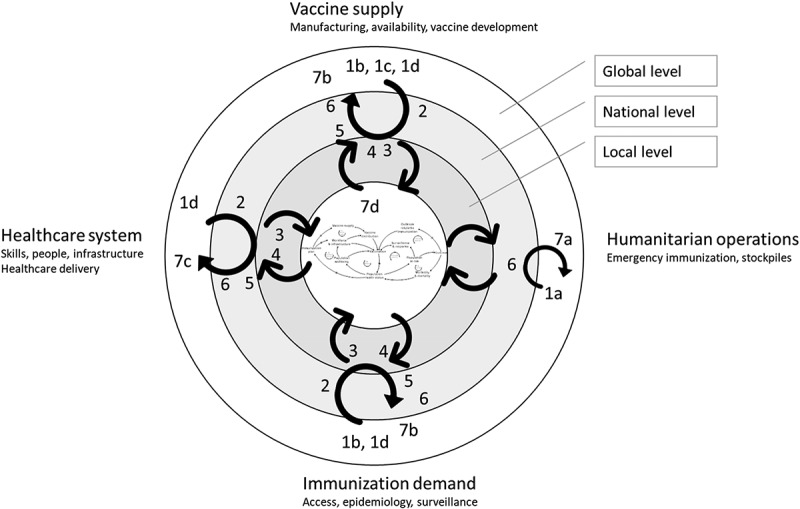
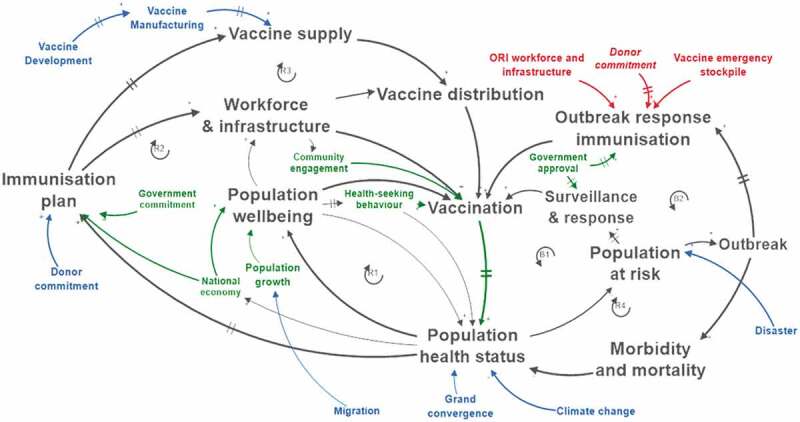
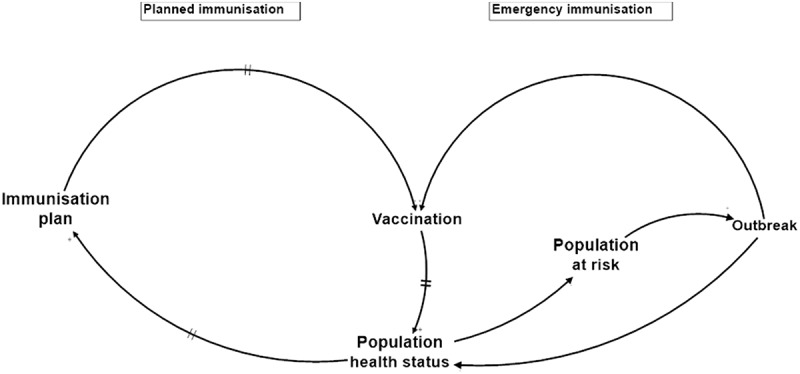
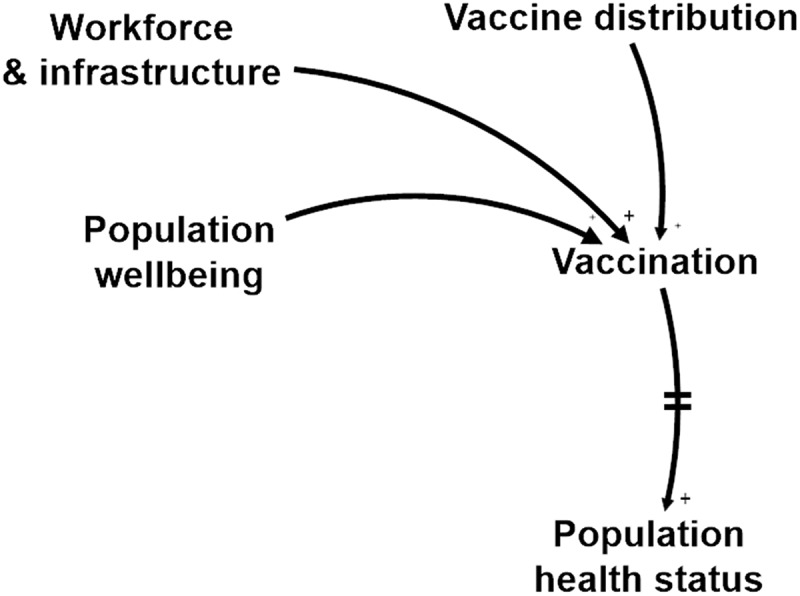
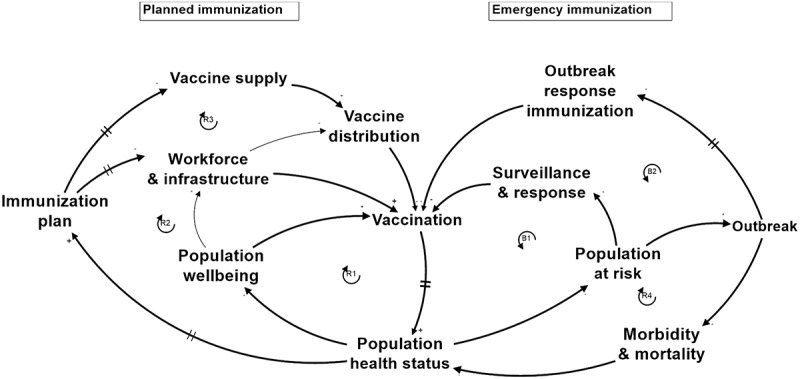
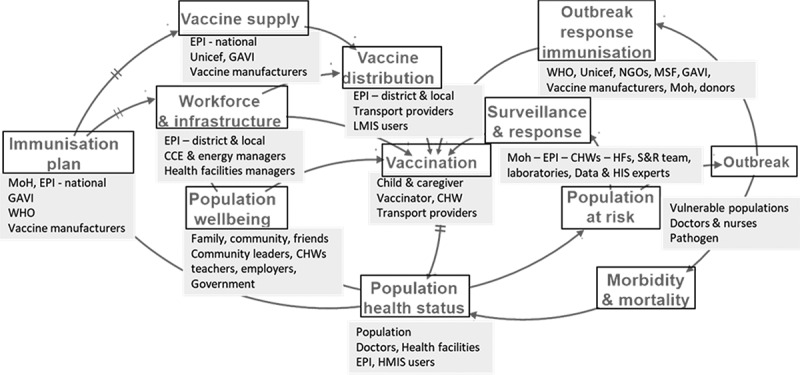
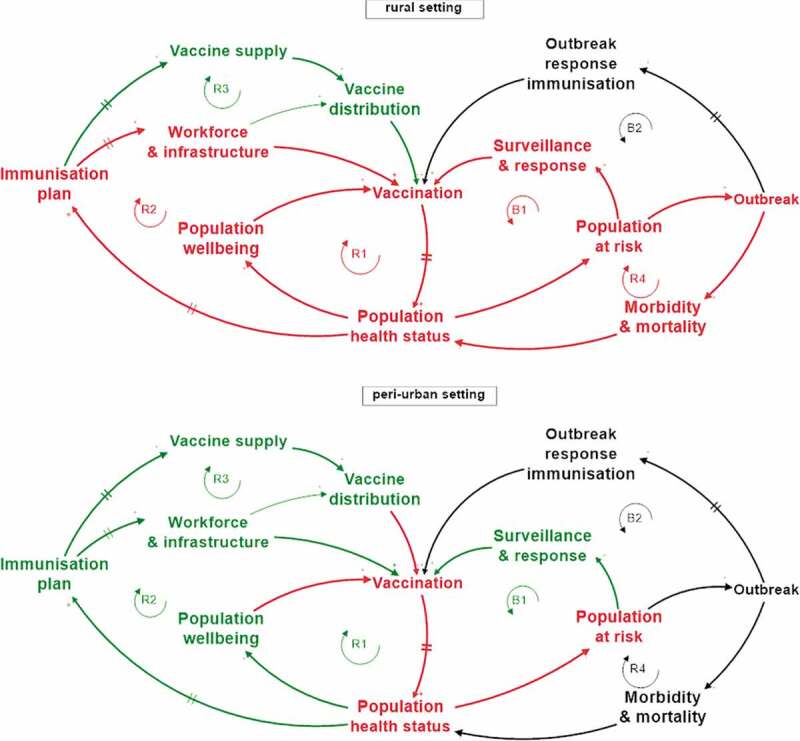
Despite massive progress in vaccine coverage globally, the region of sub-Saharan Africa is lagging behind for Sustainable Development Goal 3 by 2030. Sub-national under-immunisation is part of the problem. In order to reverse the current immunisation system's (IMS) underperformance, a conceptual model is proposed that captures the complexity of IMSs in low- and middle-income countries (LMICs) and offers directions for sustainable redesign. The IMS model was constructed based on literature and stakeholder interaction in Rwanda and Kenya. The model assembles the paradigms of planned and emergency immunisation in one system and emphasises the synchronised flows of vaccinee, vaccinator and vaccine. Six feedback loops capture the main mechanisms governing the system. Sustainability and resilience are assessed based on loop dominance and dependency on exogenous factors. The diagram invites stakeholders to share their mental models and. The framework provides a systems approach for problem structuring and policy design.
尽管全球疫苗接种覆盖率取得了巨大进展,但撒哈拉以南非洲地区在实现2030年可持续发展目标3方面仍落后。国家以下层面的免疫接种不足是问题的一部分。为扭转当前免疫接种系统(IMS)的不佳表现,提出了一个概念模型,该模型捕捉了低收入和中等收入国家(LMICs)免疫接种系统的复杂性,并为可持续重新设计提供了方向。免疫接种系统模型是基于卢旺达和肯尼亚的文献及利益相关者互动构建的。该模型将计划免疫和应急免疫的范式整合在一个系统中,并强调受种者、接种者和疫苗的同步流动。六个反馈回路捕捉了控制系统的主要机制。基于回路主导性和对外源因素的依赖性评估可持续性和恢复力。该图表邀请利益相关者分享他们的心智模型。该框架为问题构建和政策设计提供了一种系统方法。