Applied Chemicals and Materials Division, National Institute of Standards and Technology, Boulder, Colorado 80305, United States.
Department of Chemistry, Texas A&M University, College Station, Texas 77843, United States.
ACS Appl Mater Interfaces. 2023 Mar 29;15(12):16046-16054. doi: 10.1021/acsami.3c00177. Epub 2023 Mar 16.
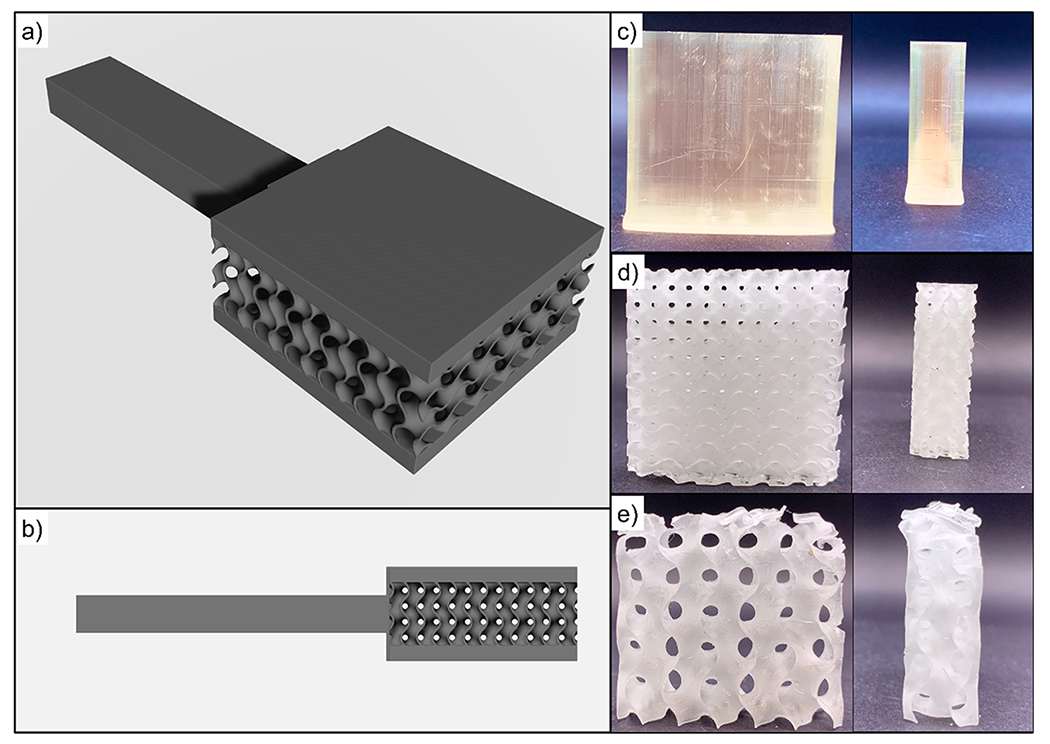
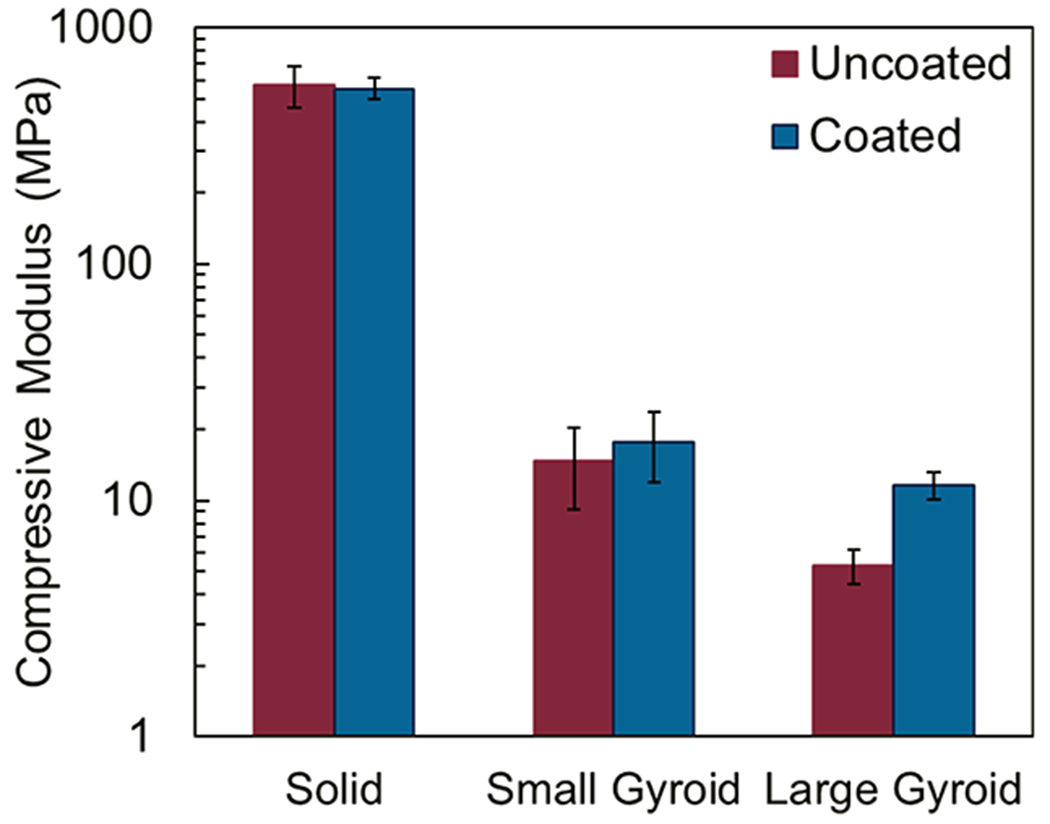
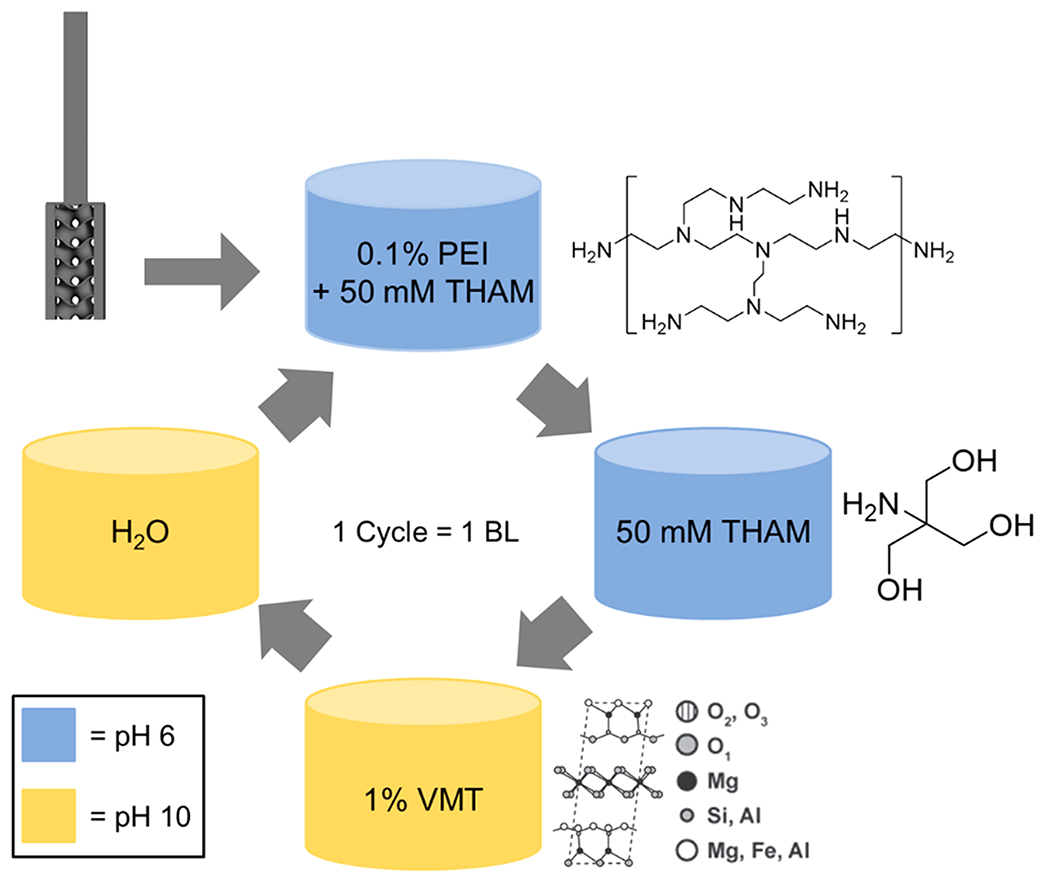
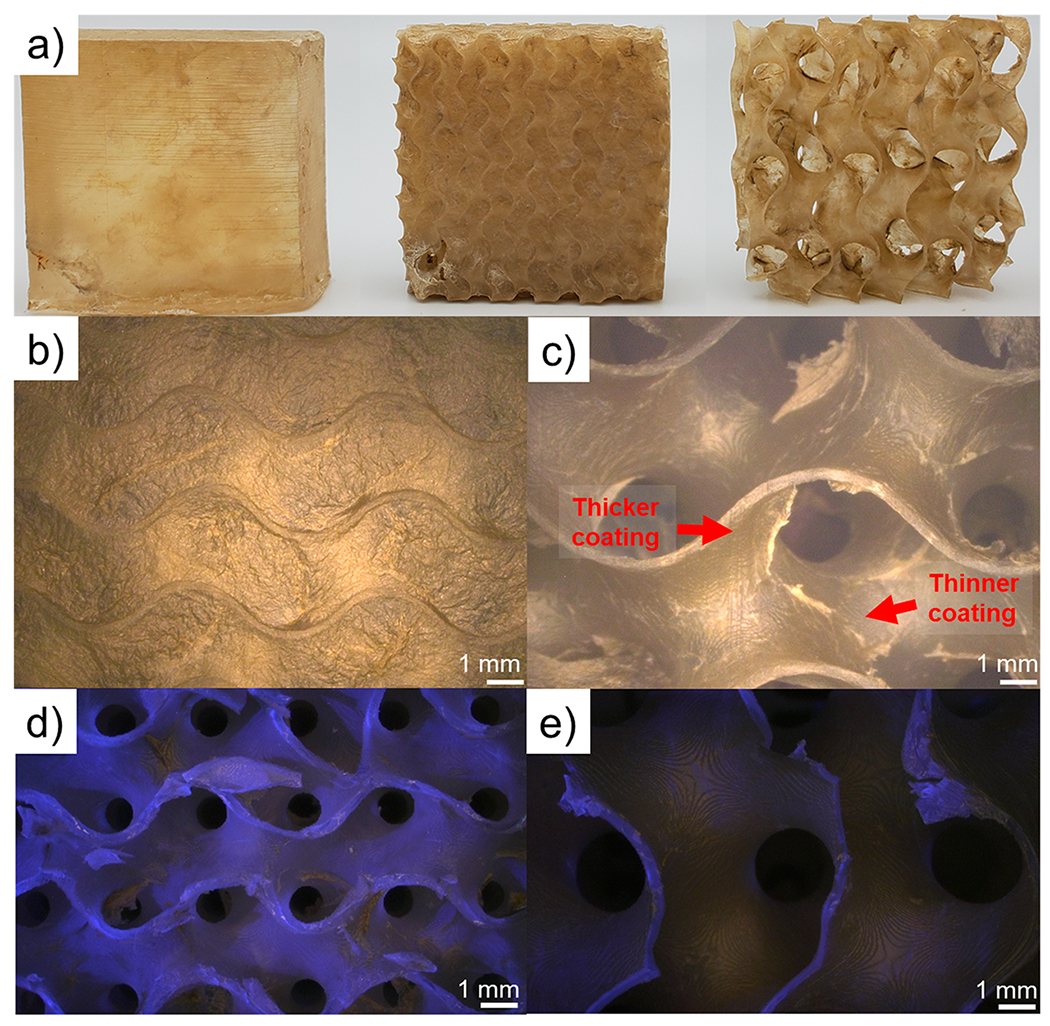
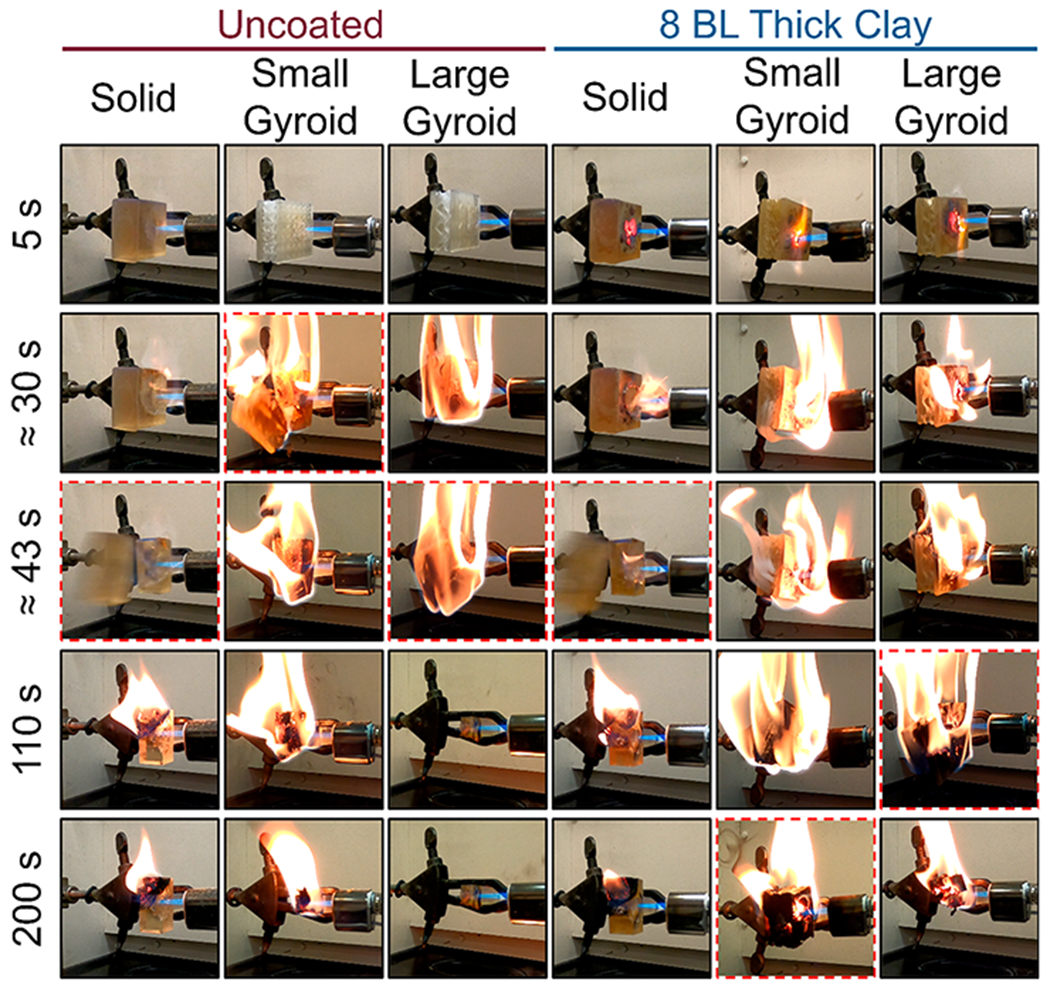
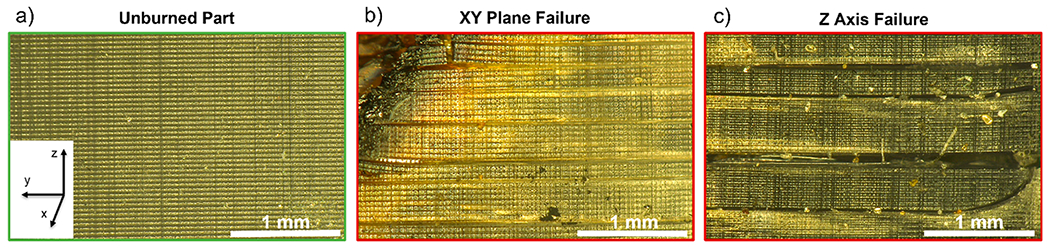
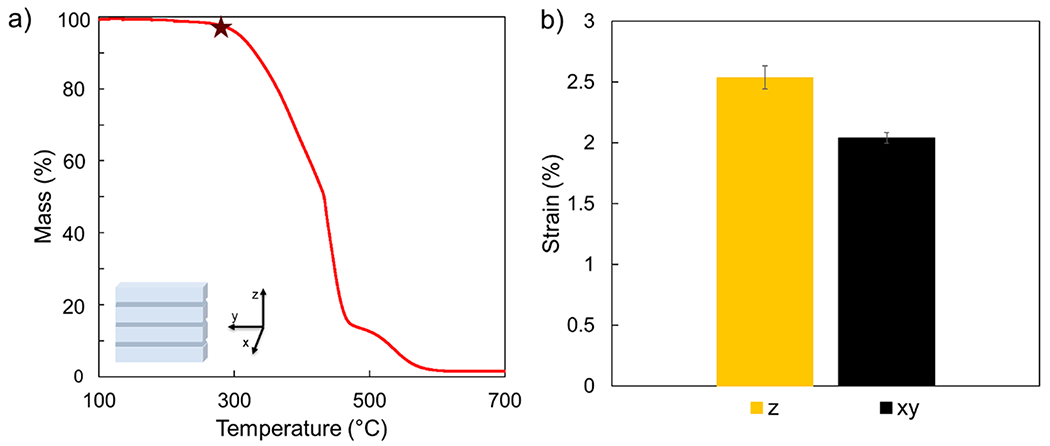
Photopolymer additive manufacturing has become the subject of widespread interest in recent years due to its capacity to enable fabrication of difficult geometries that are impossible to build with traditional manufacturing methods. The flammability of photopolymer resin materials and the lattice structures enabled by 3D printing is a barrier to widespread adoption that has not yet been adequately addressed. Here, a water-based nanobrick wall coating is deposited on 3D printed parts with simple (i.e., dense solid) or complex (i.e., lattice) geometries. When subject to flammability testing, the printed parts exhibit no melt dripping and a propensity toward failure at the print layer interfaces. Moving from a simple solid geometry to a latticed geometry leads to reduced time to failure during flammability testing. For nonlatticed parts, the coating provides negligible improvement in fire resistance, but coating of the latticed structures significantly increases time to failure by up to ≈340% compared to the uncoated lattice. The synergistic effect of coating and latticing is attributed to the lattice structures' increased surface area to volume ratio, allowing for an increased coating:photopolymer ratio and the ability of the lattice to better accommodate thermal expansion strains. Overall, nanobrick wall coated lattices can serve as metamaterials to increase applications of polymer additive manufacturing in extreme environments.
光固化添加剂制造近年来引起了广泛关注,因为它能够制造出传统制造方法无法制造的复杂几何形状。光固化树脂材料的可燃性和 3D 打印所实现的晶格结构是广泛采用的障碍,尚未得到充分解决。在这里,将基于纳米砖的壁涂层沉积在具有简单(即密集固体)或复杂(即晶格)几何形状的 3D 打印部件上。当进行可燃性测试时,打印部件没有熔融滴落,并且在打印层界面处容易发生故障。从简单的实心几何形状转变为晶格几何形状会导致可燃性测试中故障时间的减少。对于非晶格部件,涂层对耐火性几乎没有改善,但涂层的晶格结构会大大增加故障时间,与未涂层的晶格相比,增加了约 340%。涂层和晶格的协同效应归因于晶格结构增加的表面积与体积比,从而允许增加涂层:光聚合物的比例,并且晶格能够更好地适应热膨胀应变。总体而言,纳米砖壁涂层的晶格可以作为超材料,以增加聚合物添加剂制造在极端环境中的应用。