Department of Radiation Oncology, University Medical Center Freiburg, Faculty of Medicine, University of Freiburg, Robert-Koch-Straße 3, 79106, Freiburg, Germany.
German Cancer Consortium (DKTK) Partner Site Freiburg, Heidelberg, Germany.
Eur J Nucl Med Mol Imaging. 2023 Jul;50(8):2537-2547. doi: 10.1007/s00259-023-06195-3. Epub 2023 Mar 16.
To develop a CT-based radiomic signature to predict biochemical recurrence (BCR) in prostate cancer patients after sRT guided by positron-emission tomography targeting prostate-specific membrane antigen (PSMA-PET).
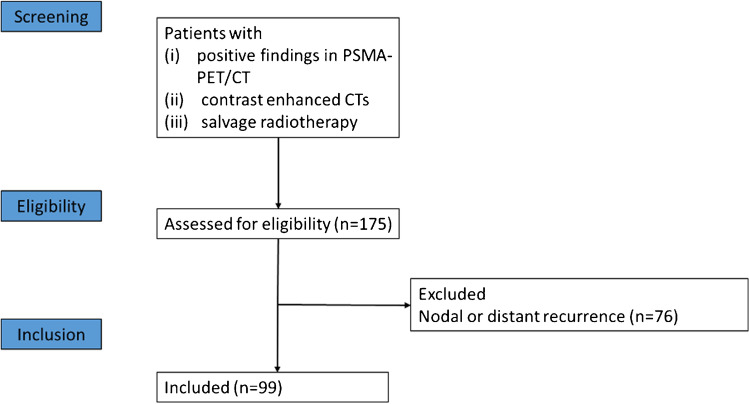
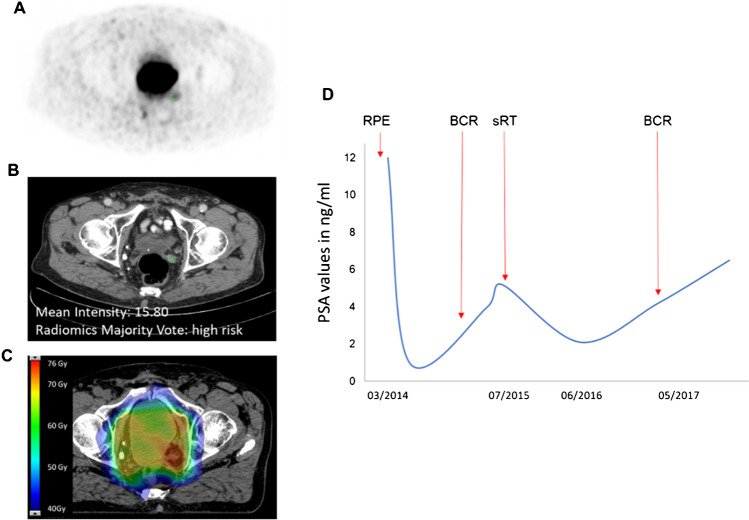
Consecutive patients, who underwent Ga-PSMA11-PET/CT-guided sRT from three high-volume centers in Germany, were included in this retrospective multicenter study. Patients had PET-positive local recurrences and were treated with intensity-modulated sRT. Radiomic features were extracted from volumes of interests on CT guided by focal PSMA-PET uptakes. After preprocessing, clinical, radiomics, and combined clinical-radiomic models were developed combining different feature reduction techniques and Cox proportional hazard models within a nested cross validation approach.
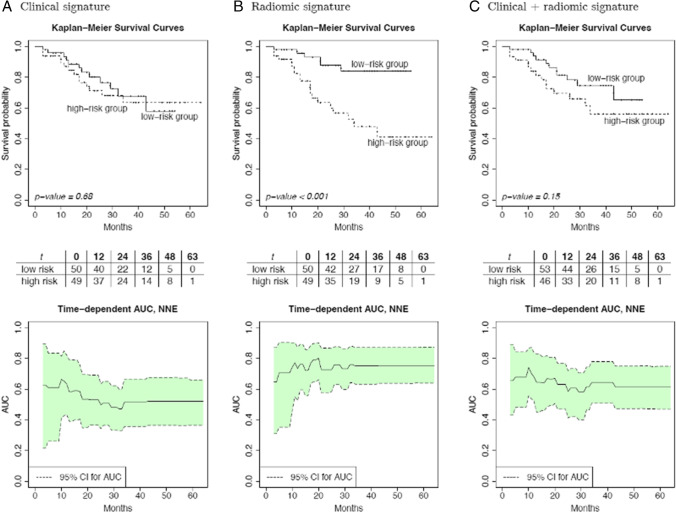
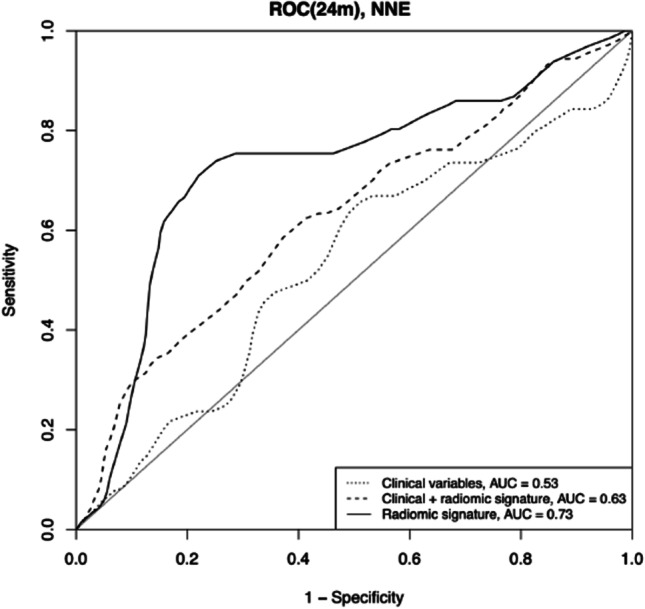
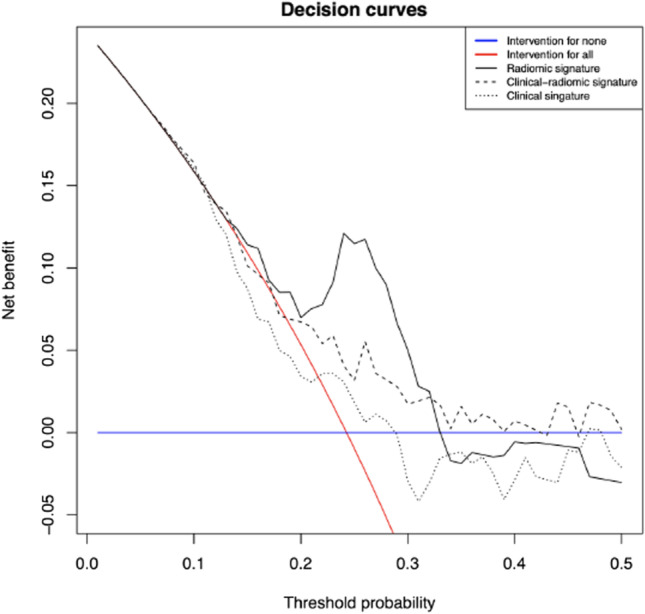
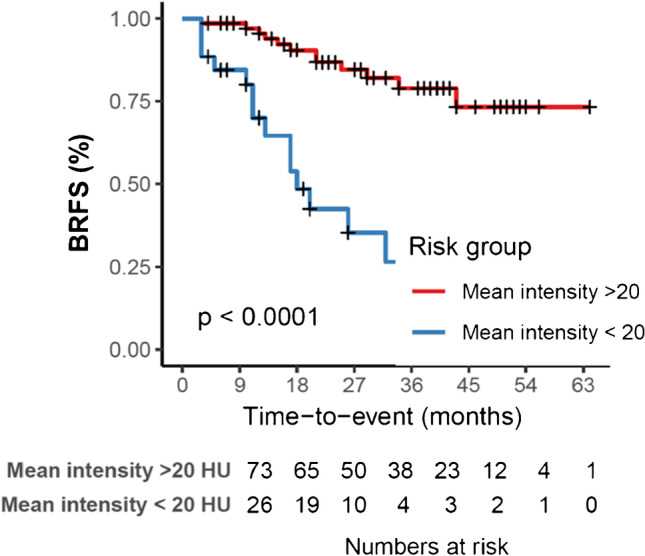
Among 99 patients, median interval until BCR was the radiomic models outperformed clinical models and combined clinical-radiomic models for prediction of BCR with a C-index of 0.71 compared to 0.53 and 0.63 in the test sets, respectively. In contrast to the other models, the radiomic model achieved significantly improved patient stratification in Kaplan-Meier analysis. The radiomic and clinical-radiomic model achieved a significantly better time-dependent net reclassification improvement index (0.392 and 0.762, respectively) compared to the clinical model. Decision curve analysis demonstrated a clinical net benefit for both models. Mean intensity was the most predictive radiomic feature.
This is the first study to develop a PSMA-PET-guided CT-based radiomic model to predict BCR after sRT. The radiomic models outperformed clinical models and might contribute to guide personalized treatment decisions.
开发一种基于 CT 的放射组学特征,以预测前列腺癌患者在正电子发射断层扫描靶向前列腺特异性膜抗原(PSMA-PET)指导下接受近距离放射治疗(sRT)后发生生化复发(BCR)的情况。
本回顾性多中心研究纳入了在德国三个高容量中心接受 Ga-PSMA11-PET/CT 指导下 sRT 的连续患者。这些患者存在 PSMA-PET 阳性的局部复发,并接受了强度调制 sRT 治疗。从通过焦点 PSMA-PET 摄取引导的 CT 上的感兴趣区域中提取放射组学特征。在预处理后,在嵌套交叉验证方法中,结合不同的特征减少技术和 Cox 比例风险模型,开发了临床、放射组学和联合临床放射组学模型。
在 99 例患者中,中位至 BCR 的间隔时间为,放射组学模型在预测 BCR 方面优于临床模型和联合临床放射组学模型,在测试集中的 C 指数分别为 0.71、0.53 和 0.63。与其他模型相比,放射组学模型在 Kaplan-Meier 分析中实现了显著改善的患者分层。放射组学和联合临床放射组学模型在时间依赖性净重新分类改善指数方面(分别为 0.392 和 0.762)显著优于临床模型。决策曲线分析表明,这两个模型都有显著的临床净收益。平均强度是最具预测性的放射组学特征。
这是第一项开发 PSMA-PET 指导下 CT 基于放射组学模型以预测 sRT 后 BCR 的研究。放射组学模型优于临床模型,可能有助于指导个性化治疗决策。