• 文献检索
  • 文档翻译
  • 深度研究
  • 学术资讯
  • Suppr Zotero 插件Zotero 插件
  • 邀请有礼
  • 套餐&价格
  • 历史记录
应用&插件
Suppr Zotero 插件Zotero 插件浏览器插件Mac 客户端Windows 客户端微信小程序
定价
高级版会员购买积分包购买API积分包
服务
文献检索文档翻译深度研究API 文档MCP 服务
关于我们
关于 Suppr公司介绍联系我们用户协议隐私条款
关注我们

Suppr 超能文献

核心技术专利:CN118964589B侵权必究
粤ICP备2023148730 号-1Suppr @ 2026

文献检索

告别复杂PubMed语法,用中文像聊天一样搜索,搜遍4000万医学文献。AI智能推荐,让科研检索更轻松。

立即免费搜索

文件翻译

保留排版,准确专业,支持PDF/Word/PPT等文件格式,支持 12+语言互译。

免费翻译文档

深度研究

AI帮你快速写综述,25分钟生成高质量综述,智能提取关键信息,辅助科研写作。

立即免费体验

诱导小鼠房室传导系统细胞消融的方案。

Protocol for inducing cellular ablation in the mouse atrioventricular conduction system.

机构信息

Department of Internal Medicine, Cardiology Division, UT Southwestern Medical Center, Dallas, TX 75390, USA.

Department of Internal Medicine, Cardiology Division, UT Southwestern Medical Center, Dallas, TX 75390, USA; College of Medicine, University of the Philippines Manila, Metro Manila 1000, Philippines.

出版信息

STAR Protoc. 2023 Mar 17;4(1):102145. doi: 10.1016/j.xpro.2023.102145. Epub 2023 Mar 11.

DOI:10.1016/j.xpro.2023.102145
PMID:36933220
原文链接:https://pmc.ncbi.nlm.nih.gov/articles/PMC10024233/
Abstract

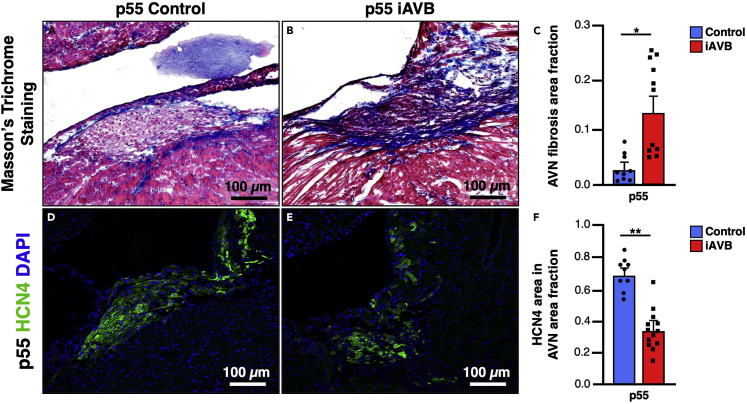
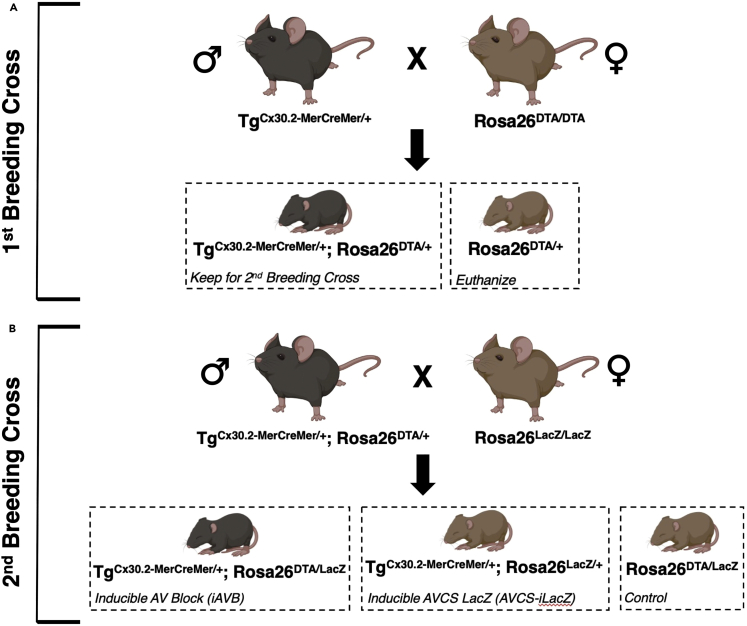
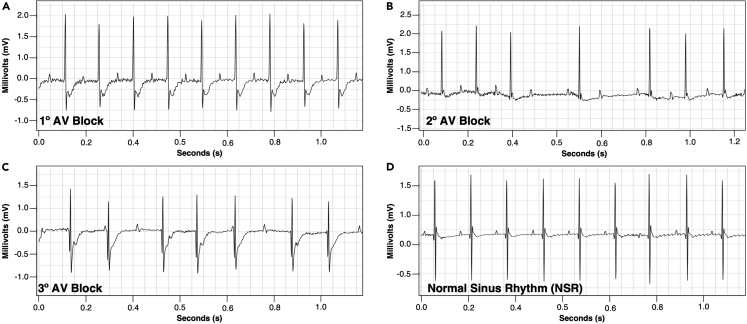
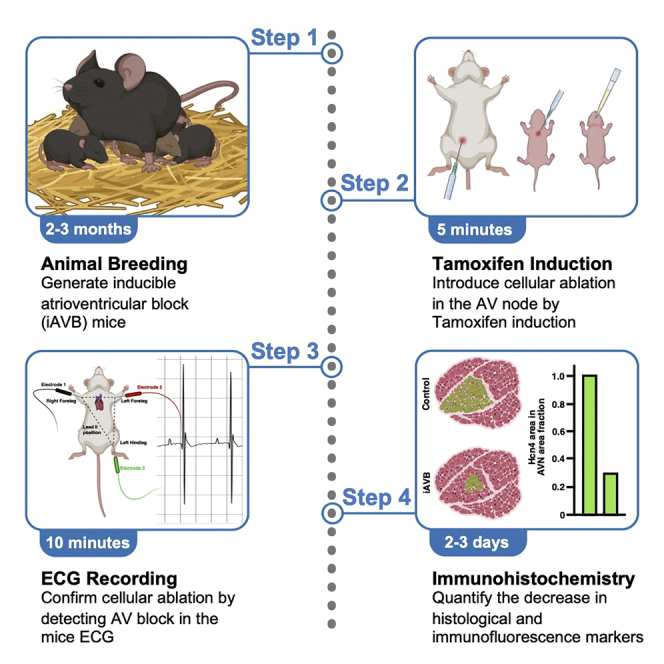
Damage to the atrioventricular conduction system (AVCS), the main electrical connection between the atrial and ventricular chambers, can result in a variety of cardiac conduction disorders. Here, we provide a protocol for selective damage of the mouse AVCS to study its response during injury. We describe tamoxifen-induced cellular ablation, detection of AV block through electrocardiography, and quantification of histological and immunofluorescence markers to analyze the AVCS. This protocol can be used to study mechanisms associated with AVCS injury repair and regeneration. For complete details on the use and execution of this protocol, please refer to Wang et al. (2021)..

摘要

房室传导系统(AVCS)损伤会导致各种心脏传导障碍,AVCS 是心房和心室之间的主要电连接。在这里,我们提供了一种选择性损伤小鼠 AVCS 的方案,以研究其在损伤过程中的反应。我们描述了他莫昔芬诱导的细胞消融、心电图检测房室传导阻滞以及组织学和免疫荧光标记物的定量分析,以分析 AVCS。该方案可用于研究与 AVCS 损伤修复和再生相关的机制。有关该方案使用和执行的完整详细信息,请参阅 Wang 等人。(2021 年)。
https://cdn.ncbi.nlm.nih.gov/pmc/blobs/e050/10024233/e354174f98bc/gr9.jpg
https://cdn.ncbi.nlm.nih.gov/pmc/blobs/e050/10024233/af02c6a9c135/fx1.jpg
https://cdn.ncbi.nlm.nih.gov/pmc/blobs/e050/10024233/cf8ceeaef300/gr1.jpg
https://cdn.ncbi.nlm.nih.gov/pmc/blobs/e050/10024233/8f4887f41dc1/gr2.jpg
https://cdn.ncbi.nlm.nih.gov/pmc/blobs/e050/10024233/846594e0594c/gr3.jpg
https://cdn.ncbi.nlm.nih.gov/pmc/blobs/e050/10024233/63975450613b/gr4.jpg
https://cdn.ncbi.nlm.nih.gov/pmc/blobs/e050/10024233/da42a885044b/gr5.jpg
https://cdn.ncbi.nlm.nih.gov/pmc/blobs/e050/10024233/61d0ee14b8ec/gr6.jpg
https://cdn.ncbi.nlm.nih.gov/pmc/blobs/e050/10024233/c1eb62e3737f/gr7.jpg
https://cdn.ncbi.nlm.nih.gov/pmc/blobs/e050/10024233/648dcfcc515c/gr8.jpg
https://cdn.ncbi.nlm.nih.gov/pmc/blobs/e050/10024233/e354174f98bc/gr9.jpg
https://cdn.ncbi.nlm.nih.gov/pmc/blobs/e050/10024233/af02c6a9c135/fx1.jpg
https://cdn.ncbi.nlm.nih.gov/pmc/blobs/e050/10024233/cf8ceeaef300/gr1.jpg
https://cdn.ncbi.nlm.nih.gov/pmc/blobs/e050/10024233/8f4887f41dc1/gr2.jpg
https://cdn.ncbi.nlm.nih.gov/pmc/blobs/e050/10024233/846594e0594c/gr3.jpg
https://cdn.ncbi.nlm.nih.gov/pmc/blobs/e050/10024233/63975450613b/gr4.jpg
https://cdn.ncbi.nlm.nih.gov/pmc/blobs/e050/10024233/da42a885044b/gr5.jpg
https://cdn.ncbi.nlm.nih.gov/pmc/blobs/e050/10024233/61d0ee14b8ec/gr6.jpg
https://cdn.ncbi.nlm.nih.gov/pmc/blobs/e050/10024233/c1eb62e3737f/gr7.jpg
https://cdn.ncbi.nlm.nih.gov/pmc/blobs/e050/10024233/648dcfcc515c/gr8.jpg
https://cdn.ncbi.nlm.nih.gov/pmc/blobs/e050/10024233/e354174f98bc/gr9.jpg

相似文献

1
Protocol for inducing cellular ablation in the mouse atrioventricular conduction system.诱导小鼠房室传导系统细胞消融的方案。
STAR Protoc. 2023 Mar 17;4(1):102145. doi: 10.1016/j.xpro.2023.102145. Epub 2023 Mar 11.
2
Cellular regeneration as a potential strategy to treat cardiac conduction disorders.细胞再生作为一种治疗心脏传导障碍的潜在策略。
J Clin Invest. 2021 Oct 1;131(19). doi: 10.1172/JCI152185.
3
Modulation of atrioventricular conduction by ablation of the "slow" atrioventricular node pathway in patients with drug-refractory atrial fibrillation or flutter.药物难治性心房颤动或心房扑动患者中,通过消融“慢”房室结径路对房室传导进行调制。
J Am Coll Cardiol. 1995 Jan;25(1):39-46. doi: 10.1016/0735-1097(94)00315-h.
4
Electrophysiologic significance of discrete slow potentials in dual atrioventricular node physiology: implications for selective radiofrequency ablation of slow pathway conduction.房室结双径路生理中离散缓慢电位的电生理意义:对慢径路传导选择性射频消融的启示
Am Heart J. 1996 Mar;131(3):490-8. doi: 10.1016/s0002-8703(96)90527-x.
5
Characterization of atrioventricular nodal behavior and ventricular response during atrial fibrillation before and after a selective slow-pathway ablation.选择性慢径消融前后心房颤动期间房室结行为及心室反应的特征分析
Circulation. 1995 Feb 15;91(4):1086-94. doi: 10.1161/01.cir.91.4.1086.
6
Transcatheter modification of the atrioventricular node in dogs, using radiofrequency energy.使用射频能量对犬的房室结进行经导管改良。
Am J Vet Res. 1996 Feb;57(2):229-35.
7
Should fast pathway ablation be reconsidered in typical atrioventricular nodal re-entrant tachycardia?典型房室结折返性心动过速时是否应重新考虑快径消融?
J Cardiovasc Electrophysiol. 2019 Sep;30(9):1569-1577. doi: 10.1111/jce.14012. Epub 2019 Jul 2.
8
[Electrophysiologic findings and high frequency catheter ablation in atriofascicular and nodoventricular pathways ("Mahaim bundles")].[房室束旁道和结室旁道(“Mahaim 束”)的电生理表现及高频导管消融]
Z Kardiol. 1995;84 Suppl 2:153-62.
9
A transarterial approach of electrical ablation of atrioventricular junction in a dog model: comparison of the effects between high and low energy shocks.犬模型中经动脉途径进行房室结电消融:高能量与低能量电击效果的比较
Pacing Clin Electrophysiol. 1989 Sep;12(9):1474-84. doi: 10.1111/j.1540-8159.1989.tb06152.x.
10
Inducible cardiomyocyte injury within the atrioventricular conduction system uncovers latent regenerative capacity in mice.在房室传导系统内诱导心肌细胞损伤揭示了小鼠潜在的再生能力。
J Clin Invest. 2021 Oct 1;131(19). doi: 10.1172/JCI138637.