Zhang Jing, Zhu Gang, Wan Lin, Liang Yan, Liu Xinting, Yan Huimin, Zhang Bo, Yang Guang
Senior Department of Pediatrics, The Seventh Medical Center of Chinese PLA General Hospital, Beijing, China.
Department of Pediatrics, The First Medical Center of Chinese PLA General Hospital, Beijing, China.
Front Psychiatry. 2023 Mar 2;14:1123658. doi: 10.3389/fpsyt.2023.1123658. eCollection 2023.
Fecal microbiota transplantation (FMT) may be helpful in the treatment of autism spectrum disorder (ASD) as rebalancing the gut microbiome has been shown to potentially improve behavioral symptoms in children with ASD.
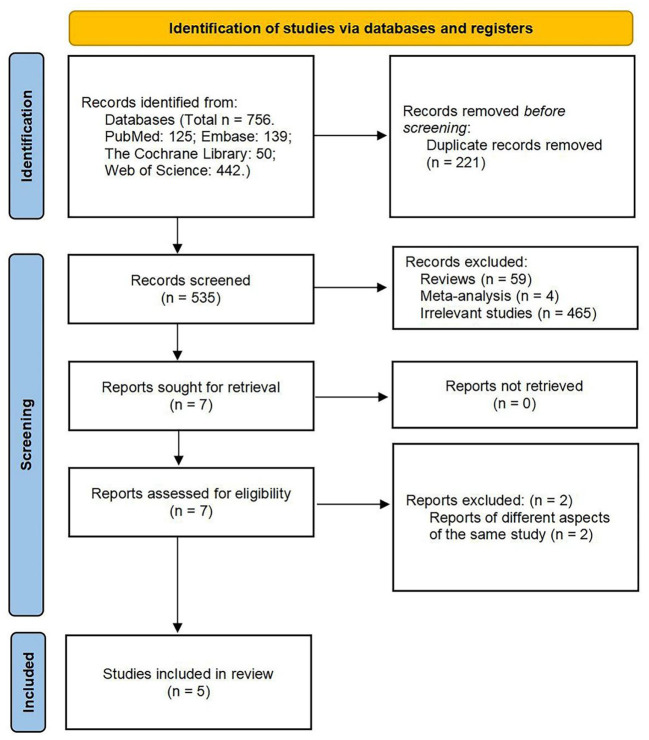
This systematic review was conducted to assess the effect of FMT for children with ASD. The Embase, PubMed, Web of Science, and Cochrane Library databases were searched for articles published from inception to October 6, 2022. Two reviewers independently screened the identified records and undertook data extraction.
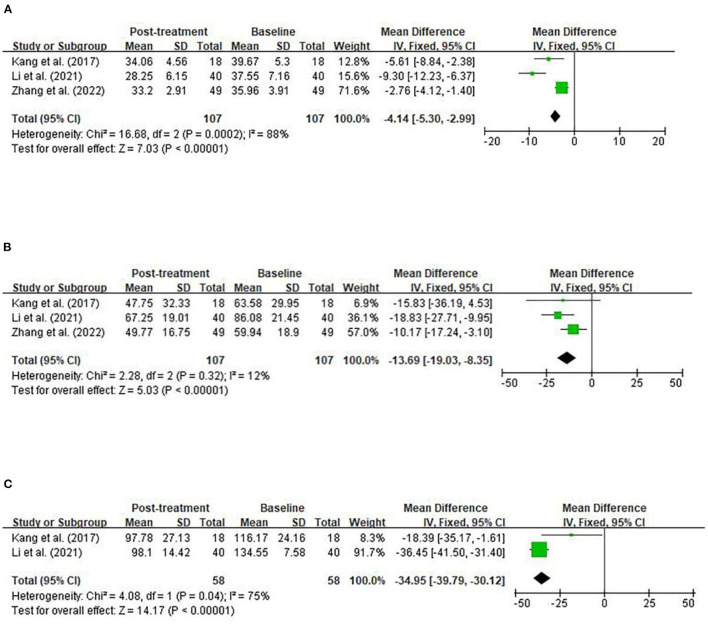
The search identified a total of five studies: two prospective open-label studies, two retrospective observational studies, and a case report; however, no randomized controlled trial was identified. All five studies reported a significant post-FMT-treatment improvement in neuropsychological assessment of ASD. The two prospective open-label studies suggested that the Autism Behavior Checklist (ABC) score, and the Social Responsiveness Scale (SRS) score at the posttreatment assessment decreased from the baseline (Wilcoxon signed-rank test; all < 0.01]). The two retrospective observational studies suggested that FMT helped to improve the ASD symptoms. One observational study reported that the Childhood Autism Rating Scale (CARS) score and ABC score of the constipation group decreased from the baseline after the second course assessment (CARS [baseline: mean 35.25 ± standard deviation 4.36, second course: 32.5 ± 3.1, = 0.015]; ABC [baseline: 56.21 ± 16.08, second course: 46.54 ± 16.54, = 0.046]). Another observational study found that both ABC and CARS scores decreased as the number of FMT courses increased, and significant differences were found at the end of each course as compared with the baseline.
Compared with the baseline, FMT significantly improved symptoms of autism in children with ASD in observational studies. However, rigorously designed randomized controlled clinical trials are needed to establish the safety and efficacy of FMT as a treatment for ASD.
粪便微生物群移植(FMT)可能有助于治疗自闭症谱系障碍(ASD),因为肠道微生物群的重新平衡已被证明有可能改善ASD儿童的行为症状。
进行这项系统评价以评估FMT对ASD儿童的疗效。检索了Embase、PubMed、Web of Science和Cochrane图书馆数据库中从创刊至2022年10月6日发表的文章。两名评审员独立筛选确定的记录并进行数据提取。
检索共确定了五项研究:两项前瞻性开放标签研究、两项回顾性观察性研究和一篇病例报告;然而,未确定随机对照试验。所有五项研究均报告FMT治疗后ASD的神经心理学评估有显著改善。两项前瞻性开放标签研究表明,治疗后评估时的自闭症行为量表(ABC)评分和社会反应量表(SRS)评分较基线下降(Wilcoxon符号秩检验;均<0.01)。两项回顾性观察性研究表明,FMT有助于改善ASD症状。一项观察性研究报告称,便秘组在第二疗程评估后,儿童自闭症评定量表(CARS)评分和ABC评分较基线下降(CARS[基线:均值35.25±标准差4.36,第二疗程:32.5±3.1,P=0.015];ABC[基线:56.21±16.08,第二疗程:46.54±16.54,P=0.046])。另一项观察性研究发现,随着FMT疗程数的增加,ABC和CARS评分均下降,且与基线相比,各疗程结束时均有显著差异。
在观察性研究中,与基线相比,FMT显著改善了ASD儿童的自闭症症状。然而,需要严格设计的随机对照临床试验来确定FMT作为ASD治疗方法的安全性和有效性。