Dossaji Zahra, Khattak Adam, Tun Kyaw Min, Hsu Mark, Batra Kavita, Hong Annie S
Department of Medical Education, Kirk Kerkorian School of Medicine at UNLV, University of Nevada, Las Vegas, NV 89102, USA.
Office of Research, Kirk Kerkorian School of Medicine at UNLV, University of Nevada, Las Vegas, NV 89102, USA.
Microorganisms. 2023 Mar 22;11(3):806. doi: 10.3390/microorganisms11030806.
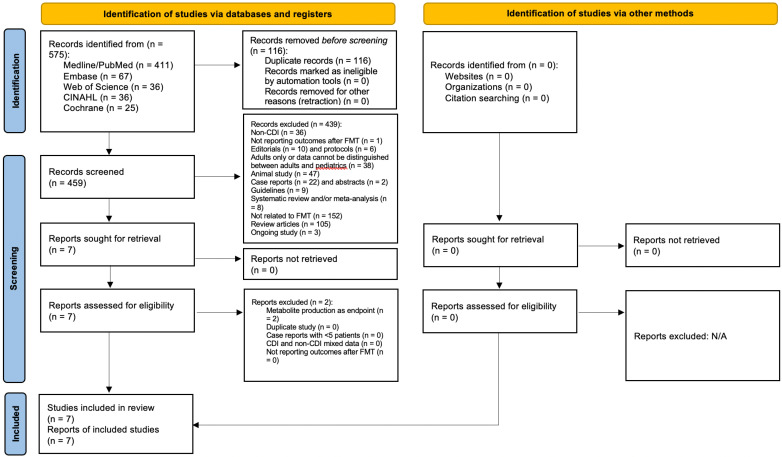
There is a high prevalence of gastrointestinal-related (GI) symptoms among children with autism spectrum disorder (ASD), which is associated with the severity of behavioral symptoms. Fecal microbiota transplantation (FMT) is a proposed therapeutic strategy that aims to address the dysregulation of the gut microbiome among children with ASD. Our study performed the first systematic review aimed to evaluate the benefits of FMT on the behavioral and gastrointestinal symptoms of pediatric patients with autism. A literature search was performed using variations of the keywords "pediatrics" and "fecal microbiota transplantation" in PubMed, EMBASE, CINAHL, Cochrane, and Web of Science from inception to 30 June 2022. Four studies that met the eligibility criteria were included in the systematic review. The efficacy of FMT on behavioral symptoms was measured by the difference in Aberrant Behavior Checklist (ABC) and Child Autism Rating Scale (CARS) scores before and after FMT. We found a statistically significant improvement ( < 0.05) in ABC and CARS scores following FMT, with a statistically significant decrease in scores observed across all studies. In addition, substantial improvements in gastrointestinal symptoms were observed across all studies. Our findings suggest that FMT may offer a promising intervention for treating both behavioral and gastrointestinal symptoms in pediatric patients with autism.
自闭症谱系障碍(ASD)儿童中胃肠道相关(GI)症状的患病率很高,这与行为症状的严重程度相关。粪便微生物群移植(FMT)是一种提出的治疗策略,旨在解决ASD儿童肠道微生物群的失调问题。我们的研究进行了首次系统评价,旨在评估FMT对自闭症儿科患者行为和胃肠道症状的益处。在PubMed、EMBASE、CINAHL、Cochrane和Web of Science数据库中,使用关键词“儿科学”和“粪便微生物群移植”的变体,从建库至2022年6月30日进行文献检索。四项符合纳入标准的研究被纳入该系统评价。FMT对行为症状的疗效通过FMT前后异常行为检查表(ABC)和儿童自闭症评定量表(CARS)得分的差异来衡量。我们发现,FMT后ABC和CARS得分有统计学意义的改善(<0.05),所有研究中得分均有统计学意义的下降。此外,所有研究中胃肠道症状均有显著改善。我们的研究结果表明,FMT可能为治疗自闭症儿科患者的行为和胃肠道症状提供一种有前景的干预措施。