Pittino Francesca, Zawierucha Krzysztof, Poniecka Ewa, Buda Jakub, Rosatelli Asia, Zordan Simone, Azzoni Roberto S, Diolaiuti Guglielmina, Ambrosini Roberto, Franzetti Andrea
Department of Earth and Environmental Sciences (DISAT)-University of Milano-Bicocca, Milano, Italy.
Biodiversity and Conservation Biology, Swiss Federal Research Institute WSL, Birmensdorf, Switzerland.
Microbiol Spectr. 2023 Mar 20;11(2):e0100422. doi: 10.1128/spectrum.01004-22.
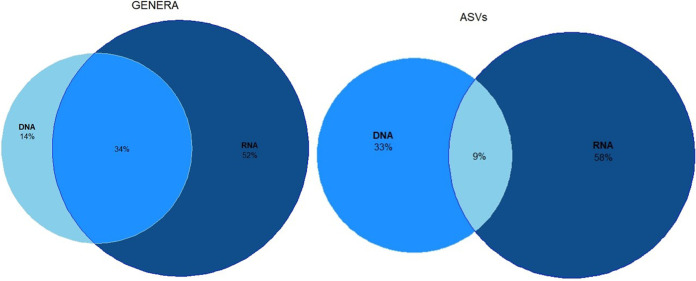
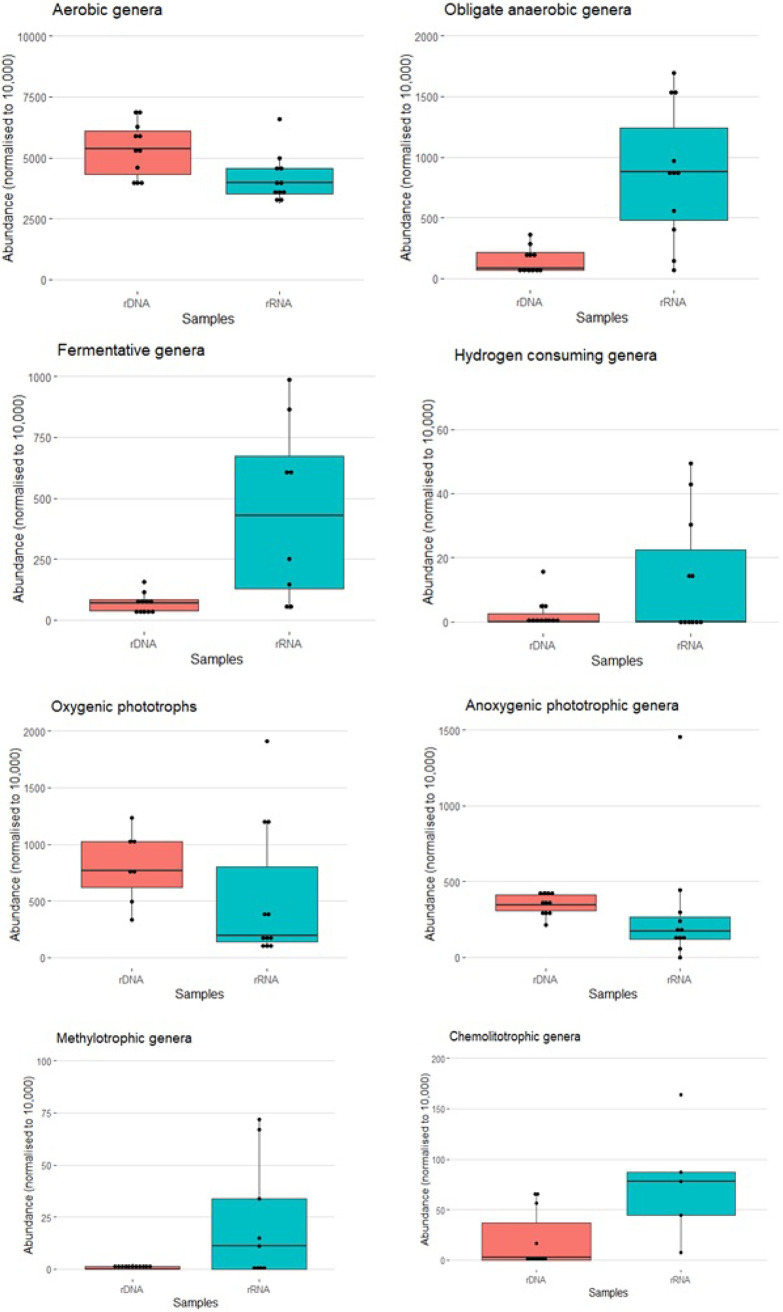
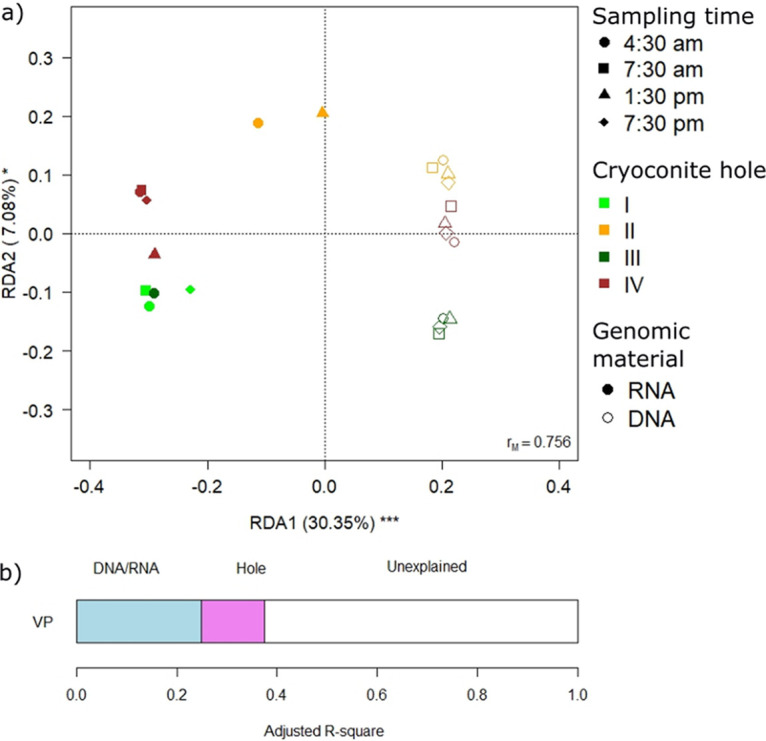
Cryoconite holes are small ponds present on the surface of most glaciers filled with meltwater and sediment at the bottom. Although they are characterized by extreme conditions, they host bacterial communities with high taxonomic and functional biodiversity. Despite that evidence for a potential niche for anaerobic microorganisms and anaerobic processes has recently emerged, the composition of the microbial communities of the cryoconite reported so far has not shown the relevant presence of anaerobic taxa. We hypothesize that this is due to the lower growth yield of anaerobes compared to aerobic microorganisms. In this work, we aim at evaluating whether the anaerobic bacterial community represents a relevant fraction of the biodiversity of the cryoconite and at describing its structure and functions. We collected sediment samples from cryoconite holes on the Forni Glacier (Italy) and sequenced both 16S rRNA amplicon genes and 16S rRNA amplicon transcripts at different times of the day along a clear summer day. Results showed that a relevant fraction of taxa has been detected only by 16S rRNA transcripts and was undetectable in 16S rRNA gene amplicons. Furthermore, in the transcript approach, anaerobic taxa were overrepresented compared with DNA sequencing. The metatranscriptomics approach was used also to investigate the expression of the main metabolic functions. Results showed the occurrence of syntrophic and commensalism relationships among fermentative bacteria, hydrogenothrophs, and consumers of fermentation end products, which have never been reported so far in cryoconite. Recent evidence disclosed the presence of a potential niche for anaerobic microorganisms and anaerobic processes in supraglacial sediments (cryoconite), but a detailed description of the structure and functions of the anaerobic population is still lacking. This work used rRNA and mRNA sequencing and demonstrated that anaerobes are very active in these environments and represent a relevant albeit neglected part of the ecosystem functions in these environments.
冰尘穴是大多数冰川表面存在的小池塘,底部充满了融水和沉积物。尽管它们具有极端条件的特征,但却拥有具有高度分类学和功能生物多样性的细菌群落。尽管最近已经出现了厌氧微生物和厌氧过程存在潜在生态位的证据,但迄今为止报道的冰尘微生物群落组成并未显示出厌氧类群的显著存在。我们推测这是由于厌氧菌的生长产量低于需氧微生物。在这项工作中,我们旨在评估厌氧细菌群落是否占冰尘生物多样性的相当一部分,并描述其结构和功能。我们从意大利福尔尼冰川的冰尘穴中采集了沉积物样本,并在一个晴朗的夏日一天中的不同时间对16S rRNA扩增子基因和16S rRNA扩增子转录本进行了测序。结果表明,只有通过16S rRNA转录本才能检测到相当一部分分类群,而在16S rRNA基因扩增子中则无法检测到。此外,在转录本方法中,与DNA测序相比,厌氧类群的比例过高。元转录组学方法也被用于研究主要代谢功能的表达。结果显示发酵细菌、氢营养菌和发酵终产物消费者之间存在互养和共生关系,这在冰尘中迄今为止从未被报道过。最近的证据揭示了冰川表面沉积物(冰尘)中存在厌氧微生物和厌氧过程的潜在生态位,但仍缺乏对厌氧种群结构和功能的详细描述。这项工作使用了rRNA和mRNA测序,并证明厌氧菌在这些环境中非常活跃,是这些环境中生态系统功能的一个相关但被忽视的部分。