Department of Pathology and Immunology, School of Medicine, Washington University in St. Louis, St. Louis, MO 63110.
Proc Natl Acad Sci U S A. 2023 Mar 28;120(13):e2219956120. doi: 10.1073/pnas.2219956120. Epub 2023 Mar 20.
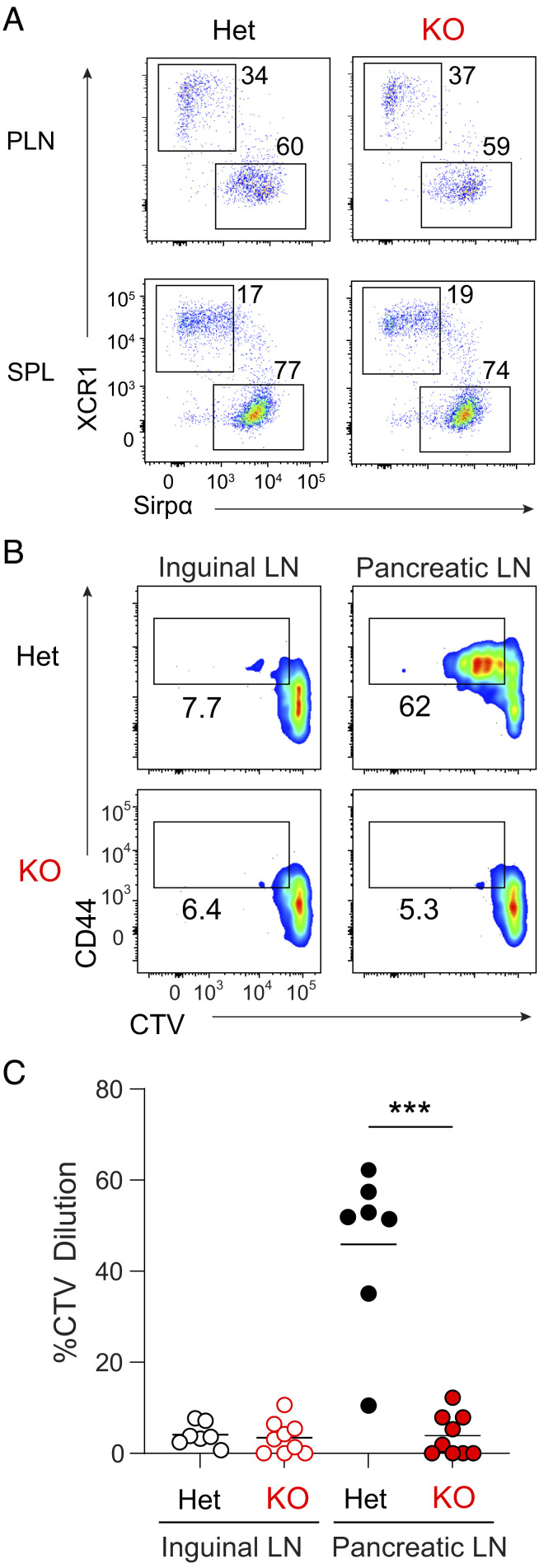
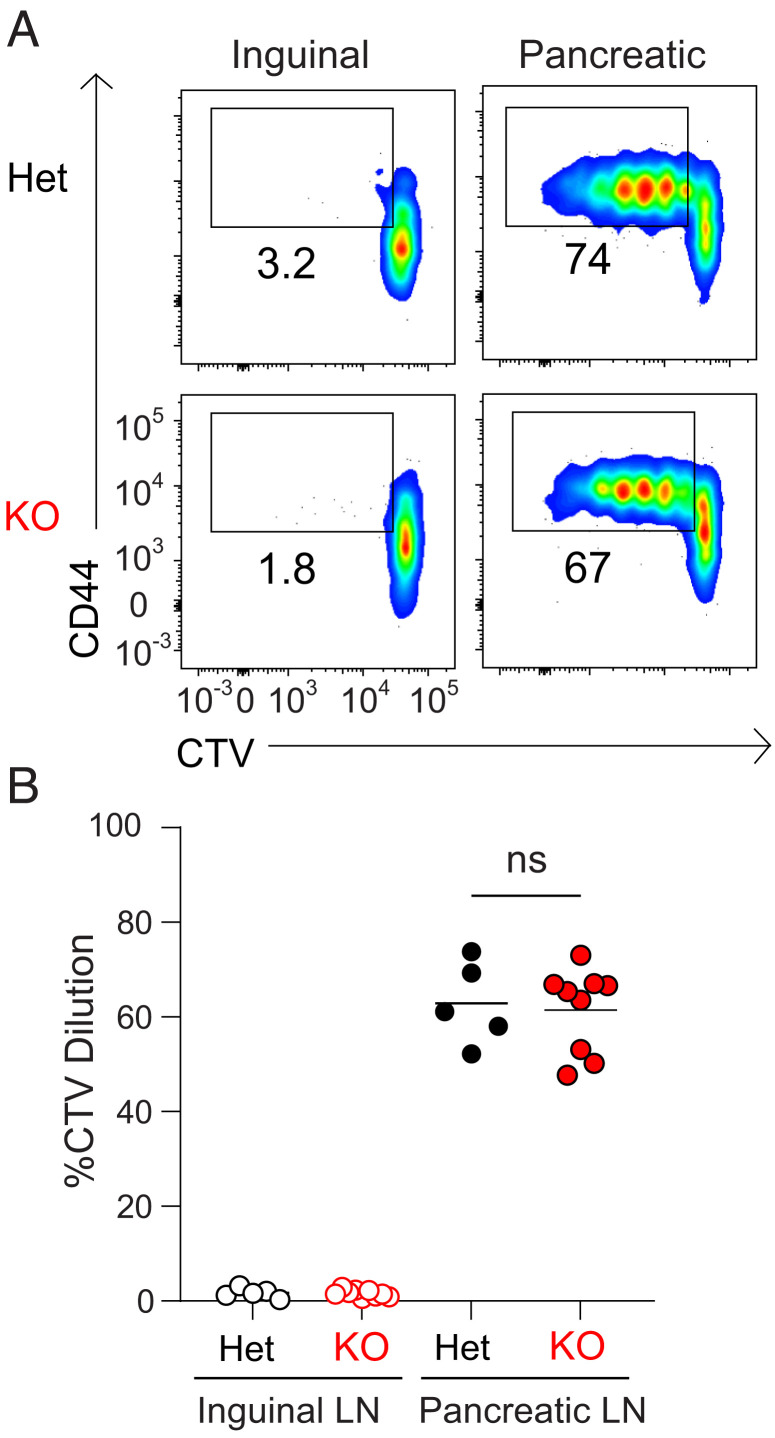
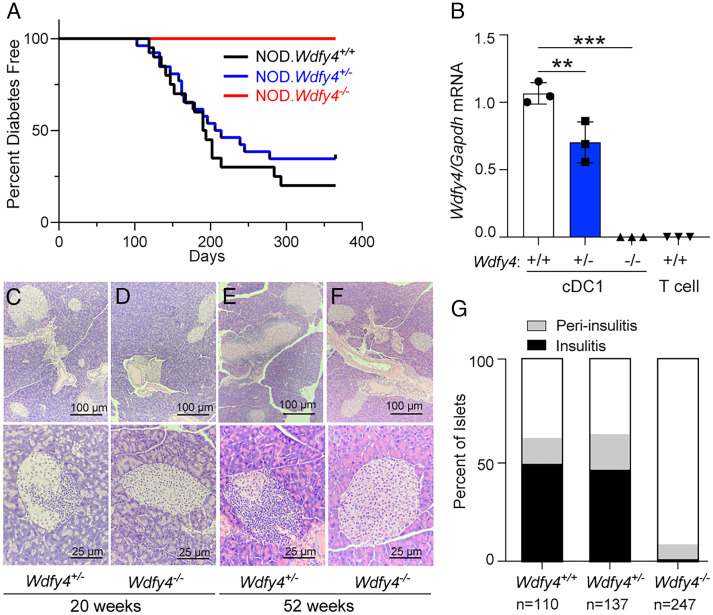
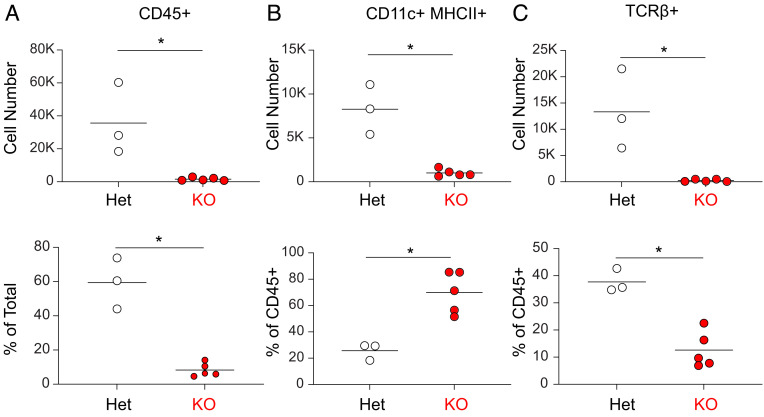
The events that initiate autoimmune diabetes in nonobese diabetic (NOD) mice remain poorly understood. CD4 and CD8 T cells are both required to develop disease, but their relative roles in initiating disease are unclear. To test whether CD4 T cell infiltration into islets requires damage to β cells induced by autoreactive CD8 T cells, we inactivated in nonobese diabetic (NOD) mice (NOD.) using CRISPR/Cas9 targeting to eliminate cross-presentation by type 1 conventional dendritic cells (cDC1s). Similar to C57BL/6 mice, cDC1 in NOD. mice are unable to cross-present cell-associated antigens to prime CD8 T cells, while cDC1 from heterozygous NOD. mice cross-present normally. Further, NOD. mice fail to develop diabetes while heterozygous NOD. mice develop diabetes similarly to wild-type NOD mice. NOD. mice remain capable of processing and presenting major histocompatibility complex class II (MHC-II)-restricted autoantigens and can activate β cell-specific CD4 T cells in lymph nodes. However, disease in these mice does not progress beyond peri-islet inflammation. These results indicate that the priming of autoreactive CD8 T cells in NOD mice requires cross-presentation by cDC1. Further, autoreactive CD8 T cells appear to be required not only to develop diabetes, but to recruit autoreactive CD4 T cells into islets of NOD mice, perhaps in response to progressive β cell damage.
在非肥胖型糖尿病(NOD)小鼠中,引发自身免疫性糖尿病的事件仍知之甚少。CD4 和 CD8 T 细胞都需要发展疾病,但它们在引发疾病中的相对作用尚不清楚。为了测试 CD4 T 细胞浸润胰岛是否需要自身反应性 CD8 T 细胞诱导的β细胞损伤,我们使用 CRISPR/Cas9 靶向在非肥胖型糖尿病(NOD)小鼠(NOD.)中失活,以消除 1 型传统树突状细胞(cDC1)的交叉呈递。与 C57BL/6 小鼠相似,NOD. 小鼠中的 cDC1 无法交叉呈递细胞相关抗原以激活 CD8 T 细胞,而杂合 NOD. 小鼠的 cDC1 则正常交叉呈递。此外,NOD. 小鼠不会发生糖尿病,而杂合 NOD. 小鼠则与野生型 NOD 小鼠相似地发生糖尿病。NOD. 小鼠仍然能够加工和呈递主要组织相容性复合物 II(MHC-II)限制性自身抗原,并能在淋巴结中激活β细胞特异性 CD4 T 细胞。然而,这些小鼠的疾病不会进展到胰岛周围炎症之外。这些结果表明,NOD 小鼠中自身反应性 CD8 T 细胞的激活需要 cDC1 的交叉呈递。此外,自身反应性 CD8 T 细胞似乎不仅需要发展糖尿病,而且需要将自身反应性 CD4 T 细胞募集到 NOD 小鼠的胰岛中,可能是对β细胞进行性损伤的反应。