Ineichen Benjamin V, Cananau Carmen, Plattén Michael, Ouellette Russell, Moridi Thomas, Frauenknecht Katrin B M, Okar Serhat V, Kulcsar Zsolt, Kockum Ingrid, Piehl Fredrik, Reich Daniel S, Granberg Tobias
Department of Clinical Neuroscience, Karolinska Institutet, Stockholm, Sweden.
Department of Neuroradiology, Karolinska University Hospital, Stockholm, Sweden.
bioRxiv. 2023 Feb 27:2023.02.24.529871. doi: 10.1101/2023.02.24.529871.
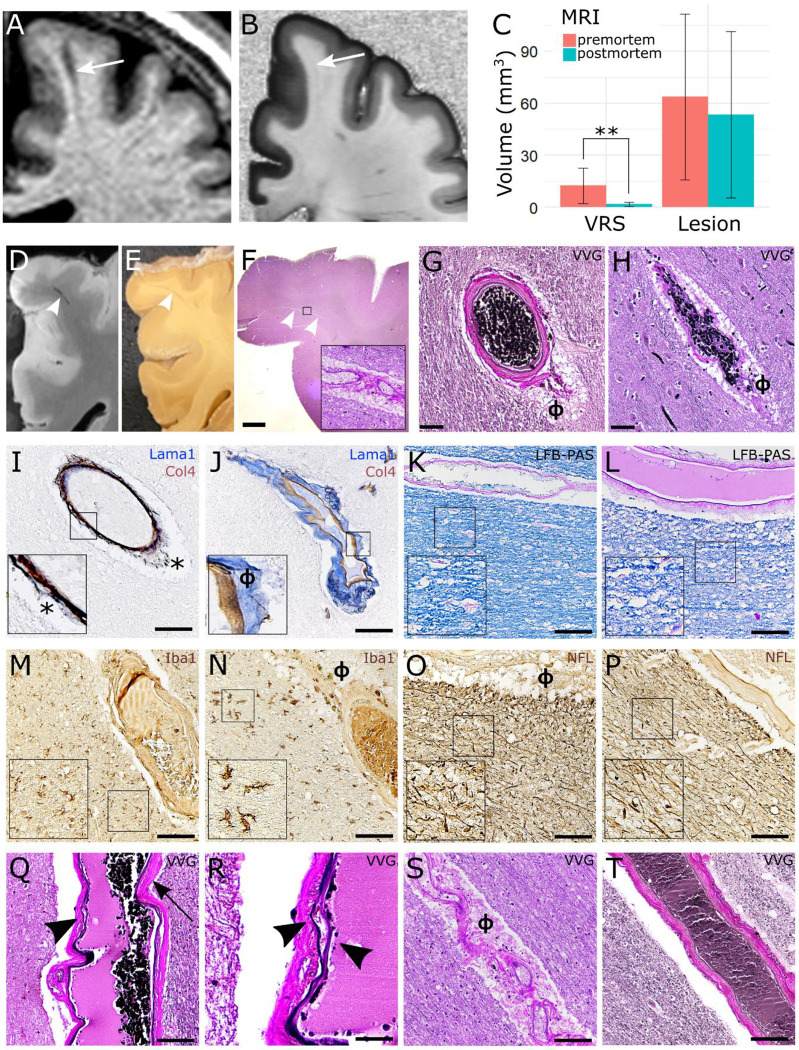
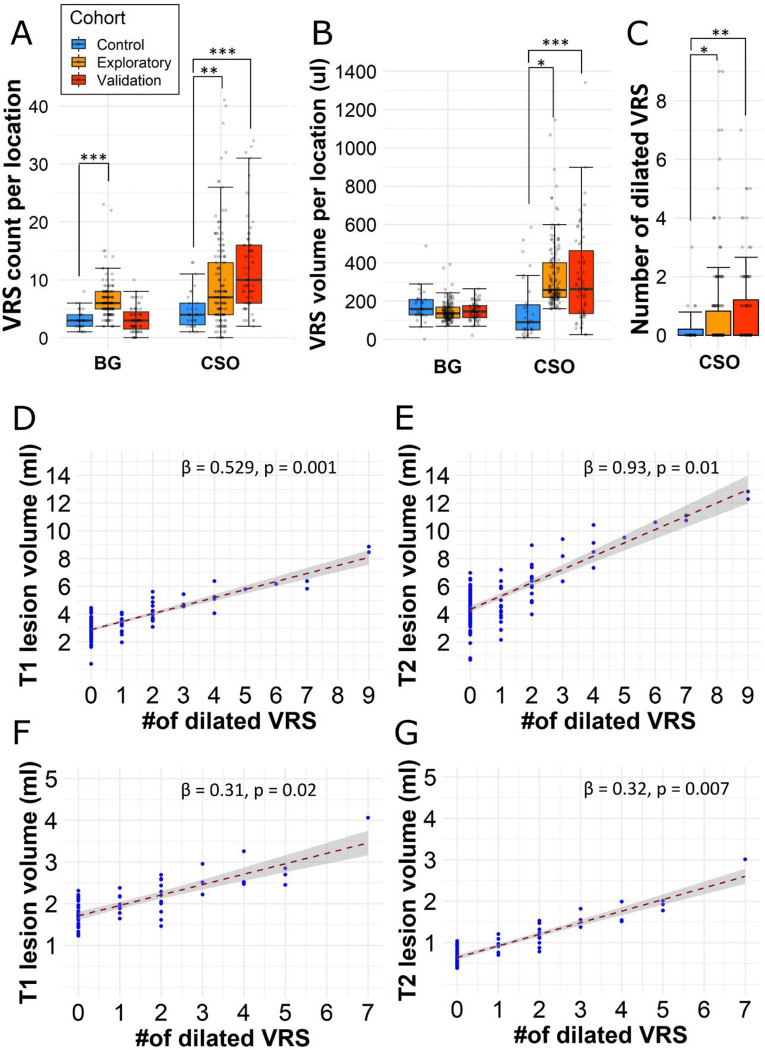
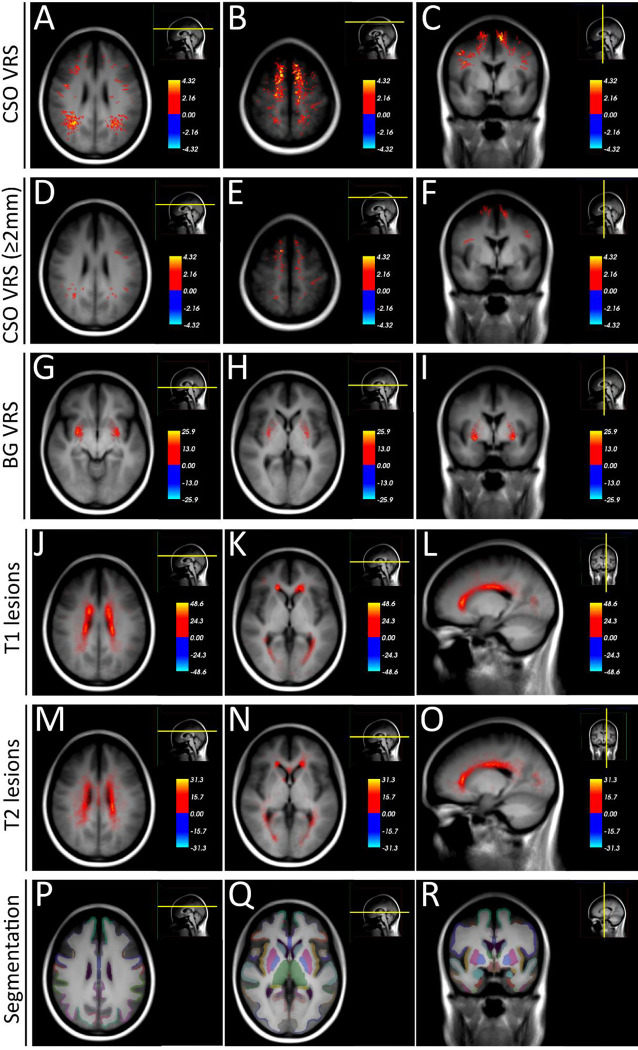
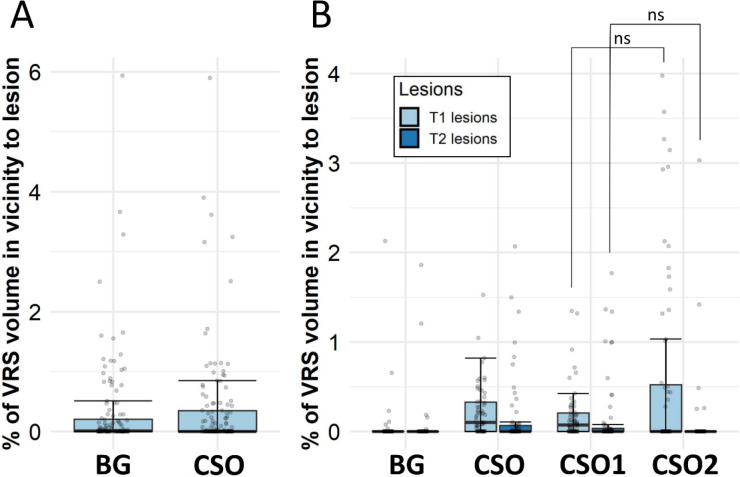
Virchow-Robin spaces (VRS) have been associated with neurodegeneration and neuroinflammation. However, it remains uncertain to what degree non-dilated or dilated VRS reflect specific features of neuroinflammatory pathology. Thus, we aimed at investigating the clinical relevance of VRS as imaging biomarker in multiple sclerosis (MS) and to correlate VRS to their histopathologic signature. In a cohort study comprising 205 MS patients (including a validation cohort) and 30 control subjects, we assessed the association of non-dilated and dilated VRS to clinical and magnetic resonance imaging (MRI) out-comes. Brain blocks from 6 MS patients and 3 non-MS controls were histopathologically processed to correlate VRS to their tissue substrate. The count of dilated centrum semiovale VRS was associated with increased T1 and T2 lesion volumes. There was no systematic spatial colocalization of dilated VRS with MS lesions. At tissue level, VRS mostly corresponded to arteries and were not associated with MS pathological hallmarks. Interestingly, dilated VRS in MS were associated with signs of small vessel disease. Contrary to prior beliefs, these observations suggest that VRS in MS do not associate with accumulation of immune cells. But instead, these findings indicate vascular pathology as a driver and/or consequence of neuroinflammatory pathology for this imaging feature.
血管周围间隙(VRS)与神经退行性变和神经炎症有关。然而,非扩张性或扩张性VRS在多大程度上反映神经炎症病理的特定特征仍不确定。因此,我们旨在研究VRS作为多发性硬化症(MS)成像生物标志物的临床相关性,并将VRS与其组织病理学特征相关联。在一项包括205名MS患者(包括一个验证队列)和30名对照受试者的队列研究中,我们评估了非扩张性和扩张性VRS与临床和磁共振成像(MRI)结果的关联。对6名MS患者和3名非MS对照的脑块进行组织病理学处理,以将VRS与其组织基质相关联。扩张的半卵圆中心VRS计数与T1和T2病变体积增加相关。扩张的VRS与MS病变没有系统性的空间共定位。在组织水平上,VRS大多与动脉相对应,与MS病理特征无关。有趣的是,MS中扩张的VRS与小血管疾病的体征相关。与先前的观点相反,这些观察结果表明,MS中的VRS与免疫细胞的积累无关。但相反,这些发现表明血管病理是这种成像特征的神经炎症病理的驱动因素和/或结果。