Wathen J Kyle, Jagannatha Shyla, Ness Seth, Bangerter Abigail, Pandina Gahan
Janssen Research & Development, NJ, USA.
Contemp Clin Trials Commun. 2023 Jan 16;32:101061. doi: 10.1016/j.conctc.2023.101061. eCollection 2023 Apr.
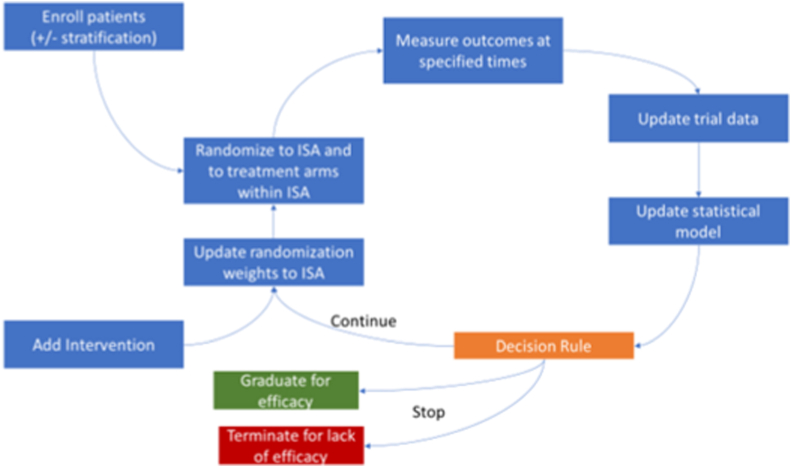
Over the past decade, autism spectrum disorder (ASD) research has blossomed, and multiple clinical trials have tested potential interventions, with varying results and no clear demonstration of efficacy. Lack of clarity concerning appropriate biological mechanisms to target and lack of sensitive, objective tools to identify subgroups and measure symptom changes have hampered the efforts to develop treatments. A platform trial for proof-of-concept studies in ASD could help address these issues. A major goal of a platform trial is to find the best treatment in the most expeditious manner, by simultaneously investigating multiple treatments, using specialized statistical tools for allocation and analysis. We describe the setup of a platform trial and perform simulations to evaluate the operating characteristics under several scenarios. We use the Autism Behavior Inventory (ABI), a psychometrically validated web-based rating scale to measure the change in ASD core and associated symptoms.
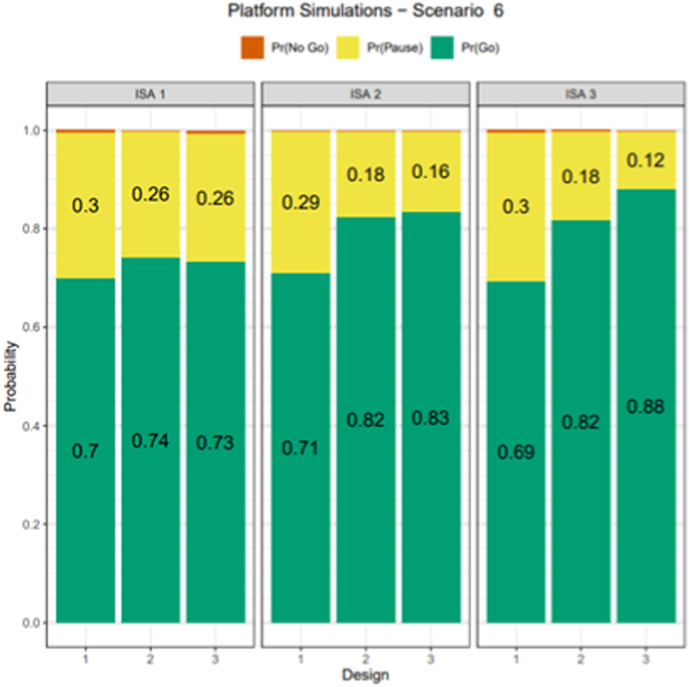
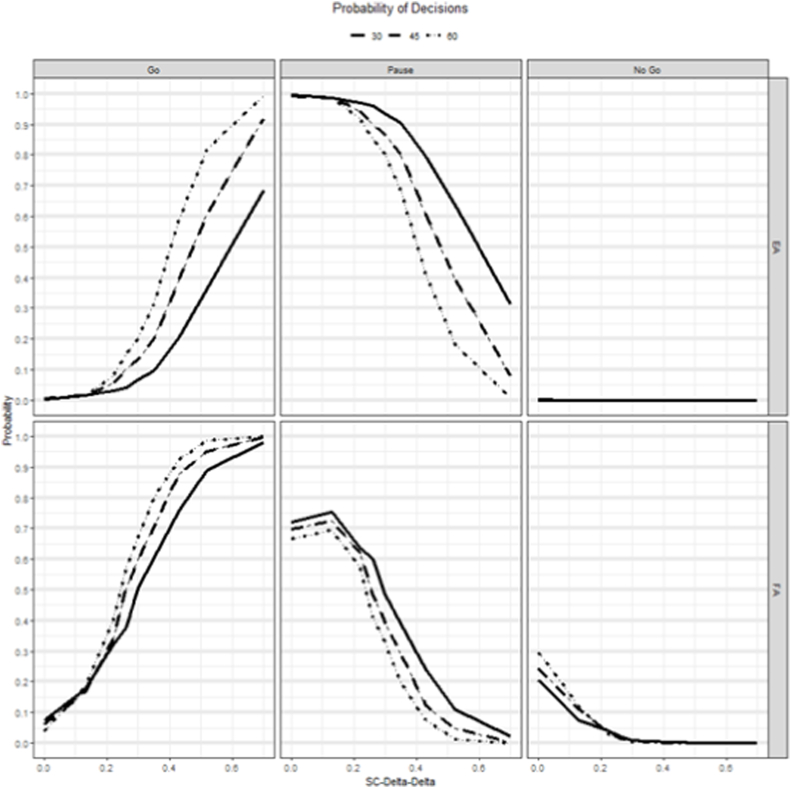
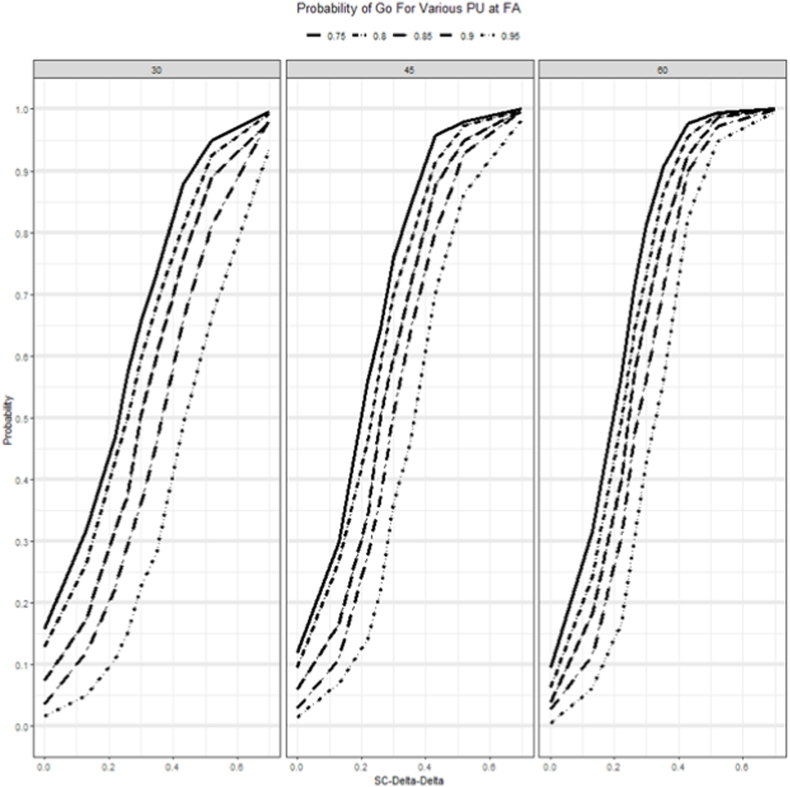
Detailed description of the setup, conduct, and decision-making rules of a platform trial are explained. Simulations of a virtual platform trial for several scenarios are performed to compare operating characteristics. The success and futility criteria for treatments are based on a Bayesian posterior probability model.
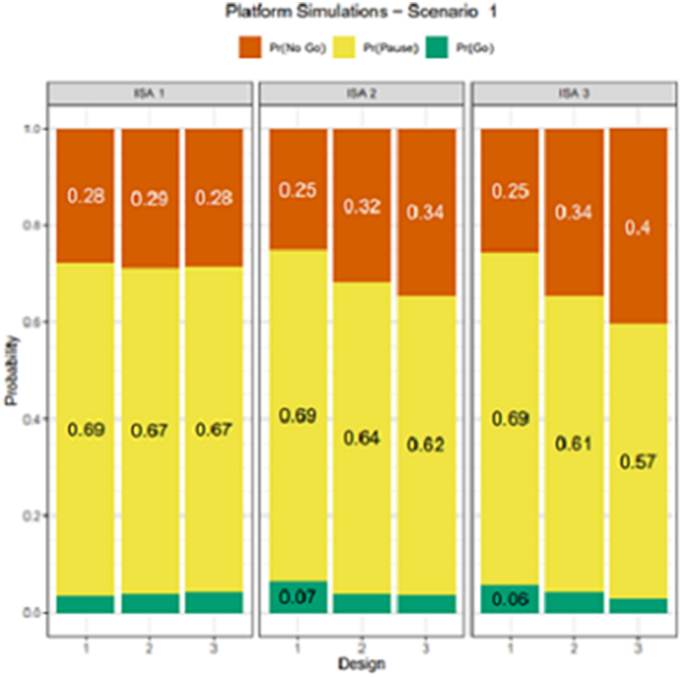
Overall, simulation results show the potential gain in terms of statistical properties especially for improved decision-making ability, while careful planning is needed due to the complexities of a platform trial.
Autism research, shaped particularly by its heterogeneity, may benefit from the platform trial approach for POC clinical studies.
在过去十年中,自闭症谱系障碍(ASD)研究蓬勃发展,多项临床试验对潜在干预措施进行了测试,结果各异,且未明确证明其疗效。缺乏关于合适的生物学靶点机制的清晰认识,以及缺乏用于识别亚组和测量症状变化的敏感、客观工具,阻碍了治疗开发的努力。一项针对ASD概念验证研究的平台试验有助于解决这些问题。平台试验的一个主要目标是通过同时研究多种治疗方法,使用专门的统计工具进行分配和分析,以最迅速的方式找到最佳治疗方法。我们描述了一个平台试验的设置,并进行模拟以评估几种情况下的操作特征。我们使用自闭症行为量表(ABI),这是一种经过心理测量验证的基于网络的评分量表,来测量ASD核心症状和相关症状的变化。
解释了平台试验的设置、实施和决策规则的详细描述。对几种情况进行了虚拟平台试验的模拟,以比较操作特征。治疗的成功和无效标准基于贝叶斯后验概率模型。
总体而言,模拟结果显示了在统计特性方面的潜在收益,特别是在提高决策能力方面,同时由于平台试验的复杂性,需要仔细规划。
自闭症研究,特别是受其异质性影响,可能会从用于概念验证临床研究的平台试验方法中受益。