Assist International, Ripon, CA, USA.
University Health Network, Toronto, Canada.
Glob Health Sci Pract. 2022 Dec 21;10(6). doi: 10.9745/GHSP-D-21-00781.
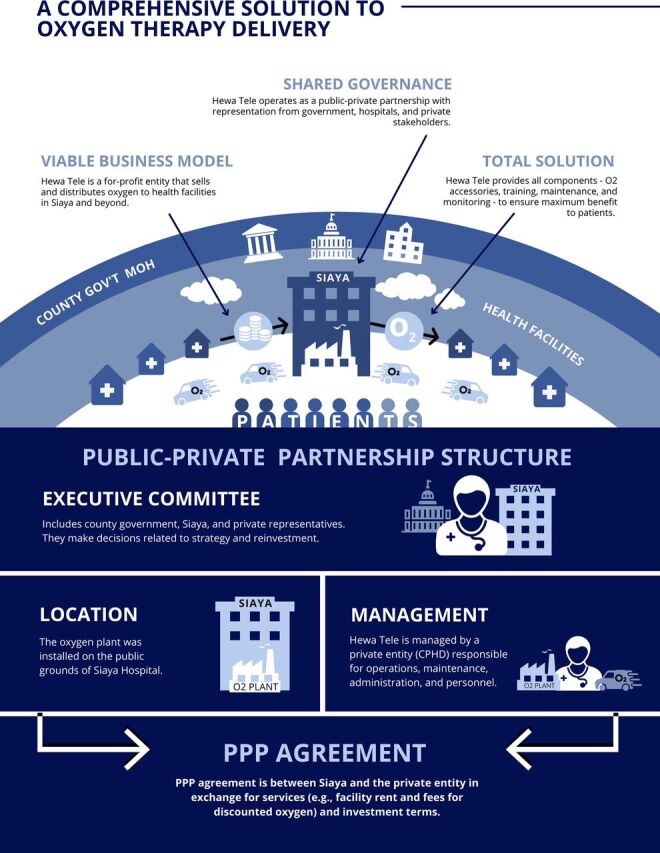
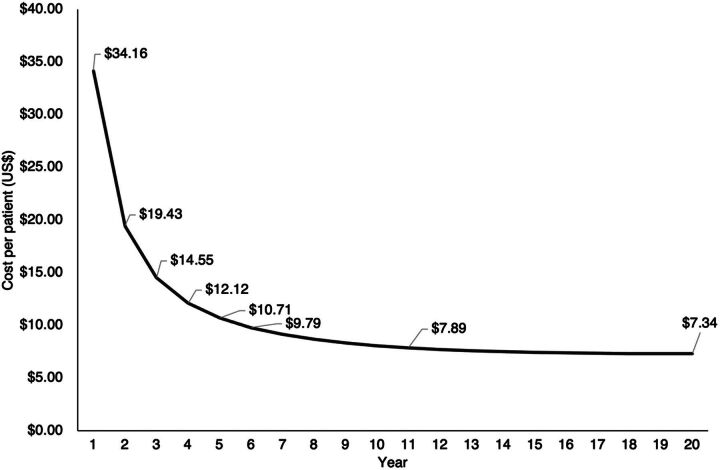
Medical oxygen is an essential treatment for life-threatening hypoxemic conditions and is commonly indicated for the clinical management of most leading causes of mortality in children aged younger than 5 years, obstetric complications at delivery, and surgical procedures. In resource-constrained settings, access to medical oxygen is unreliable due to cost, distance from production centers, undermaintained infrastructure, and a fragmented supply chain. To increase availability of medical oxygen in underserved communities, Assist International, the GE Foundation, Grand Challenges Canada, the Center for Public Health and Development (Kenya), Health Builders (Rwanda), and the National Ministries of Health and Regional Health Bureaus in Kenya, Rwanda, and Ethiopia partnered to implement a social enterprise model for the production and distribution of medical oxygen to hospitals at reduced cost. This model established pressure swing adsorption (PSA) plants at large referral hospitals and equipped them to serve as localized supply hubs to meet regional demand for medical oxygen while using revenues from cylinder distribution to subsidize ongoing costs. Since 2014, 4 PSA plants have successfully been established and sustained using a social enterprise model in Siaya, Kenya; Ruhengeri, Rwanda; and Amhara Region, Ethiopia. These plants have cumulatively delivered more than 209,708 cylinders of oxygen to a network of 183 health care facilities as of October 2022. In Ethiopia, this model costs an estimated US$7.34 per patient receiving medical oxygen over a 20-year time horizon. Altogether, this business model has enabled the sustainable provision of medical oxygen to communities with populations totaling more than 33 million people, including an estimated 5 million children aged younger than 5 years.
医用氧气是治疗危及生命的低氧血症的重要手段,通常用于治疗 5 岁以下儿童的大多数主要死亡原因、分娩时的产科并发症和手术。在资源有限的环境中,由于成本、离生产中心的距离、基础设施维护不善以及供应链分散,医用氧气的获取不可靠。为了增加服务不足社区的医用氧气供应,Assist International、GE 基金会、加拿大大挑战、肯尼亚公共卫生与发展中心、卢旺达健康建设者以及肯尼亚、卢旺达和埃塞俄比亚的国家卫生部和地区卫生局合作,实施了一种生产和分配医用氧气的社会企业模式,以降低成本。该模式在大型转诊医院建立了变压吸附(PSA)工厂,并为其配备设备,以作为本地化供应中心,满足区域对医用氧气的需求,同时利用气瓶分配收入来补贴持续成本。自 2014 年以来,肯尼亚 Siaya、卢旺达 Ruhengeri 和埃塞俄比亚阿姆哈拉地区已成功建立和维持了 4 个采用社会企业模式的 PSA 工厂。截至 2022 年 10 月,这些工厂累计向 183 个医疗保健设施网络交付了超过 209708 瓶氧气。在埃塞俄比亚,这种模式在 20 年的时间内,每个接受医用氧气治疗的患者的成本估计为 7.34 美元。总的来说,这种商业模式使医用氧气能够可持续地提供给总人口超过 3300 万人的社区,其中估计有 500 万 5 岁以下的儿童。