Muriithi Francis G, Banke-Thomas Aduragbemi, Gakuo Ruth, Pope Kia, Coomarasamy Arri, Gallos Ioannis D
WHO Collaborating Centre for Global Women's Health, Institute of Metabolism and Systems Research, University of Birmingham, Edgbaston, Birmingham, United Kingdom.
School of Human Sciences, University of Greenwich, Old Royal Naval College, Park Row, Greenwich, London, United Kingdom.
PLOS Glob Public Health. 2022 Jul 20;2(7):e0000385. doi: 10.1371/journal.pgph.0000385. eCollection 2022.
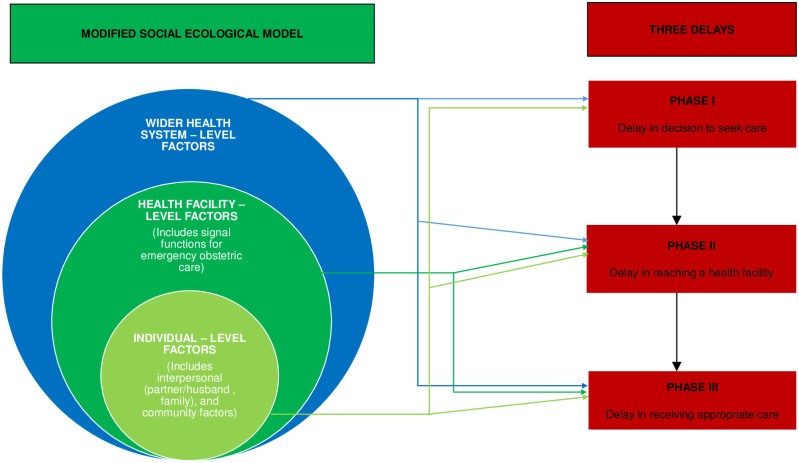
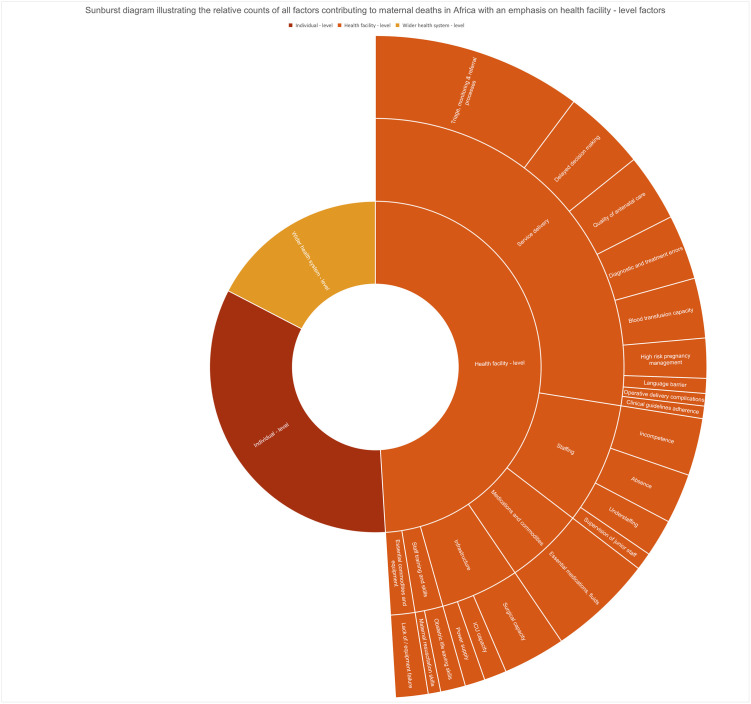
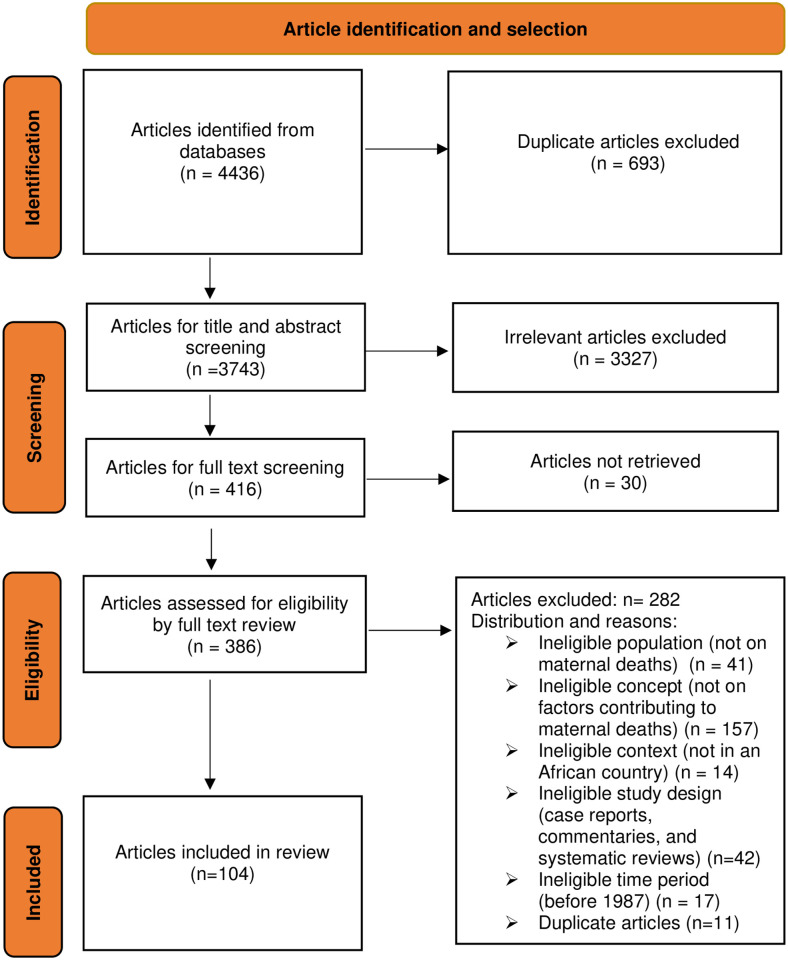
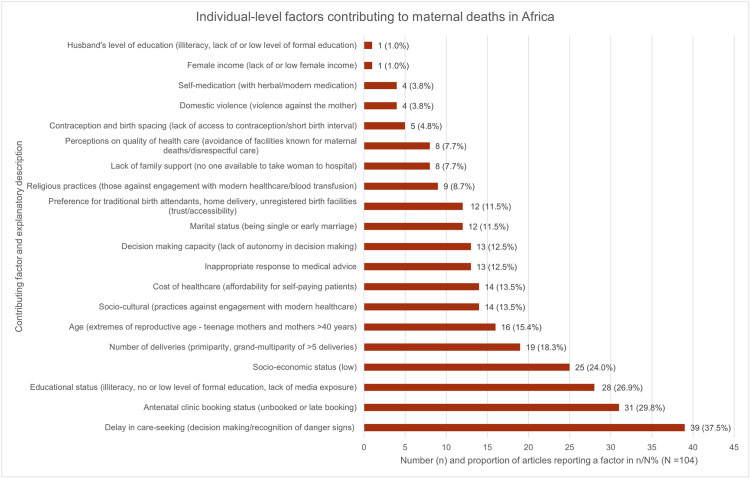
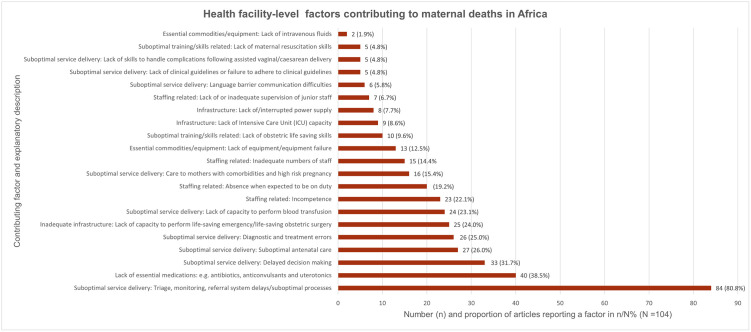
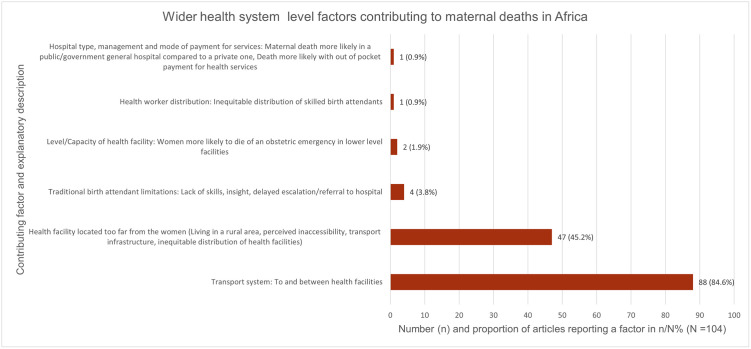
The number of women dying during pregnancy and after childbirth remains unacceptably high, with African countries showing the slowest decline. The leading causes of maternal deaths in Africa are preventable direct obstetric causes such as haemorrhage, infection, hypertension, unsafe abortion, and obstructed labour. There is an information gap on factors contributing to maternal deaths in Africa. Our objective was to identify these contributing factors and assess the frequency of their reporting in published literature. We followed the Arksey and O'Malley methodological framework for scoping reviews. We searched six electronic bibliographic databases: MEDLINE, SCOPUS, African Index Medicus, African Journals Online (AJOL), French humanities and social sciences databases, and Web of Science. We included articles published between 1987 and 2021 without language restriction. Our conceptual framework was informed by a combination of the socio-ecological model, the three delays conceptual framework for analysing the determinants of maternal mortality and the signal functions of emergency obstetric care. We included 104 articles from 27 African countries. The most frequently reported contributory factors by level were: (1) Individual-level: Delay in deciding to seek help and in recognition of danger signs (37.5% of articles), (2) Health facility-level: Suboptimal service delivery relating to triage, monitoring, and referral (80.8% of articles) and (3) Wider health system-level: Transport to and between health facilities (84.6% of articles). Our findings indicate that health facility-level factors were the most frequently reported contributing factors to maternal deaths in Africa. There is a lack of data from some African countries, especially those countries with armed conflict currently or in the recent past. Information gaps exist in the following areas: Statistical significance of each contributing factor and whether contributing factors alone adequately explain the variations in maternal mortality ratios (MMR) seen between countries and at sub-national levels.
妊娠期间及分娩后死亡的女性数量仍然高得令人无法接受,非洲国家下降速度最慢。非洲孕产妇死亡的主要原因是可预防的直接产科原因,如出血、感染、高血压、不安全堕胎和难产。关于非洲孕产妇死亡的影响因素存在信息缺口。我们的目标是确定这些影响因素,并评估其在已发表文献中的报道频率。我们遵循了阿克斯和奥马利的范围综述方法框架。我们搜索了六个电子文献数据库:医学文献数据库(MEDLINE)、科学网(SCOPUS)、非洲医学索引、非洲在线期刊(AJOL)、法国人文社会科学数据库和科学引文索引(Web of Science)。我们纳入了1987年至2021年发表的文章,无语言限制。我们的概念框架是由社会生态模型、用于分析孕产妇死亡率决定因素的三个延误概念框架以及急诊产科护理的信号功能相结合形成的。我们纳入了来自27个非洲国家的104篇文章。按层面最常报道的影响因素为:(1)个人层面:决定寻求帮助和识别危险信号的延误(占文章的37.5%),(2)卫生设施层面:与分诊、监测和转诊相关的服务提供欠佳(占文章的80.8%),以及(3)更广泛的卫生系统层面:前往卫生设施及在不同卫生设施之间的交通(占文章的84.6%)。我们的研究结果表明,卫生设施层面的因素是非洲孕产妇死亡最常报道的影响因素。一些非洲国家缺乏数据,尤其是那些目前或近期存在武装冲突的国家。在以下方面存在信息缺口:每个影响因素的统计学意义,以及这些影响因素本身是否足以解释各国及国家以下层面孕产妇死亡率(MMR)的差异。