Tewabe Tilahun, Kamal Md Moustafa, Alam Khorshed, Quazi Ali, Talukder Majharul, Hossain Syeda Z
College of Medicine and Health Science, Bahir Dar University, Bahir Dar, Ethiopia.
Faculty of Medicine and Health, The University of Sydney, Sydney, Australia.
PLOS Glob Public Health. 2023 Jan 24;3(1):e0000586. doi: 10.1371/journal.pgph.0000586. eCollection 2023.
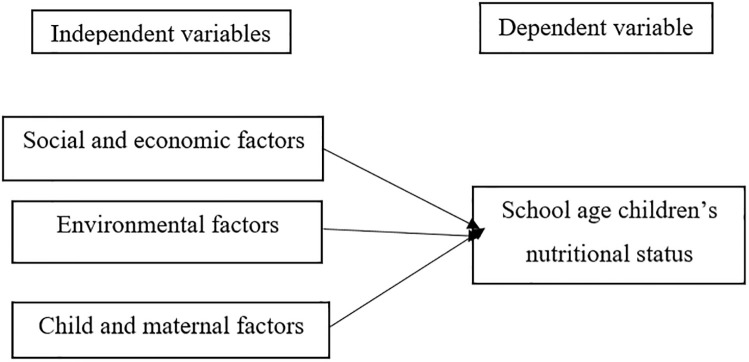
Prior research identified malnutrition as one of the most common causes of morbidity and mortality among children globally. Furthermore, research revealed that over two thirds of deaths associated with inappropriate feeding practices occurred during the early years of life. Improper feeding practices impact a child's health in many different ways. However, research on the possible factors driving underweight, wasting, and stunting among school aged children in developing countries is limited, hence warrant further attention. Against this backdrop, this research strives to identify and assess the determinants of underweight, wasting and stunting among school aged children of a developing country-Ethiopia. A community based cross-sectional study was conducted from April 1, 2018 to June 15, 2018 in Merawi town, Ethiopia. An interviewer-administered questionnaire was used to collect data from a sample of 422 children. Binary logistic regression technique was performed to examine the effect of each selected variable on the outcome measure. The prevalence of being underweight, wasting and stunting was found to be 5.7%, 9.8%, 10.4%, respectively. The age of the child [adjusted odds ratio (AOR) = 12.930 (2.350, 71.157)] and the number of children [AOR = 8.155 (1.312, 50.677)] were emerged as the key determinants for underweight, and the gender of the child was significantly associated with wasting [AOR = 0.455 (0.224, 0.927)]. Finally, the age of the child [AOR = 12.369 (2.522, 60.656)] was found to predict the risk of stunting. This study revealed the age, number of children and gender of the child to have a significant association with malnutrition. The findings of this research suggest that in improving the feeding practices of young school-aged children, special attention should be paid to female children and those coming from relatively large families.
先前的研究表明,营养不良是全球儿童发病和死亡的最常见原因之一。此外,研究显示,超过三分之二与不当喂养习惯相关的死亡发生在儿童早期。不当的喂养习惯会以多种不同方式影响儿童健康。然而,关于发展中国家学龄儿童体重不足、消瘦和发育迟缓的可能驱动因素的研究有限,因此值得进一步关注。在此背景下,本研究致力于识别和评估一个发展中国家——埃塞俄比亚学龄儿童体重不足、消瘦和发育迟缓的决定因素。2018年4月1日至2018年6月15日在埃塞俄比亚梅拉维镇开展了一项基于社区的横断面研究。采用访谈式问卷从422名儿童样本中收集数据。运用二元逻辑回归技术来检验每个选定变量对结果指标的影响。结果发现,体重不足、消瘦和发育迟缓的患病率分别为5.7%、9.8%、10.4%。儿童年龄[调整优势比(AOR)= 12.930(2.350,71.157)]和孩子数量[AOR = 8.155(1.312,50.677)]是体重不足的关键决定因素,儿童性别与消瘦显著相关[AOR = 0.455(0.224,0.927)]。最后,发现儿童年龄[AOR = 12.369(2.522,60.656)]可预测发育迟缓风险。本研究揭示了儿童年龄、孩子数量和性别与营养不良之间存在显著关联。本研究结果表明,在改善低龄学龄儿童的喂养习惯时,应特别关注女童和来自大家庭的儿童。