Makerere University School of Public Health New Mulago Hospital Complex, P.O. Box 7072, Mulago Hill Road, Kampala, Uganda.
Makerere University School of Gender and Women studies, P.O. Box 7062, Makerere Hill, Kampala, Uganda.
BMC Womens Health. 2023 Mar 25;23(1):130. doi: 10.1186/s12905-023-02274-7.
Uganda has registered an increased investment in family planning (FP) programs, which has contributed to improvement in knowledge of modern contraceptive methods being nearly universal. However, this has not matched the uptake of modern methods or the reduction in the unmet need for FP. This may be explained by the different influences which include health workers, family, and friends. Due to the limited uptake of contraceptive methods, a program on improving awareness, access to, and uptake of modern contraceptives is being implemented in selected regions in Uganda. We, therefore, conducted a formative study to determine the influences on contraceptive uptake at the onset of this program.
Using a qualitative study design, we conducted thirty-two focus group discussions and twenty-one in-depth interviews involving men and women of reproductive age. We also carried out twenty-one key informant interviews with people involved in FP service delivery. Data was collected in four districts where implementation of the program was to take place. Audio recorders were used to collect data and tools were translated into local languages. A codebook was developed, and transcripts were coded in vivo using the computer software Atlas-ti version 7 before analysis. Ethical clearance was obtained from institutional review boards and informed consent was sought from all participants.
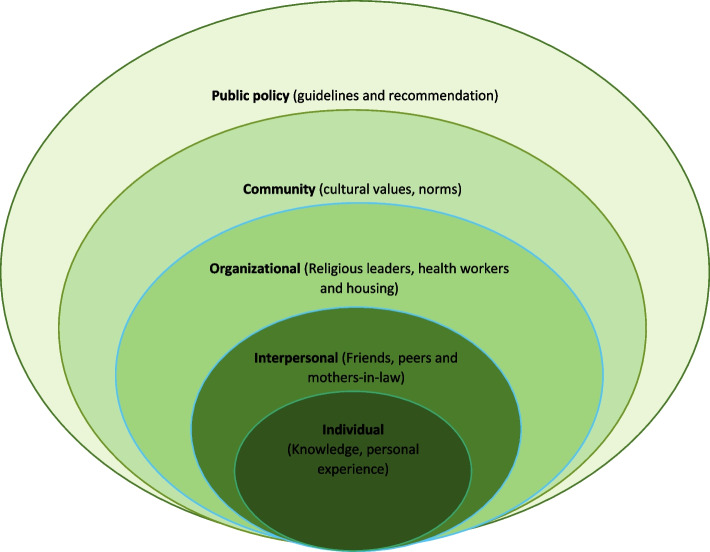
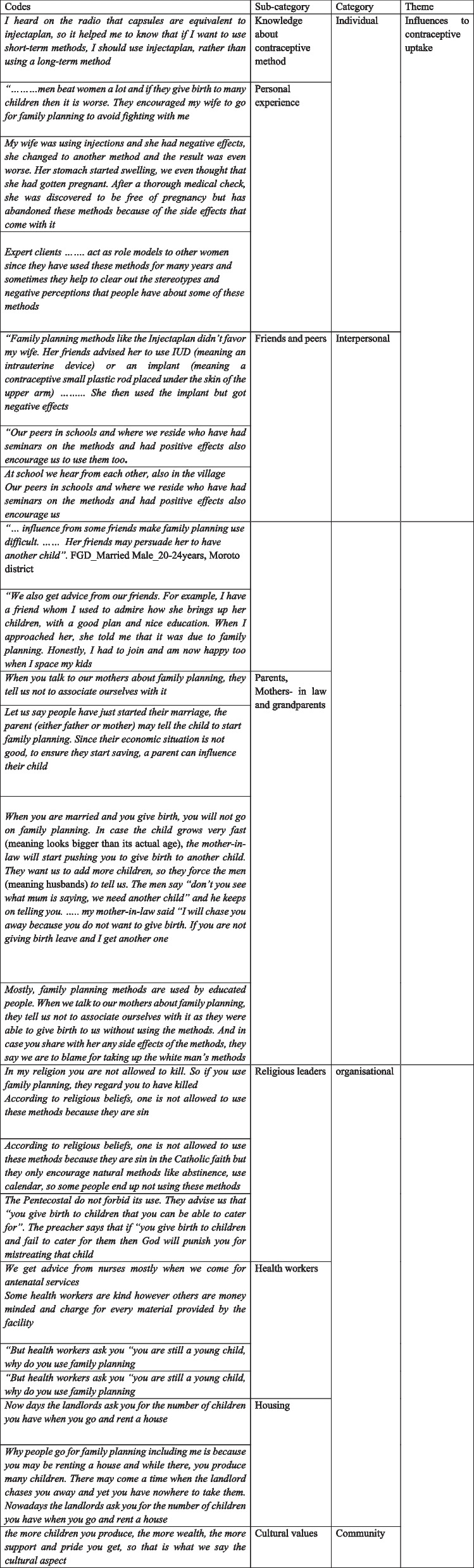
From the study, most married people mentioned health workers as their main influence while adolescents reported their peers and friends. Religious leaders and mothers-in-law were reported to mainly discourage people from taking up modern contraceptive methods. The cultural value attached to having many children influenced the contraceptive use decision among people in rural settings. Other influences included a person's experience and housing.
Health workers, religious leaders, and mothers determine the uptake of contraceptive services. The study recommends the consideration of the role of these influences in the design of FP program interventions as well as more involvement of health workers in sensitization of communities about contraceptive methods.
乌干达在计划生育(FP)项目上的投资有所增加,这有助于提高现代避孕方法的知识普及率接近普及。然而,这并没有匹配现代方法的采用率或未满足的 FP 需求的减少。这可能是由于不同的影响因素,包括卫生工作者、家庭和朋友。由于避孕方法的采用率有限,乌干达正在选定地区实施一项提高对现代避孕药具的认识、获取和采用率的方案。因此,我们进行了一项形成性研究,以确定在该方案启动时对避孕采用的影响因素。
我们采用定性研究设计,进行了 32 次焦点小组讨论和 21 次深度访谈,涉及育龄男女。我们还与参与 FP 服务提供的人员进行了 21 次关键知情人访谈。数据收集在四个将实施该方案的地区进行。使用录音机收集数据,并将工具翻译成当地语言。开发了一个代码本,并使用计算机软件 Atlas-ti 版本 7 在体内对转录本进行编码,然后进行分析。从研究中,大多数已婚人士提到卫生工作者是他们的主要影响因素,而青少年则提到了他们的同龄人朋友。宗教领袖和婆婆被报道主要劝阻人们采用现代避孕方法。农村地区人们对生育多子女的文化价值观影响了他们对避孕的使用决定。其他影响因素包括一个人的经验和住房。
卫生工作者、宗教领袖和母亲决定了避孕服务的采用率。研究建议在设计 FP 项目干预措施时考虑这些影响因素的作用,并让更多的卫生工作者参与社区对避孕方法的宣传。