Xian Peiqi, Yang Yuan, Xiong Chuwen, Guo Zhibin, Alam Intikhab, He Zihang, Zhang Yakun, Cai Zhandong, Nian Hai
The State Key Laboratory for Conservation and Utilization of Subtropical Agro-Bioresources, South China Agricultural University, Guangzhou, China.
Guangdong Laboratory for Lingnan Modern Agriculture, Guangzhou, China.
Front Plant Sci. 2023 Mar 9;14:1133892. doi: 10.3389/fpls.2023.1133892. eCollection 2023.
Cadmium (Cd) stress is a significant threat to soybean production, and enhancing Cd tolerance in soybean is the focus of this study. The WRKY transcription factor family is associated with abiotic stress response processes. In this study, we aimed to identify a Cd-responsive WRKY transcription factor from soybean and investigate its potential for enhancing Cd tolerance in soybean.
The characterization of involved analyzing its expression pattern, subcellular localization, and transcriptional activity. To assess the impact of , transgenic Arabidopsis and soybean plants were generated and examined for their tolerance to Cd and Cd content in shoots. Additionally, transgenic soybean plants were evaluated for Cd translocation and various physiological stress indicators. RNA sequencing was performed to identify the potential biological pathways regulated by GmWRKY172.
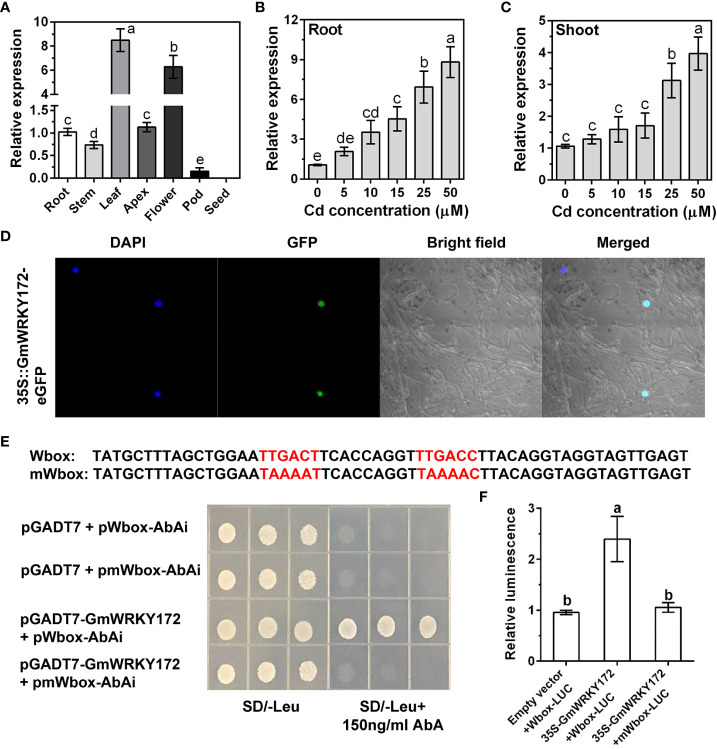
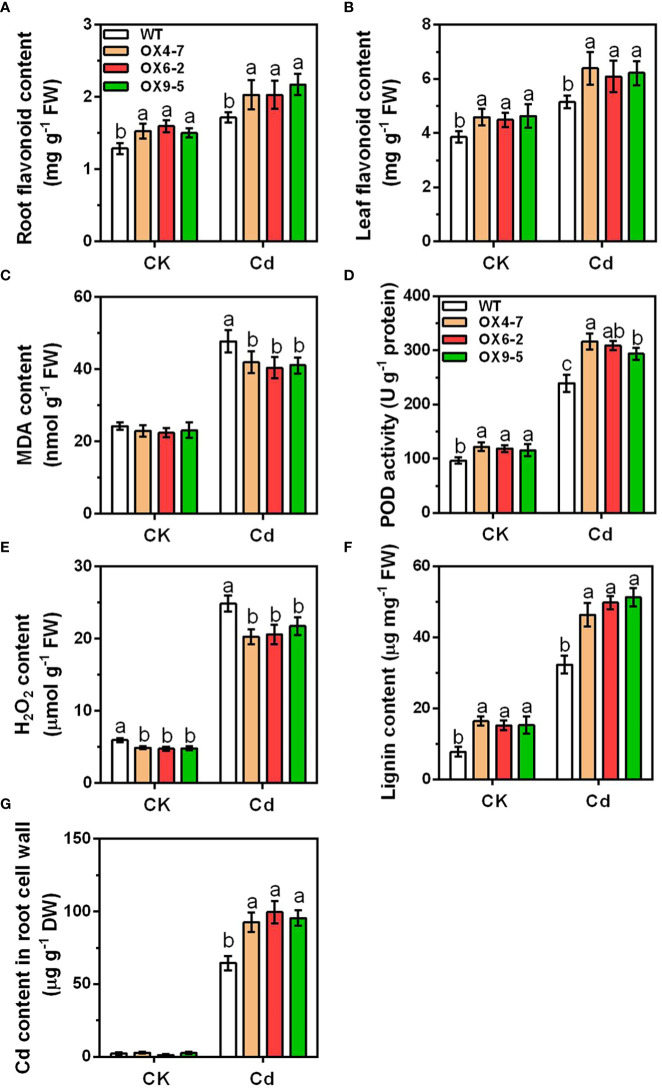
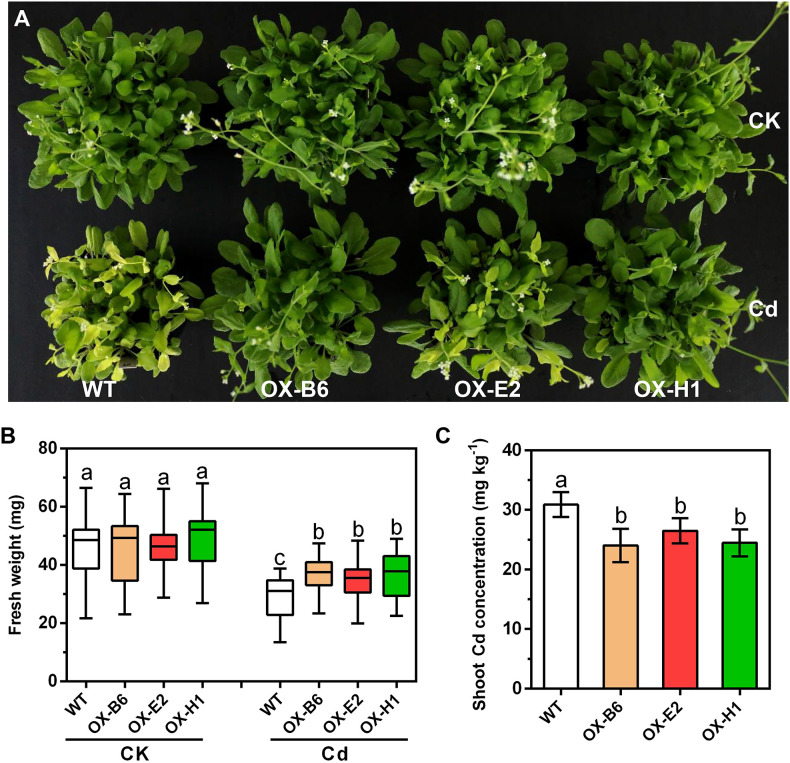
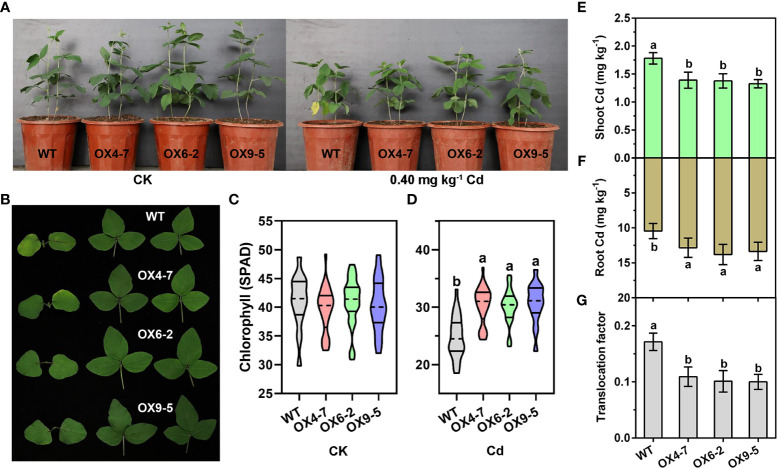
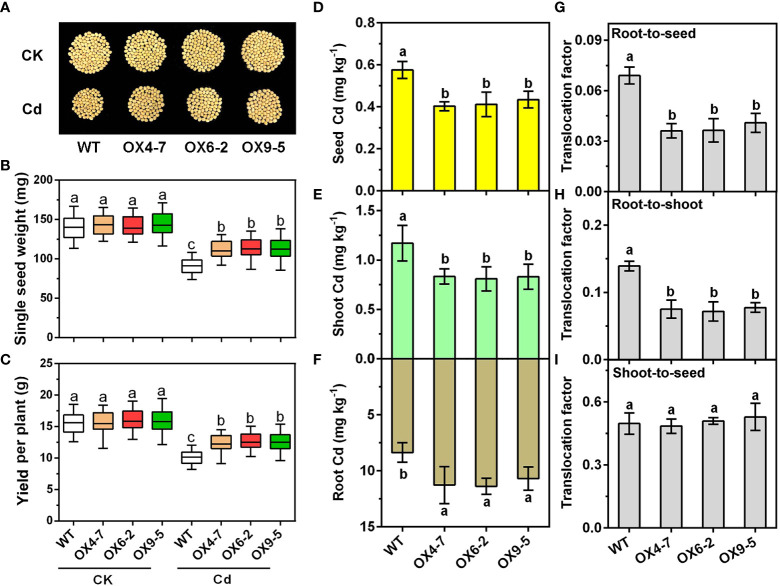
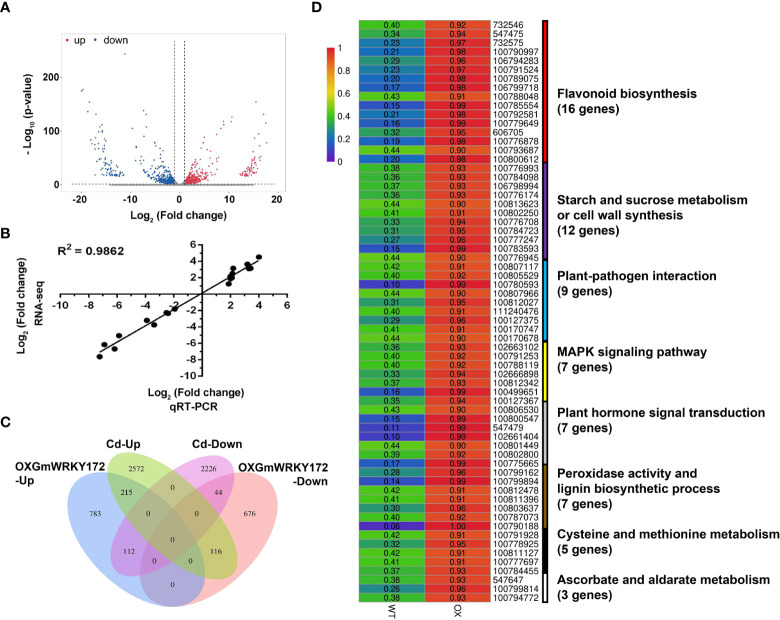
was significantly upregulated by Cd stress, highly expressed in leaves and flowers, and localized to the nucleus with transcriptional activity. Transgenic plants overexpressing showed enhanced Cd tolerance and reduced Cd content in shoots compared to WT. Lower Cd translocation from roots to shoots and seeds was also observed in transgenic soybean. Under Cd stress, transgenic soybean accumulated less malondialdehyde (MDA) and hydrogen peroxide (HO) than WT plants, with higher flavonoid and lignin contents, and peroxidase (POD) activity. RNA sequencing analysis revealed that many stress-related pathways were regulated by GmWRKY172 in transgenic soybean, including flavonoid biosynthesis, cell wall synthesis, and peroxidase activity.
Our findings demonstrated that GmWRKY172 enhances Cd tolerance and reduces seed Cd accumulation in soybean by regulating multiple stress-related pathways, and could be a promising candidate for breeding Cd-tolerant and low Cd soybean varieties.
镉(Cd)胁迫是大豆生产的重大威胁,提高大豆对镉的耐受性是本研究的重点。WRKY转录因子家族与非生物胁迫响应过程相关。在本研究中,我们旨在从大豆中鉴定一种镉响应性WRKY转录因子,并研究其增强大豆对镉耐受性的潜力。
对其进行的表征包括分析其表达模式、亚细胞定位和转录活性。为了评估其影响,构建了转基因拟南芥和大豆植株,并检测它们对镉的耐受性以及地上部的镉含量。此外,还对转基因大豆植株的镉转运和各种生理胁迫指标进行了评估。进行RNA测序以鉴定受GmWRKY172调控的潜在生物学途径。
GmWRKY172在镉胁迫下显著上调,在叶和花中高表达,定位于细胞核且具有转录活性。与野生型相比,过表达GmWRKY172的转基因植株表现出增强的镉耐受性,地上部镉含量降低。在转基因大豆中还观察到从根到地上部和种子的镉转运较低。在镉胁迫下,转基因大豆积累的丙二醛(MDA)和过氧化氢(H₂O₂)比野生型植株少,黄酮类和木质素含量更高,过氧化物酶(POD)活性更高。RNA测序分析表明,转基因大豆中许多与胁迫相关的途径受GmWRKY172调控,包括黄酮类生物合成、细胞壁合成和过氧化物酶活性。
我们的研究结果表明,GmWRKY172通过调控多个与胁迫相关的途径增强了大豆对镉的耐受性并减少了种子中的镉积累,可能是培育耐镉和低镉大豆品种的有前途的候选基因。