David Frank, Herault Gwen, Ameziane Nadia, Meziane Tarik, Badou Aïcha, Hubas Cédric
Direction Générale Déléguée à la Recherche, l'Expertise, la Valorisation et l'Enseignement (DGD REVE), Muséum National d'Histoire Naturelle (MNHN), Station Marine de Concarneau, 29900 Concarneau, France.
Institut de Systématique, Évolution, Biodiversité (UMR 7205 ISYEB), MNHN, Sorbonne Université, CNRS, EPHE, UA, Station Marine de Concarneau, Quai de la Croix, 29900 Concarneau, France.
Mar Biol. 2023;170(4):47. doi: 10.1007/s00227-023-04198-0. Epub 2023 Mar 18.
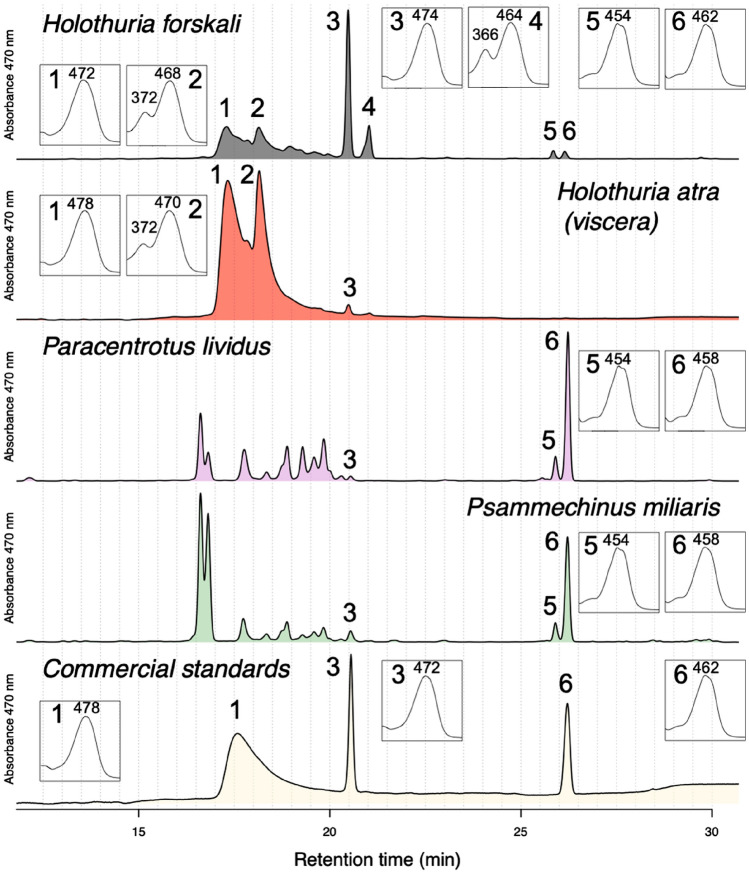
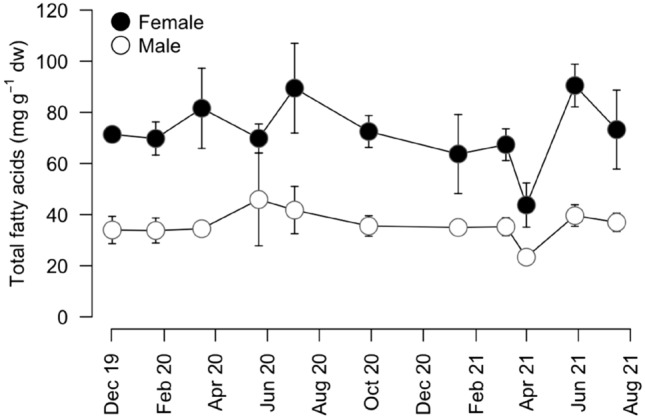
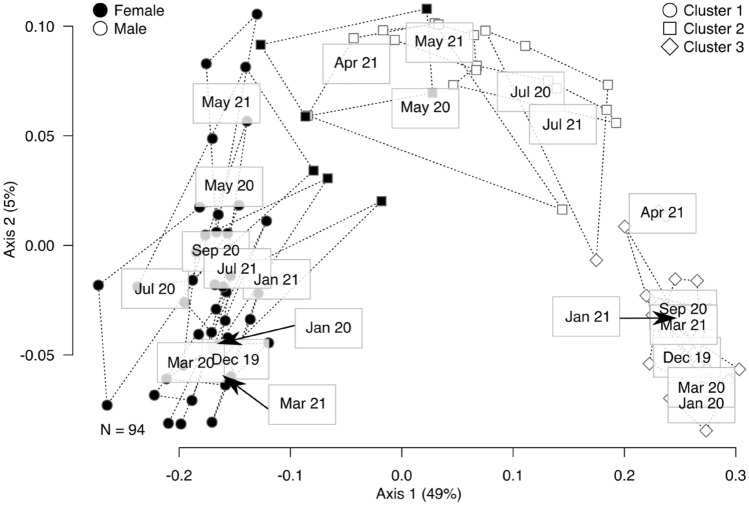
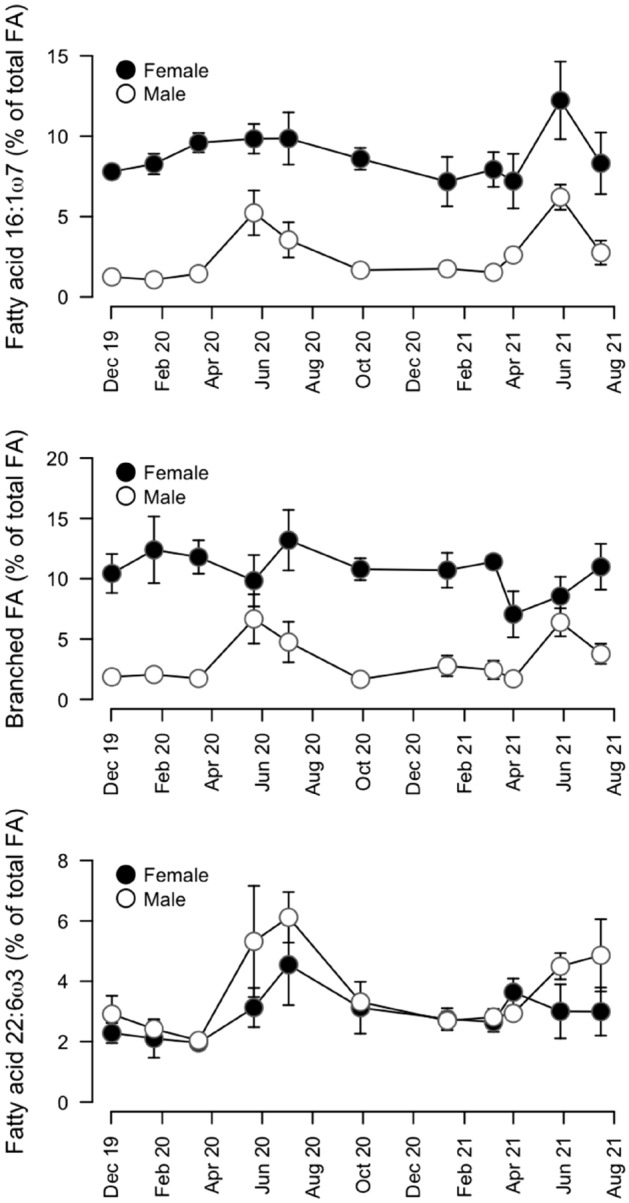
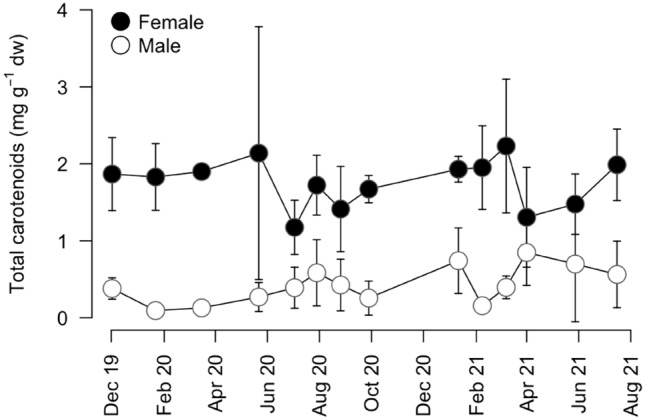
Fatty acids and carotenoids are known to have roles in embryonic and larval development of sea cucumbers, but their changes in gonads during gametogenesis have not yet been studied. To improve our knowledge of the reproductive cycle of sea cucumbers in an aquaculture perspective, we collected 6-11 individuals of the species Delle Chiaje, 1823 approximately every 2 months from December 2019 to July 2021 east of the Glenan Islands (Brittany - France; 47.710°N, 3.948°W) at a depth of 8-12 m. Our results show that soon after spawning, sea cucumbers take advantage of an increased food availability in spring to rapidly and opportunistically accumulate nutrients in the form of lipids in their gonads (from May to July) and then slowly elongate, desaturate and probably rearrange fatty acids within lipid classes for the next reproductive season according to the specific requirements of both sexes. In contrast, acquisition of carotenoids occurs synchronously with gonads filling and/or through the reabsorption of spent tubules (T5), thus revealing little seasonal variations at the scale of the entire gonad in terms of relative abundance in both sexes. All results suggest that gonads are fully replenished with nutrients by October and that broodstock for induced reproduction could be captured at this moment and kept until the production of larvae is required. Maintaining broodstock for consecutive years would probably be a higher level challenge as the dynamics of tubule recruitment are not fully understood and seem to last for several years.
The online version contains supplementary material available at 10.1007/s00227-023-04198-0.
已知脂肪酸和类胡萝卜素在海参的胚胎和幼体发育中发挥作用,但它们在配子发生过程中性腺的变化尚未得到研究。为了从水产养殖角度增进我们对海参繁殖周期的了解,我们于2019年12月至2021年7月,大约每两个月在格莱南群岛以东(法国布列塔尼;北纬47.710°,西经3.948°)8 - 12米深处采集了6 - 11只1823年戴尔·基亚耶种的海参。我们的研究结果表明,产卵后不久,海参利用春季食物供应增加的机会,迅速且 opportunistically 在其性腺中以脂质形式积累营养物质(从5月到7月),然后根据两性的特定需求,在脂质类别中缓慢延长、去饱和并可能重新排列脂肪酸,为下一个繁殖季节做准备。相比之下,类胡萝卜素的获取与性腺充盈同步发生和/或通过已耗尽小管(T5)的重吸收,因此就两性的相对丰度而言,在整个性腺尺度上几乎没有季节性变化。所有结果表明,到10月性腺已完全补充营养,此时可以捕获用于诱导繁殖的亲体并保存,直到需要生产幼体。由于小管补充的动态尚未完全了解且似乎持续数年,连续多年维持亲体可能是一个更高层次的挑战。
在线版本包含可在10.1007/s00227 - 023 - 04198 - 0获取的补充材料。