School of Public Health, Guangdong Medical University, Dongguan, Guangdong Province, China.
Pension Industry Research Institute, Guangdong Medical University, Dongguan, Guangdong Province, China.
Sci Rep. 2023 Mar 27;13(1):4974. doi: 10.1038/s41598-023-31430-0.
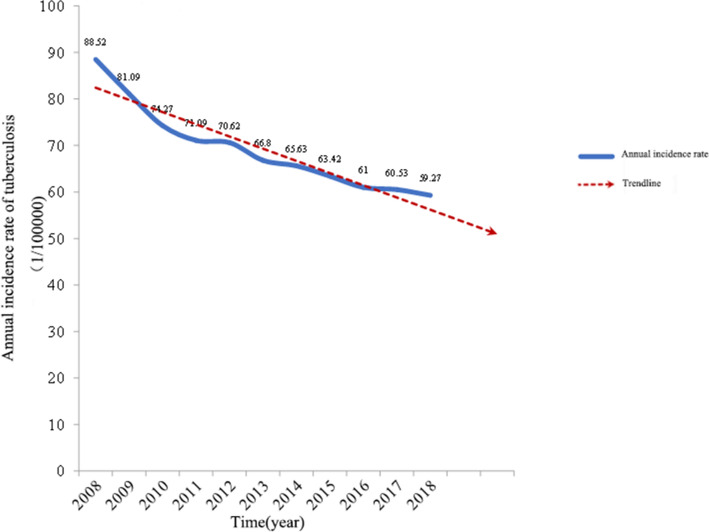
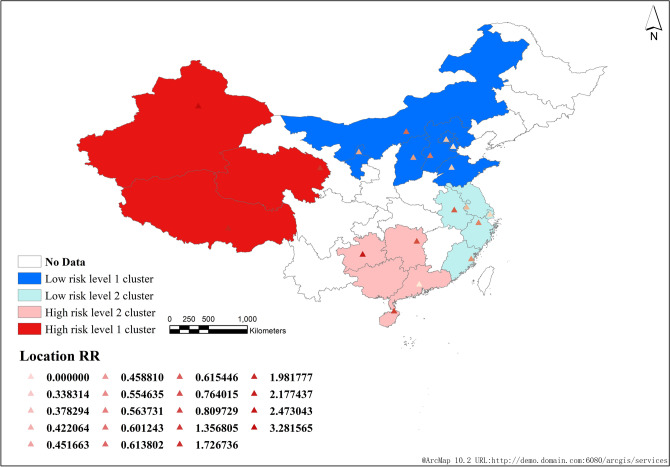
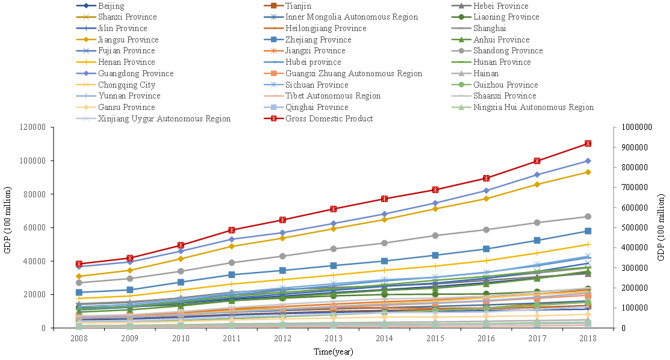
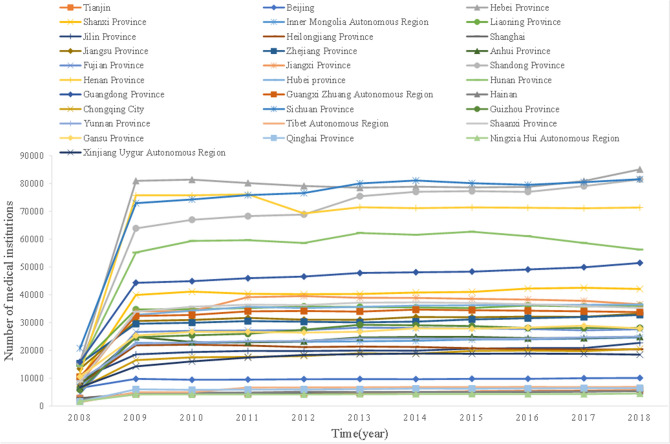
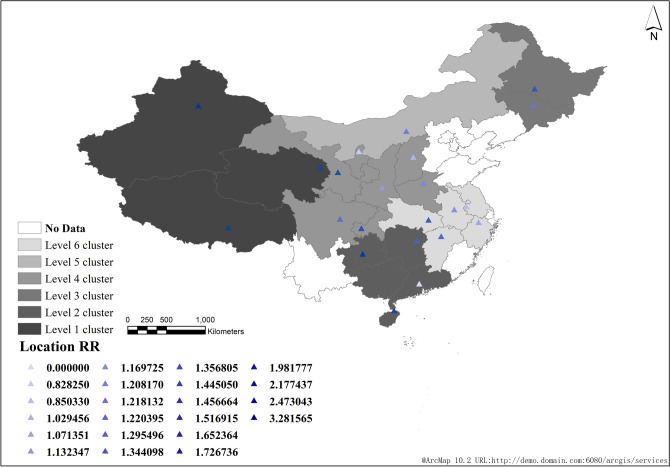
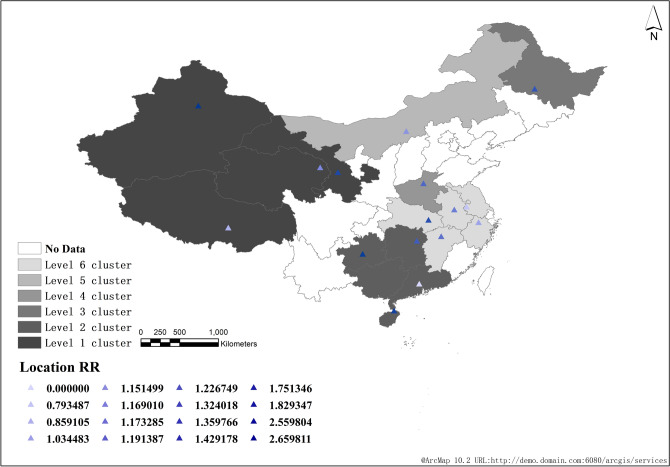
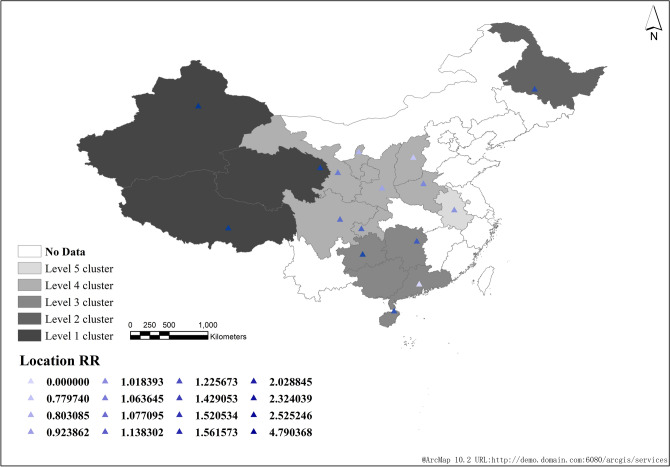
Through spatial-temporal scanning statistics, the spatial-temporal dynamic distribution of pulmonary tuberculosis incidence in 31 provinces and autonomous regions of China from 2008 to 2018 is obtained, and the related factors of spatial-temporal aggregation of tuberculosis in China are analyzed to provide strong scientific basis and data support for the prevention and control of pulmonary tuberculosis. This is a retrospective study, using spatial epidemiological methods to reveal the spatial-temporal clustering distribution characteristics of China's tuberculosis epidemic from 2008 to 2018, in which cases data comes from the China Center for Disease Control and prevention. Office Excel is used for general statistical description, and the single factor correlation analysis adopts χ Test (or trend χ Inspection). Retrospective discrete Poisson distribution space time scanning statistics of SaTScan 9.6 software are used to analyze the space time dynamic distribution of tuberculosis incidence in 31 provinces, cities and autonomous regions in China from 2008 to 2018. ArcGIS 10.2 software is used to visualize the results. The global spatial autocorrelation analysis adopts Moran's I of ArcGIS Map(Monte Carlo randomization simulation times of 999) is used to analyze high-risk areas, low-risk areas and high-low risk areas. From 2008 to 2018, 10,295,212 cases of pulmonary tuberculosis were reported in China, with an average annual incidence rate of 69.29/100,000 (95% CI: (69.29 ± 9.16)/100,000). The annual GDP (gross domestic product) of each province and city showed an upward trend year by year, and the number of annual medical institutions in each province and city showed a sharp increase in 2009, and then tended to be stable; From 2008 to 2018, the national spatiotemporal scanning statistics scanned a total of 6 clusters, including 23 provinces and cities. The national high-low spatiotemporal scanning statistics of the number of pulmonary tuberculosis cases scanned a total of 2 high-risk and low-risk clusters. The high-risk cluster included 8 provinces and cities, and the low-risk cluster included 12 provinces and cities. The global autocorrelation Moran's I index of the incidence rate of pulmonary tuberculosis in all provinces and cities was greater than the expected value (E (I) = -0.0333); The correlation analysis between the average annual GDP and the number of pulmonary tuberculosis cases in each province and city from 2008 to 2018 was statistically significant. From 2008 to 2018, the spatial and temporal scanning and statistical scanning areas of tuberculosis incidence in China were mainly concentrated in the northwest and southern regions of China. There is an obvious positive spatial correlation between the annual GDP distribution of each province and city, and the aggregation degree of the development level of each province and city is increasing year by year. There is a correlation between the average annual GDP of each province and the number of tuberculosis cases in the cluster area. There is no correlation between the number of medical institutions set up in each province and city and the number of pulmonary tuberculosis cases.
通过时空扫描统计,获得了 2008 年至 2018 年中国 31 个省、自治区和直辖市肺结核发病率的时空动态分布,并分析了中国结核病时空聚集的相关因素,为肺结核的预防和控制提供了有力的科学依据和数据支持。这是一项回顾性研究,采用空间流行病学方法揭示了 2008 年至 2018 年中国结核病疫情的时空聚集分布特征,其中病例数据来自中国疾病预防控制中心。使用 Office Excel 进行一般统计描述,单因素相关性分析采用 χ 检验(或趋势 χ 检验)。使用 SaTScan 9.6 软件进行回顾性离散泊松分布时空扫描统计,分析 2008 年至 2018 年中国 31 个省、市、自治区肺结核发病率的时空动态分布。使用 ArcGIS 10.2 软件可视化结果。采用 ArcGIS Map 的 Moran's I 的全局空间自相关分析(蒙特卡罗随机化模拟次数为 999)来分析高风险区、低风险区和高低风险区。2008 年至 2018 年,中国共报告肺结核病例 1029.5212 万例,年均发病率为 69.29/10 万(95%CI:(69.29±9.16)/10 万)。各省、市、区的年度国内生产总值(GDP)呈逐年上升趋势,各年的医疗机构数量在 2009 年大幅增加,然后趋于稳定;2008 年至 2018 年,全国时空扫描统计共扫描出 6 个聚集区,包括 23 个省、市。全国肺结核病例高低时空扫描统计共扫描出 2 个高风险和低风险聚集区。高风险集群包括 8 个省、市,低风险集群包括 12 个省、市。全国各省市肺结核发病率的全局自相关 Moran's I 指数大于预期值(E(I)=−0.0333);2008 年至 2018 年,各省、市、区 GDP 与肺结核病例数的相关分析具有统计学意义。2008 年至 2018 年,中国肺结核发病率的时空扫描和统计扫描区主要集中在中国的西北部和南部地区。各省、市、区 GDP 分布存在明显的正空间相关,各省、市、区发展水平的聚集程度逐年增加。各省、市、区的 GDP 年度平均值与结核病病例的聚集区呈正相关。各省、市、区医疗机构数量的设置与肺结核病例数无相关性。