Department of Ophthalmology, Otorhinolaryngology, and Head and Neck Surgery, Ribeirão Preto Medical School, University of São Paulo, Av. Bandeirantes, 3900, Ribeirão Preto, SP, CEP 14049-900, Brazil.
Department of Ophthalmology, Otorhinolaryngology, and Head and Neck Surgery, Ribeirão Preto Medical School, University of São Paulo, Ribeirão Preto, SP, Brazil.
Sci Rep. 2023 Mar 27;13(1):4940. doi: 10.1038/s41598-023-32176-5.
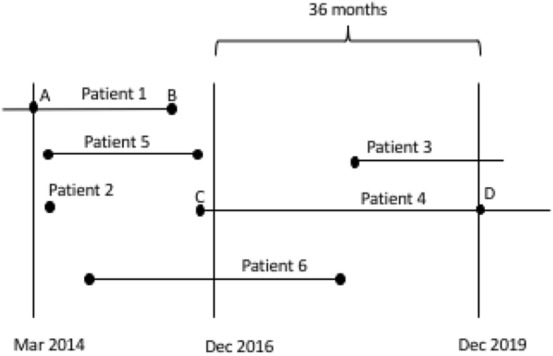
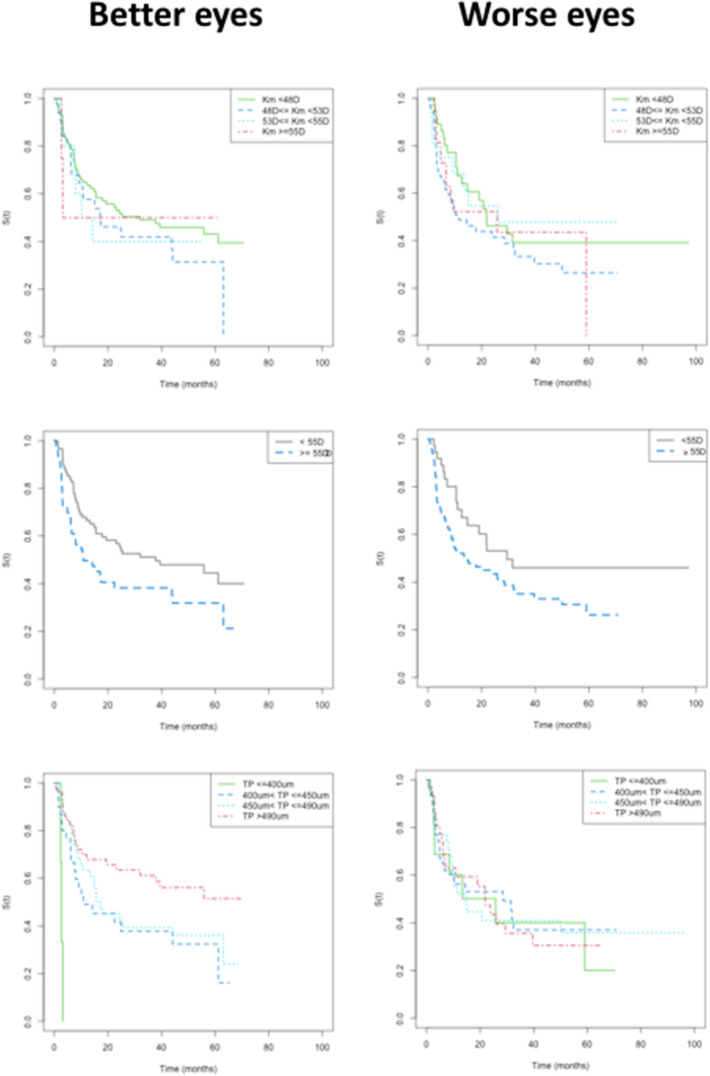
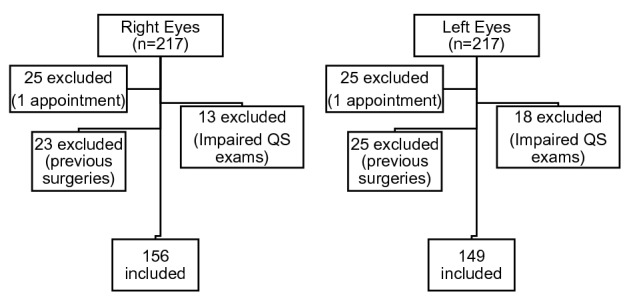
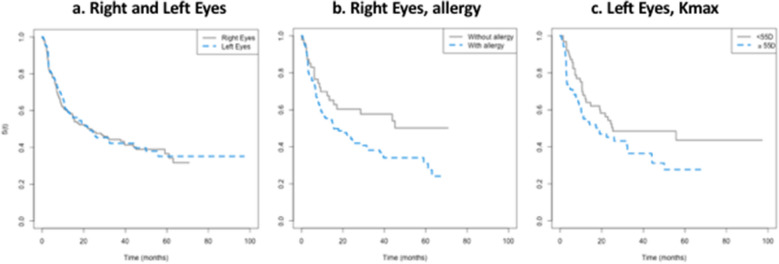
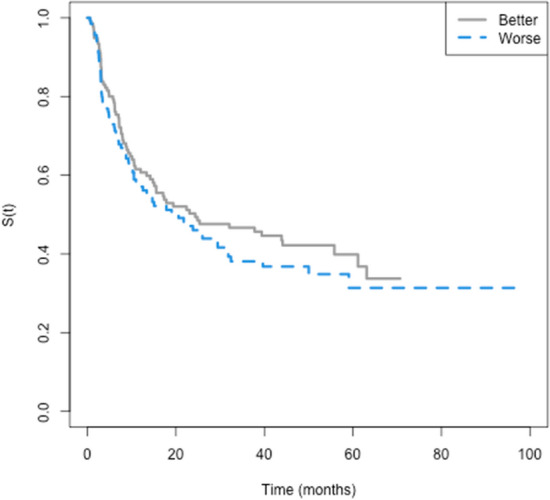
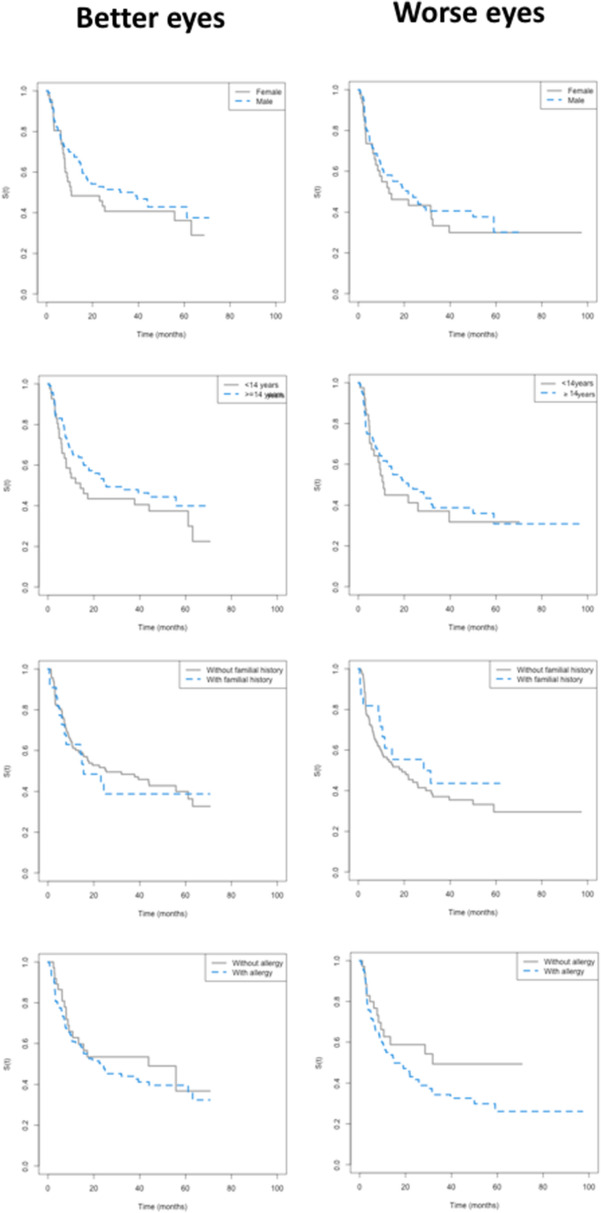
We studied the demographic and clinical predictors associated with keratoconus progression in a pediatric population. Retrospective cohort study. We evaluated 305 eyes without previous surgeries from 168 patients, 9 to < 18 years old, and with a minimum 36-month follow-up in a hospital corneal ambulatory. We used Kaplan-Meyer survival curves; the dependent variable (main outcome measure) was the interval time (months) until the event, defined as an increase of 1.5 D in the maximum keratometry (Kmax), obtained with Pentacam. We evaluated the predictors: age (< or ≥ 14 years), sex, keratoconus familial history, allergy medical history, and the baseline tomographic parameters: mean keratometry (Km), Kmax (< or ≥ 55 D); and thinnest pachymetry (TP). We used log-rank tests and compared median survival times for right (RE)/left eyes (LE) and better (BE)/worse eyes (WE). A p value < 0.05 was considered significant. The patients' mean ± SD age was 15.1 ± 2.3 years old; 67% were boys, 30% were < 14 years, 15% had keratoconus familial history, and 70% were allergic. The general Kaplan-Meyer curves showed no differences between RE/LE or BE/WE. RE with allergy and LE with Kmax ≥ 55 D had smaller survival times ((95%CI 9.67-32.1), p 0.031 and (95%CI 10.1-44.1), p 0.042, respectively). For BE and WE, Kmax ≥ 55 D had smaller survival times ((95% CI 6.42- ), p 0.031 and (95%CI 8.75-31.8), p 0.043, respectively). Keratoconus progression was similar between RE/LE and BE/WE. Steepest corneas are predictors of faster progression. Allergy is also a predictor of keratoconus progression in RE.
我们研究了与儿童人群中圆锥角膜进展相关的人口统计学和临床预测因素。回顾性队列研究。我们评估了 168 名 9 至<18 岁患者的 305 只未经手术的眼睛,并在医院角膜门诊进行了至少 36 个月的随访。我们使用 Kaplan-Meier 生存曲线;因变量(主要观察结果)是事件发生的时间间隔(月),定义为 Pentacam 获得的最大角膜曲率(Kmax)增加 1.5D。我们评估了预测因素:年龄(<或≥14 岁)、性别、圆锥角膜家族史、过敏病史以及基线断层参数:平均角膜曲率(Km)、Kmax(<或≥55D);和最薄的角膜厚度(TP)。我们使用对数秩检验,并比较右眼(RE)/左眼(LE)和较好眼(BE)/较差眼(WE)的中位生存时间。p 值<0.05 被认为具有统计学意义。患者的平均年龄为 15.1±2.3 岁;67%为男性,30%年龄<14 岁,15%有圆锥角膜家族史,70%为过敏。一般 Kaplan-Meier 曲线显示 RE/LE 或 BE/WE 之间没有差异。有过敏的 RE 和 Kmax≥55D 的 LE 生存时间较短((95%CI 9.67-32.1),p=0.031 和(95%CI 10.1-44.1),p=0.042,分别)。对于 BE 和 WE,Kmax≥55D 的生存时间较短((95%CI 6.42-),p=0.031 和(95%CI 8.75-31.8),p=0.043,分别)。RE/LE 和 BE/WE 之间的圆锥角膜进展相似。最陡峭的角膜是进展较快的预测因素。过敏也是 RE 中圆锥角膜进展的一个预测因素。