Ramalingam Prasanna Srinivasan, Balakrishnan Purushothaman, Rajendran Senthilnathan, Jothi Arunachalam, Ramalingam Rajasekaran, Arumugam Sivakumar
Protein Engineering Lab, School of Biosciences and Technology, VIT University, Vellore 632014, Tamil Nadu, India.
TanBio R and D Solution, Thanjavur 613403, Tamil Nadu, India.
Curr Issues Mol Biol. 2023 Mar 6;45(3):2136-2156. doi: 10.3390/cimb45030137.
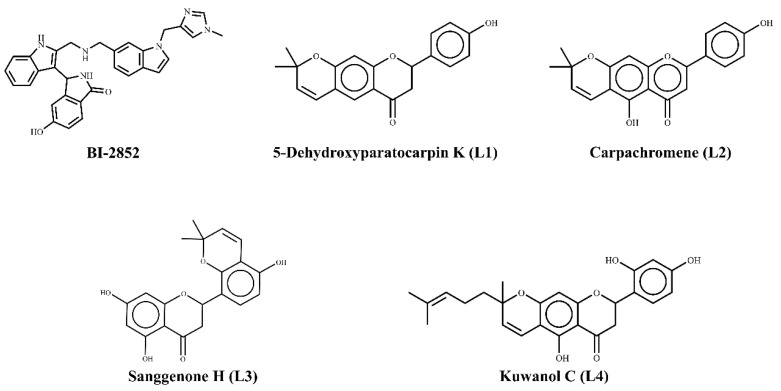
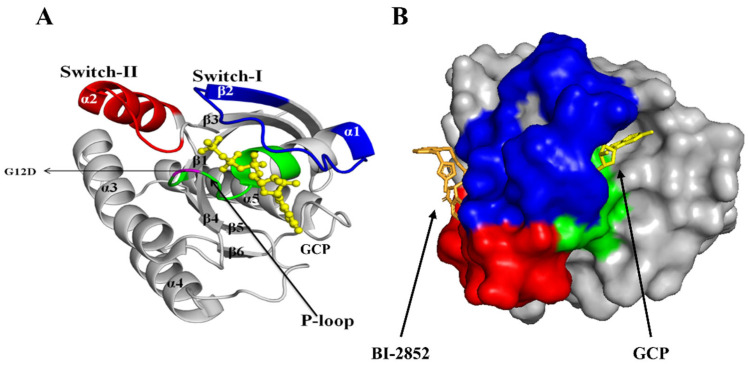
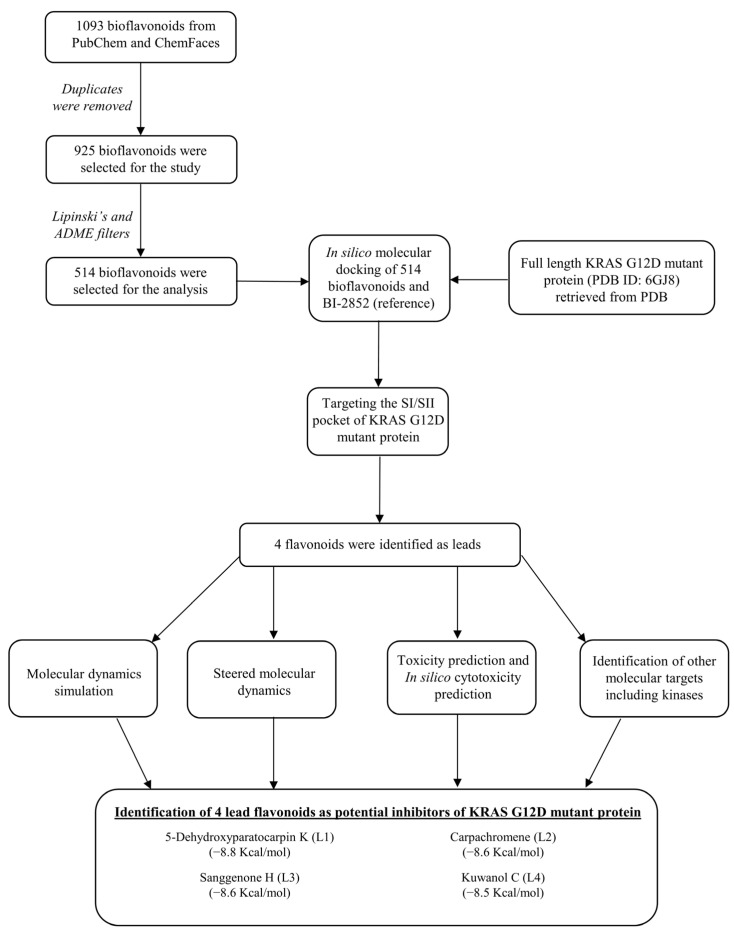
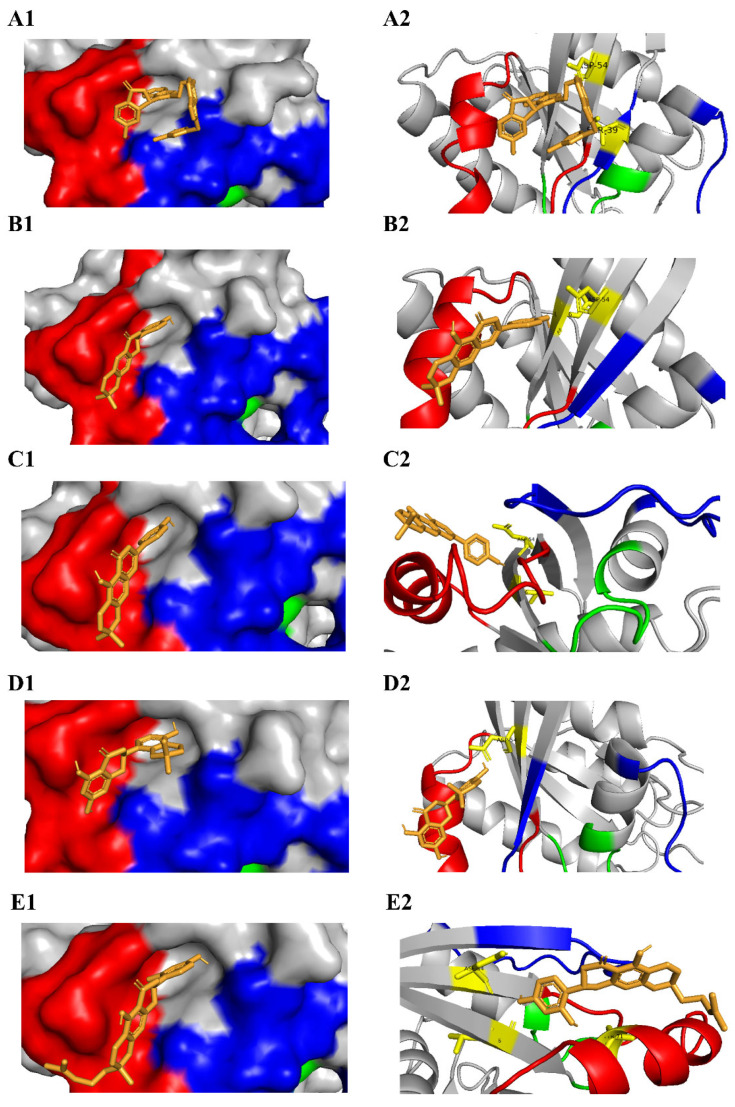
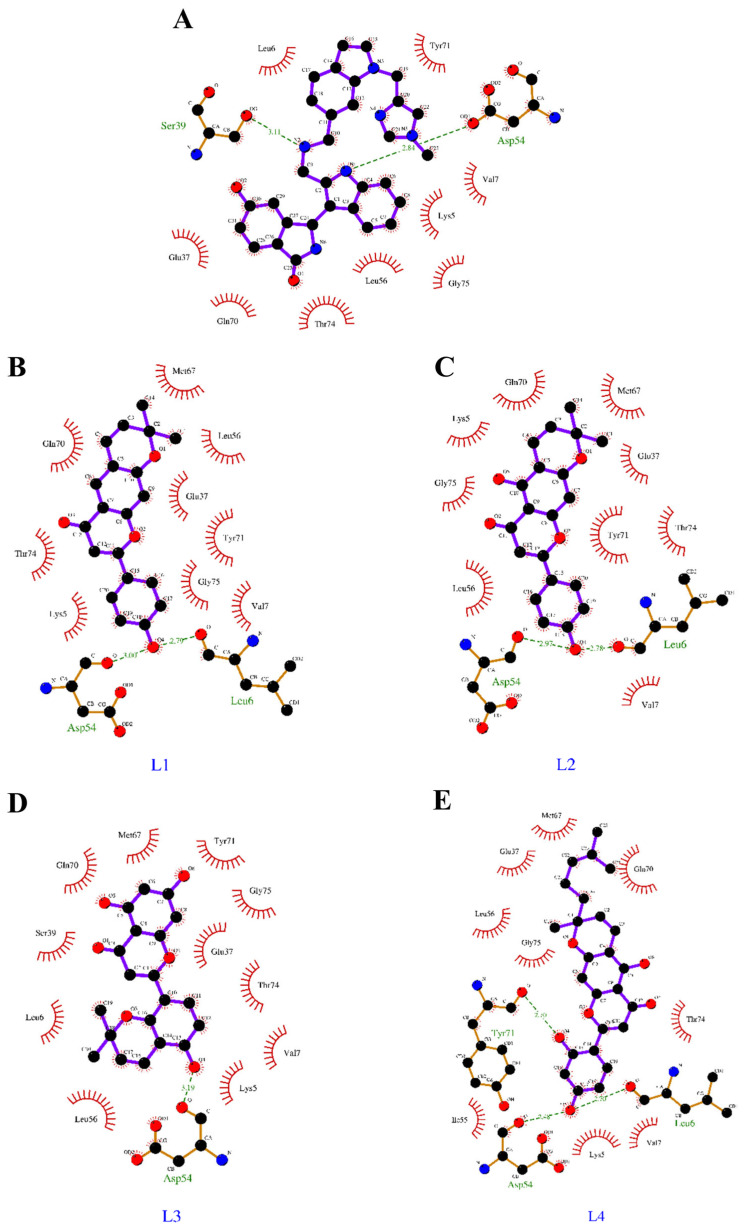
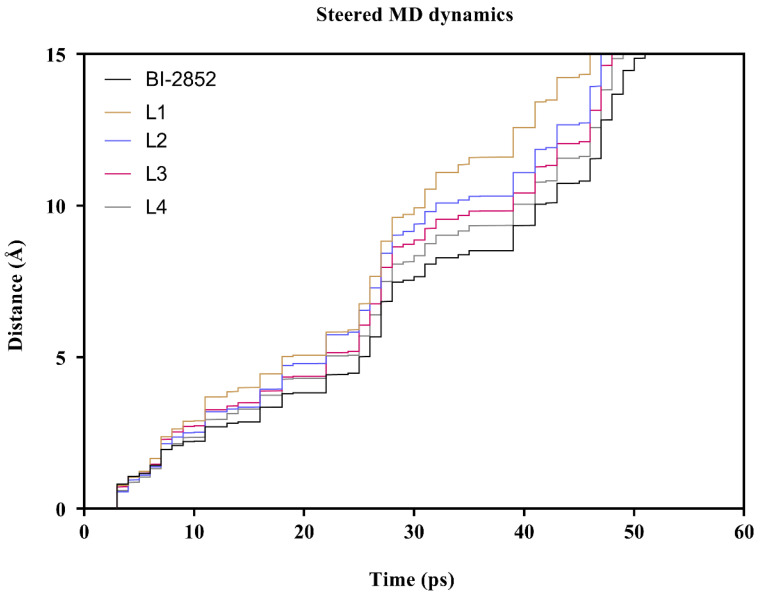
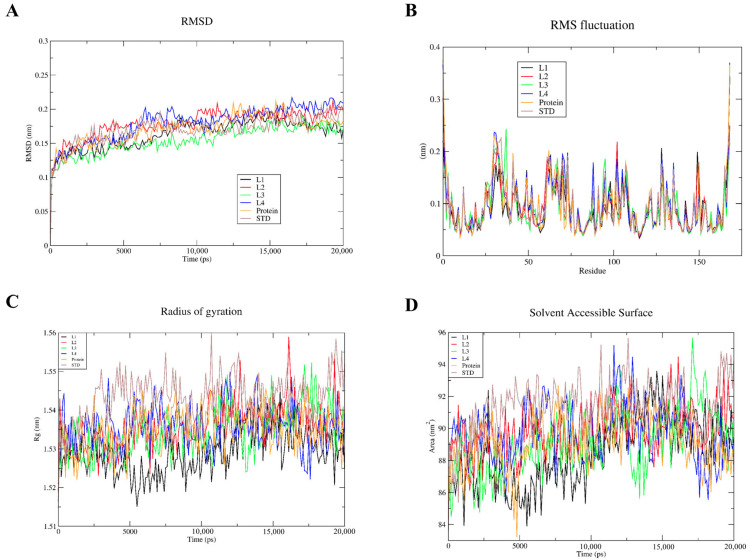
The KRAS G12D mutation is very frequent in many cancers, such as pancreatic, colon and lung, and has remained undruggable for the past three decades, due to its smooth surface and lack of suitable pockets. Recent small pieces of evidence suggest that targeting the switch I/II of KRAS G12D mutant could be an efficient strategy. Therefore, in the present study, we targeted the switch I (residues 25-40) and switch II (residues 57-76) regions of KRAS G12D with dietary bioflavonoids in comparison with the reference KRAS SI/II inhibitor BI-2852. Initially, we screened 925 bioflavonoids based on drug-likeness properties, and ADME properties and selected 514 bioflavonoids for further studies. Molecular docking resulted in four lead bioflavonoids, namely 5-Dehydroxyparatocarpin K (L1), Carpachromene (L2), Sanggenone H (L3), and Kuwanol C (L4) with binding affinities of 8.8 Kcal/mol, 8.64 Kcal/mol, 8.62 Kcal/mol, and 8.58 Kcal/mol, respectively, in comparison with BI-2852 (-8.59 Kcal/mol). Further steered-molecular dynamics, molecular-dynamics simulation, toxicity, and in silico cancer-cell-line cytotoxicity predictions significantly support these four lead bioflavonoids as potential inhibitors of KRAS G12D SI/SII inhibitors. We finally conclude that these four bioflavonoids have potential inhibitory activity against the KRAS G12D mutant, and are further to be studied in vitro and in vivo, to evaluate their therapeutic potential and the utility of these compounds against KRAS G12D mutated cancers.
KRAS G12D突变在许多癌症中非常常见,如胰腺癌、结肠癌和肺癌,在过去三十年中一直无法用药物治疗,因为其表面光滑且缺乏合适的靶点。最近的一些小证据表明,靶向KRAS G12D突变体的开关I/II可能是一种有效的策略。因此,在本研究中,我们用膳食生物类黄酮靶向KRAS G12D的开关I(25-40位氨基酸)和开关II(57-76位氨基酸)区域,并与参考KRAS SI/II抑制剂BI-2852进行比较。最初,我们根据类药性和ADME性质筛选了925种生物类黄酮,并选择了514种生物类黄酮进行进一步研究。分子对接产生了四种先导生物类黄酮,即5-去羟基副罗汉果素K(L1)、罗汉果色烯(L2)、桑根酮H(L3)和苦马豆素C(L4),其结合亲和力分别为8.8千卡/摩尔、8.64千卡/摩尔、8.62千卡/摩尔和8.58千卡/摩尔,而BI-2852的结合亲和力为-8.59千卡/摩尔。进一步的引导分子动力学、分子动力学模拟、毒性和计算机模拟癌细胞系细胞毒性预测显著支持这四种先导生物类黄酮作为KRAS G12D SI/SII抑制剂的潜在抑制剂。我们最终得出结论,这四种生物类黄酮对KRAS G12D突变体具有潜在的抑制活性,有待进一步进行体外和体内研究,以评估它们的治疗潜力以及这些化合物对KRAS G12D突变癌症的效用。