Qi Gao-Xiu, Zhao Rui-Xia, Gao Chen, Ma Zeng-Yan, Wang Shang, Xu Jing
Department of Pathology, Qingdao Central Hospital, University of Health and Rehabilitation Sciences (Qingdao Central Medical Group), Qingdao 266042, Shandong Province, China.
Department of Pathology, School of Basic Medicine, Qingdao University, Qingdao 266071, Shandong Province, China.
World J Gastroenterol. 2025 Jun 7;31(21):106964. doi: 10.3748/wjg.v31.i21.106964.
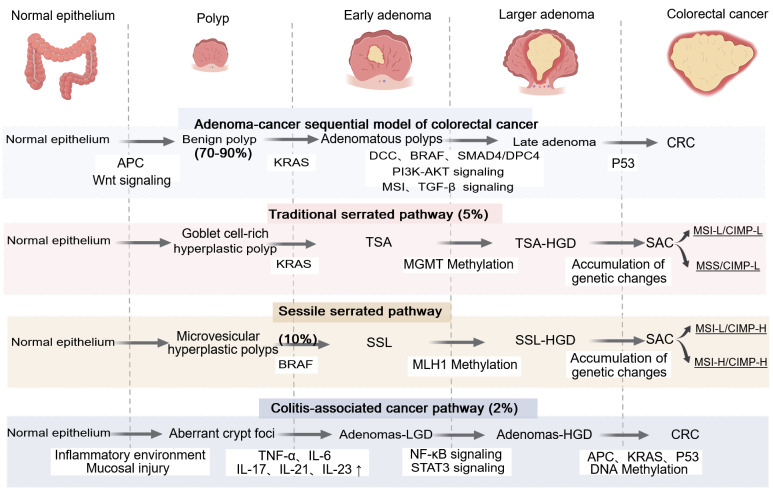
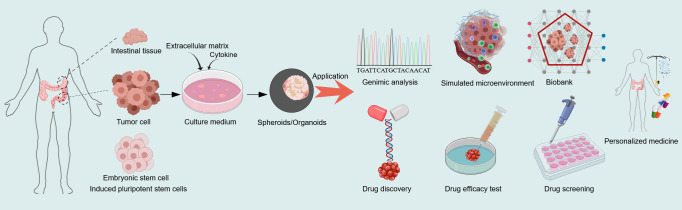
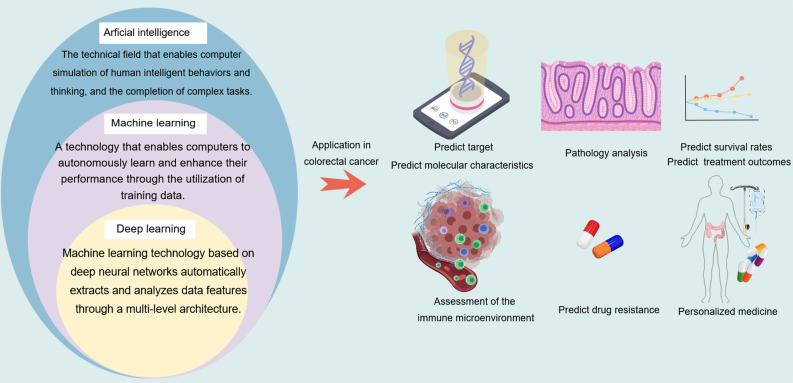
Colorectal cancer (CRC) ranks among the top causes of cancer-related fatalities globally. Recent progress in genomics, proteomics, and bioinformatics has greatly improved our comprehension of the molecular underpinnings of CRC, paving the way for targeted therapies and immunotherapies. Nonetheless, obstacles such as tumor heterogeneity and drug resistance persist, hindering advancements in treatment efficacy. In this context, the integration of artificial intelligence (AI) and organoid technology presents promising new avenues. AI can analyze genetic and clinical data to forecast disease risk, prognosis, and treatment responses, thereby expediting drug development and tailoring treatment plans. Organoids replicate the genetic traits and biological behaviors of tumors, acting as platforms for drug testing and the formulation of personalized treatment approaches. Despite notable strides in CRC research and treatment - from genetic insights to therapeutic innovations - numerous challenges endure, including the intricate tumor microenvironment, tumor heterogeneity, adverse effects of immunotherapies, issues related to AI data quality and privacy, and the need for standardization in organoid culture. Future initiatives should concentrate on clarifying the pathogenesis of CRC, refining AI algorithms and organoid models, and creating more effective therapeutic strategies to alleviate the global impact of CRC.
结直肠癌(CRC)是全球癌症相关死亡的主要原因之一。基因组学、蛋白质组学和生物信息学的最新进展极大地提高了我们对CRC分子基础的理解,为靶向治疗和免疫治疗铺平了道路。尽管如此,肿瘤异质性和耐药性等障碍仍然存在,阻碍了治疗效果的进步。在这种背景下,人工智能(AI)与类器官技术的整合呈现出了有前景的新途径。AI可以分析基因和临床数据以预测疾病风险、预后和治疗反应,从而加速药物开发并制定个性化治疗方案。类器官复制肿瘤的遗传特征和生物学行为,作为药物测试和制定个性化治疗方法的平台。尽管在CRC研究和治疗方面取得了显著进展——从基因洞察到治疗创新——但仍存在许多挑战,包括复杂的肿瘤微环境、肿瘤异质性、免疫治疗的副作用、与AI数据质量和隐私相关的问题,以及类器官培养的标准化需求。未来的举措应集中于阐明CRC的发病机制、优化AI算法和类器官模型,以及制定更有效的治疗策略,以减轻CRC对全球的影响。