Department of Microbiology and Molecular Genetics, Institute for Medical Research Israel-Canada, Faculty of Medicine, The Hebrew University of Jerusalem, Jerusalem, Israel.
mSystems. 2023 Apr 27;8(2):e0002423. doi: 10.1128/msystems.00024-23. Epub 2023 Mar 28.
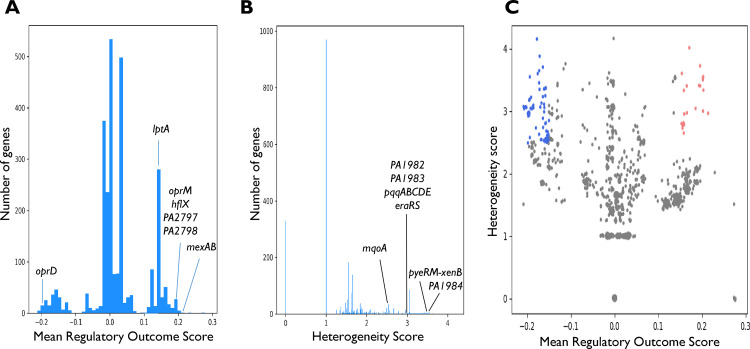
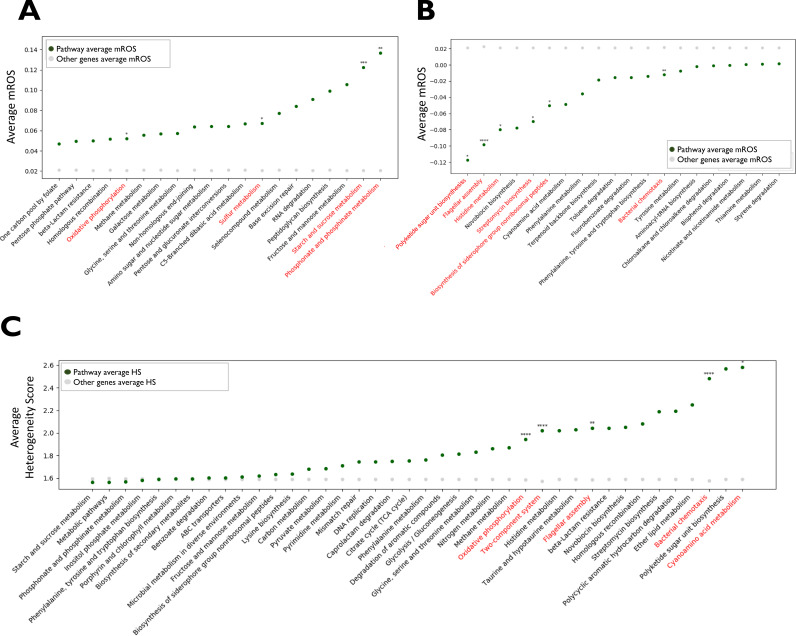
Bacteria adapt to their host by mutating specific genes and by reprogramming their gene expression. Different strains of a bacterial species often mutate the same genes during infection, demonstrating convergent genetic adaptation. However, there is limited evidence for convergent adaptation at the transcriptional level. To this end, we utilize genomic data of 114 Pseudomonas aeruginosa strains, derived from patients with chronic pulmonary infection, and the P. aeruginosa transcriptional regulatory network. Relying on loss-of-function mutations in genes encoding transcriptional regulators and predicting their effects through the network, we demonstrate predicted expression changes of the same genes in different strains through different paths in the network, implying convergent transcriptional adaptation. Furthermore, through the transcription lens we associate yet-unknown processes, such as ethanol oxidation and glycine betaine catabolism, with P. aeruginosa host adaptation. We also find that known adaptive phenotypes, including antibiotic resistance, which were identified before as achieved by specific mutations, are achieved also through transcriptional changes. Our study has revealed novel interplay between the genetic and transcriptional levels in host adaptation, demonstrating the versatility of the adaptive arsenal of bacterial pathogens and their ability to adapt to the host conditions in a myriad of ways. Pseudomonas aeruginosa causes significant morbidity and mortality. The pathogen's remarkable ability to establish chronic infections greatly depends on its adaptation to the host environment. Here, we use the transcriptional regulatory network to predict expression changes during adaptation. We expand the processes and functions known to be involved in host adaptation. We show that the pathogen modulates the activity of genes during adaptation, including genes implicated in antibiotic resistance, both directly via genomic mutations and indirectly via mutations in transcriptional regulators. Furthermore, we detect a subgroup of genes whose predicted changes in expression are associated with mucoid strains, a major adaptive phenotype in chronic infections. We propose that these genes constitute the transcriptional arm of the mucoid adaptive strategy. Identification of different adaptive strategies utilized by pathogens during chronic infection has major promise in the treatment of persistent infections and opens the door to personalized tailored antibiotic treatment in the future.
细菌通过突变特定基因和重新编程基因表达来适应其宿主。在感染过程中,不同菌株的细菌经常会突变相同的基因,这表明存在趋同遗传适应。然而,在转录水平上,趋同适应的证据有限。为此,我们利用了 114 株铜绿假单胞菌的基因组数据,这些菌株来自慢性肺部感染患者,以及铜绿假单胞菌的转录调控网络。通过基因编码转录调节剂的功能丧失突变,并通过网络预测它们的影响,我们证明了不同菌株通过网络中的不同路径,相同基因的预测表达变化,暗示了趋同转录适应。此外,通过转录视角,我们将尚未可知的过程,如乙醇氧化和甘氨酸甜菜碱代谢,与铜绿假单胞菌的宿主适应联系起来。我们还发现,已知的适应性表型,包括抗生素耐药性,以前被认为是通过特定突变实现的,也可以通过转录变化来实现。我们的研究揭示了宿主适应中遗传和转录水平之间的新相互作用,展示了细菌病原体适应性武器库的多功能性及其通过多种方式适应宿主条件的能力。铜绿假单胞菌可导致严重的发病率和死亡率。该病原体建立慢性感染的显著能力在很大程度上取决于其对宿主环境的适应。在这里,我们使用转录调控网络来预测适应过程中的表达变化。我们扩展了已知参与宿主适应的过程和功能。我们表明,病原体在适应过程中调节基因的活性,包括与抗生素耐药性相关的基因,既可以直接通过基因组突变,也可以间接通过转录调节剂的突变。此外,我们检测到一组预测表达变化与粘液型菌株相关的基因,粘液型是慢性感染中的主要适应性表型。我们提出这些基因构成了粘液适应策略的转录分支。鉴定病原体在慢性感染过程中使用的不同适应策略,在治疗持续性感染方面具有重要意义,并为未来个性化定制抗生素治疗开辟了道路。