Cancer Dynamics Laboratory, The Francis Crick Institute, London, United Kingdom.
Skin and Renal Unit, Royal Marsden NHS Foundation Trust, London, United Kingdom.
Cancer Discov. 2023 Jun 2;13(6):1364-1385. doi: 10.1158/2159-8290.CD-22-1427.
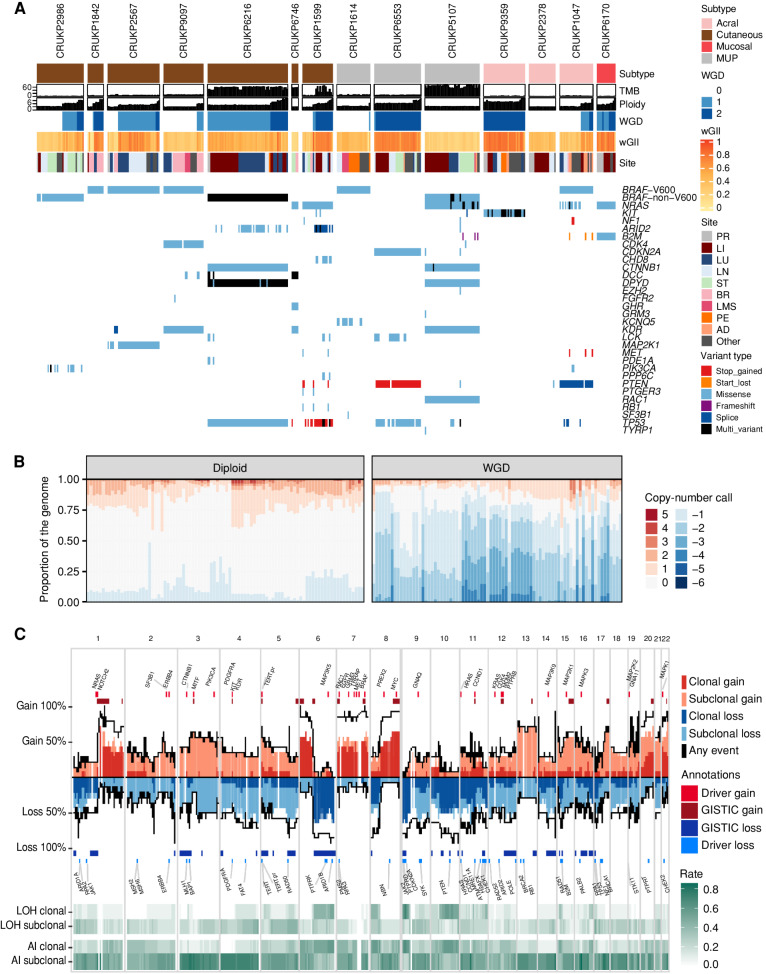
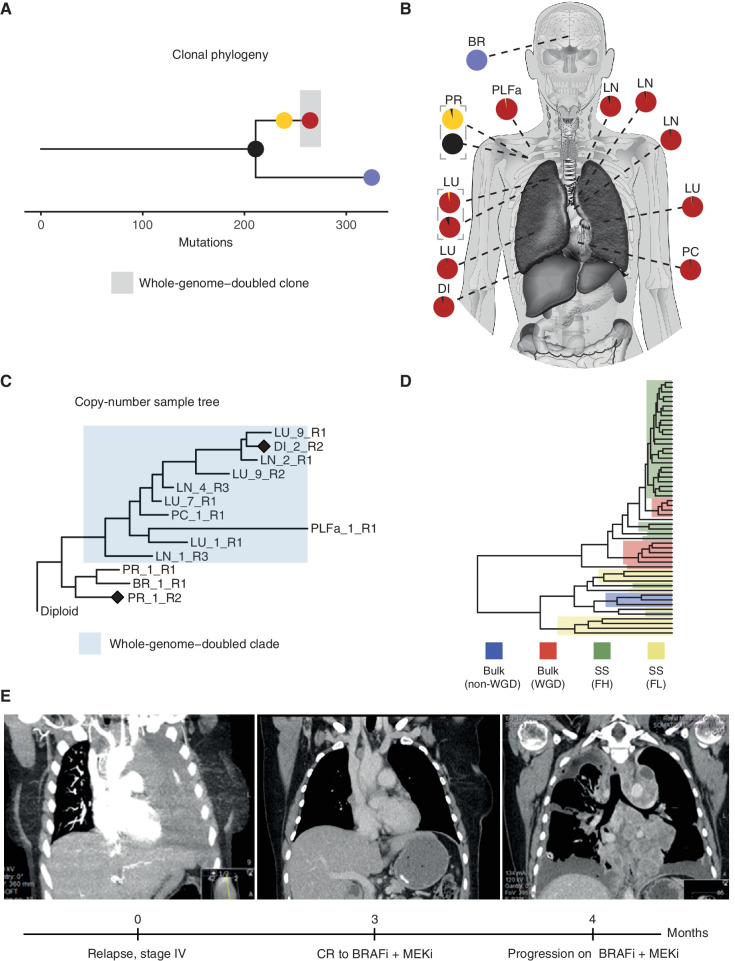
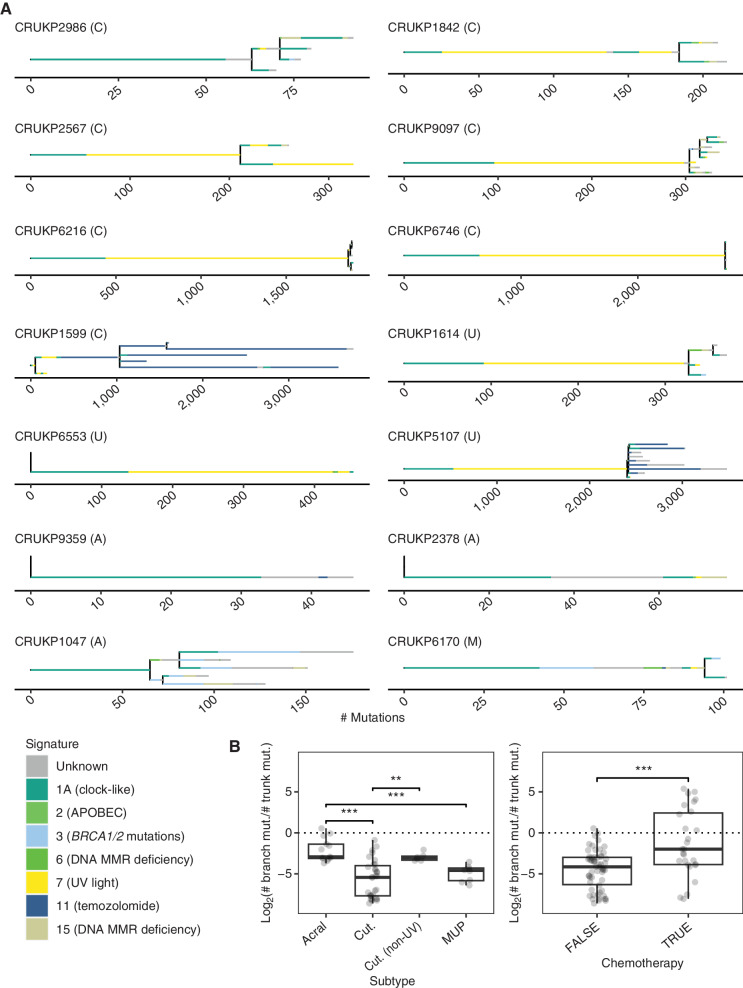
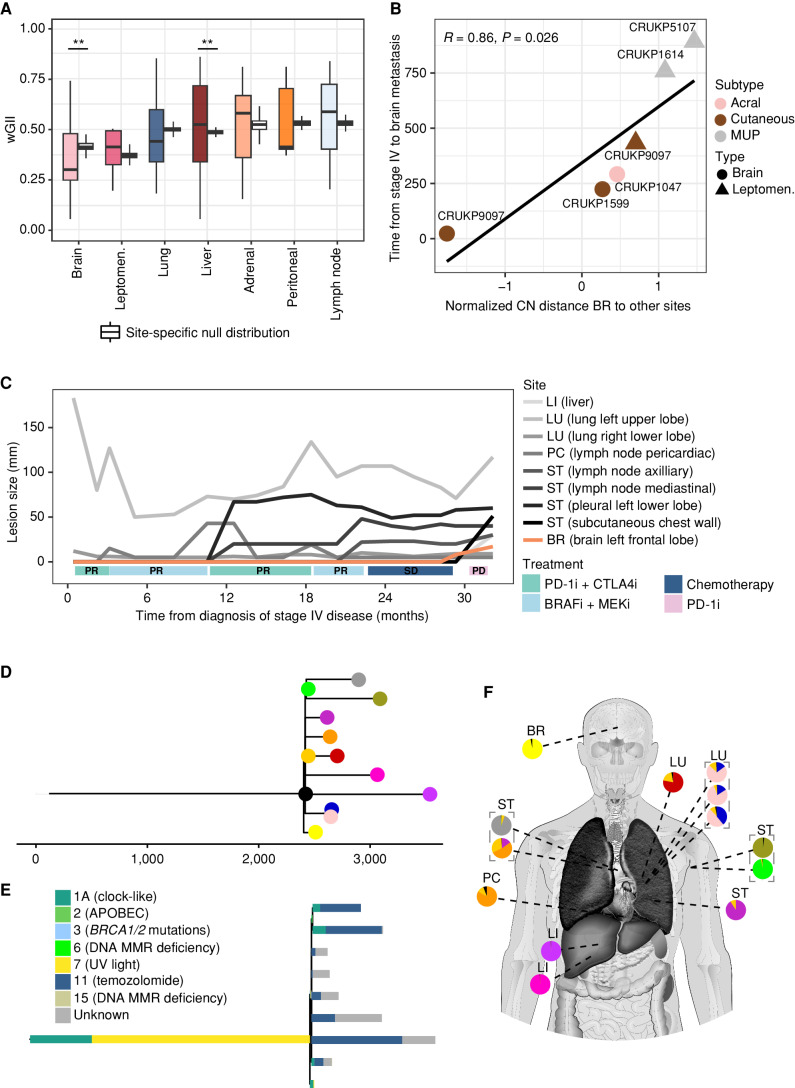
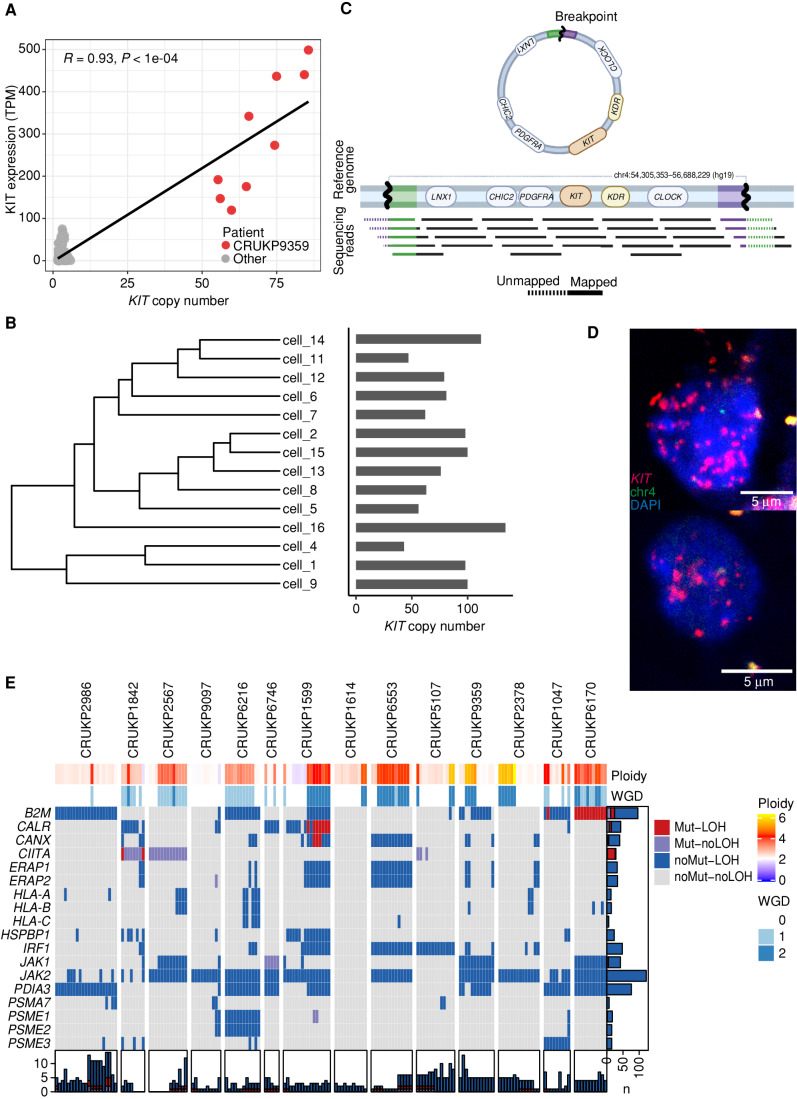
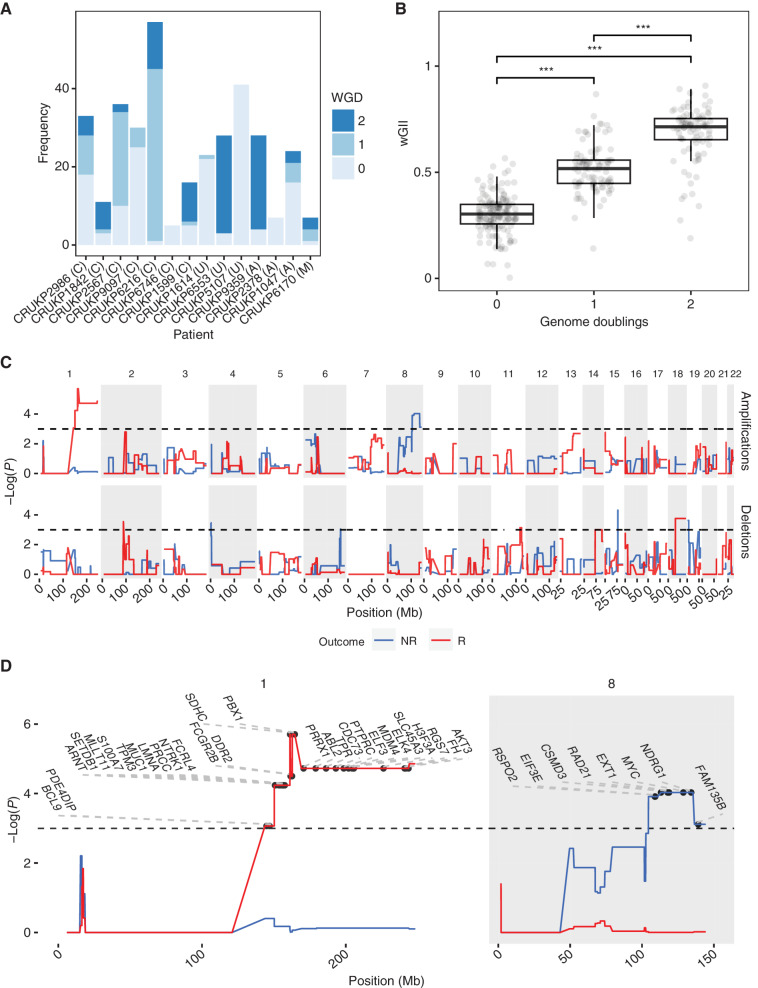
Understanding the evolutionary pathways to metastasis and resistance to immune-checkpoint inhibitors (ICI) in melanoma is critical for improving outcomes. Here, we present the most comprehensive intrapatient metastatic melanoma dataset assembled to date as part of the Posthumous Evaluation of Advanced Cancer Environment (PEACE) research autopsy program, including 222 exome sequencing, 493 panel-sequenced, 161 RNA sequencing, and 22 single-cell whole-genome sequencing samples from 14 ICI-treated patients. We observed frequent whole-genome doubling and widespread loss of heterozygosity, often involving antigen-presentation machinery. We found KIT extrachromosomal DNA may have contributed to the lack of response to KIT inhibitors of a KIT-driven melanoma. At the lesion-level, MYC amplifications were enriched in ICI nonresponders. Single-cell sequencing revealed polyclonal seeding of metastases originating from clones with different ploidy in one patient. Finally, we observed that brain metastases that diverged early in molecular evolution emerge late in disease. Overall, our study illustrates the diverse evolutionary landscape of advanced melanoma.
Despite treatment advances, melanoma remains a deadly disease at stage IV. Through research autopsy and dense sampling of metastases combined with extensive multiomic profiling, our study elucidates the many mechanisms that melanomas use to evade treatment and the immune system, whether through mutations, widespread copy-number alterations, or extrachromosomal DNA. See related commentary by Shain, p. 1294. This article is highlighted in the In This Issue feature, p. 1275.
了解黑色素瘤转移和对免疫检查点抑制剂(ICI)耐药的进化途径对于改善预后至关重要。在这里,我们展示了迄今为止作为 Posthumous Evaluation of Advanced Cancer Environment (PEACE) 研究尸检计划的一部分组装的最全面的患者间转移性黑色素瘤数据集,包括 222 个外显子组测序、493 个面板测序、161 个 RNA 测序和 22 个来自 14 名接受 ICI 治疗的患者的单细胞全基因组测序样本。我们观察到频繁的全基因组加倍和广泛的杂合性丢失,经常涉及抗原呈递机制。我们发现 KIT 外染色体 DNA 可能导致 KIT 驱动的黑色素瘤对 KIT 抑制剂缺乏反应。在病变水平,ICI 无反应者中 MYC 扩增富集。单细胞测序揭示了一个患者中来自不同倍性克隆的转移的多克隆播种。最后,我们观察到在分子进化中早期分化的脑转移在疾病晚期出现。总体而言,我们的研究说明了晚期黑色素瘤的多样化进化景观。
尽管治疗取得了进展,但黑色素瘤在 IV 期仍然是一种致命疾病。通过研究尸检和转移灶的密集采样结合广泛的多组学分析,我们的研究阐明了黑色素瘤逃避治疗和免疫系统的许多机制,无论是通过突变、广泛的拷贝数改变还是外染色体 DNA。请参阅 Shain 的相关评论,第 1294 页。本文在本期特色栏目中重点介绍,第 1275 页。