Pieramico Giulia, Guidotti Roberto, Nieminen Aino E, D'Andrea Antea, Basti Alessio, Souza Victor H, Nieminen Jaakko O, Lioumis Pantelis, Ilmoniemi Risto J, Romani Gian Luca, Pizzella Vittorio, Marzetti Laura
Department of Neuroscience, Imaging and Clinical Sciences, University of Chieti-Pescara, 66100 Chieti, Italy.
Department of Neuroscience and Biomedical Engineering, Aalto University School of Science, 02150 Espoo, Finland.
Brain Sci. 2023 Feb 28;13(3):418. doi: 10.3390/brainsci13030418.
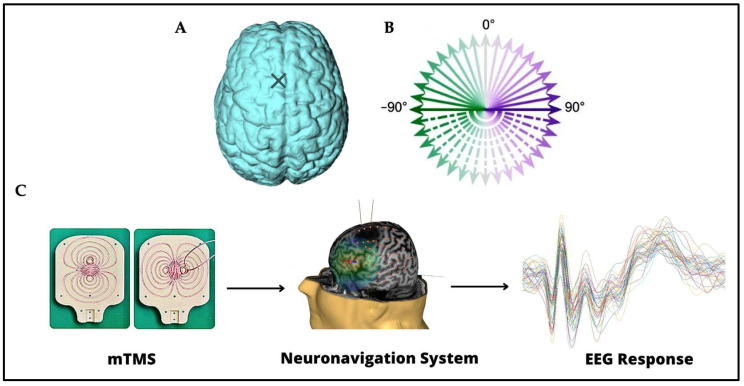
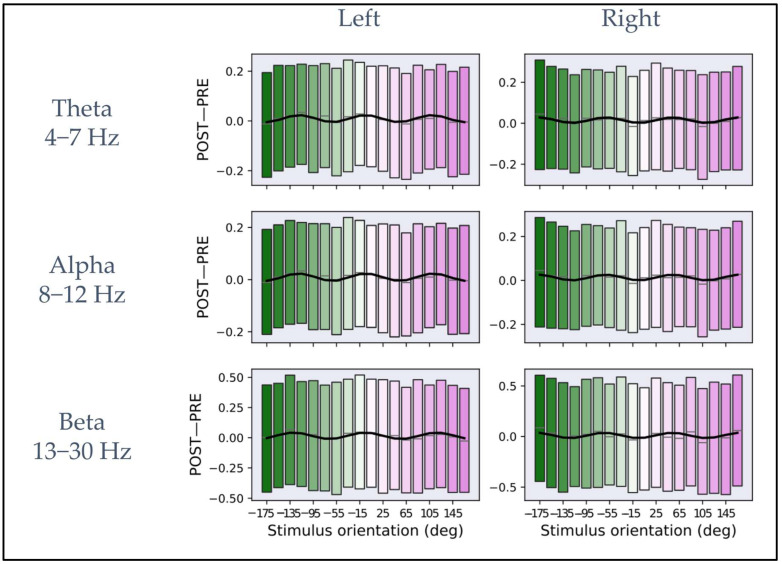
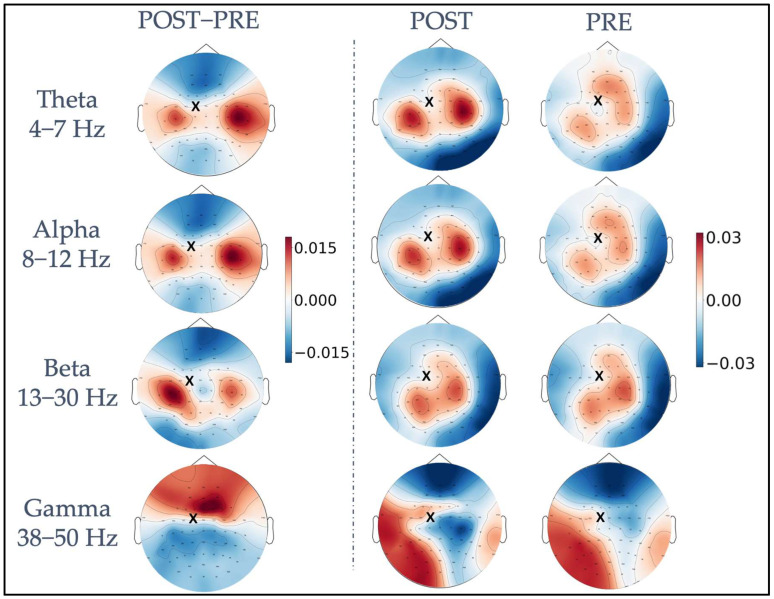
Coregistration of transcranial magnetic stimulation (TMS) and electroencephalography (EEG) allows non-invasive probing of brain circuits: TMS induces brain activation due to the generation of a properly oriented focused electric field (E-field) using a coil placed on a selected position over the scalp, while EEG captures the effects of the stimulation on brain electrical activity. Moreover, the combination of these techniques allows the investigation of several brain properties, including brain functional connectivity. The choice of E-field parameters, such as intensity, orientation, and position, is crucial for eliciting cortex-specific effects. Here, we evaluated whether and how the spatial pattern, i.e., topography and strength of functional connectivity, is modulated by the stimulus orientation. We systematically altered the E-field orientation when stimulating the left pre-supplementary motor area and showed an increase of functional connectivity in areas associated with the primary motor cortex and an E-field orientation-specific modulation of functional connectivity intensity.
经颅磁刺激(TMS)与脑电图(EEG)的联合使用能够对脑回路进行无创探测:TMS通过将线圈置于头皮上选定位置来产生方向合适的聚焦电场(E场),从而诱发大脑激活,而EEG则捕捉刺激对脑电活动的影响。此外,这些技术的结合能够对包括脑功能连接性在内的多种脑特性进行研究。电场参数(如强度、方向和位置)的选择对于引发特定于皮质的效应至关重要。在此,我们评估了功能连接性的空间模式(即拓扑结构和强度)是否以及如何受到刺激方向的调节。我们在刺激左侧辅助运动前区时系统地改变电场方向,结果显示与初级运动皮层相关区域的功能连接性增强,并且功能连接性强度存在电场方向特异性调节。