Brodie Tooth Development Genetics & Regenerative Medicine Research Laboratory, Department of Oral Biology, University of Illinois at Chicago, Chicago, IL 60612, USA.
Division of Cancer Research, Rajiv Gandhi Centre for Biotechnology, Thiruvananthapuram, Kerala 695014, India.
Biomolecules. 2023 Feb 22;13(3):412. doi: 10.3390/biom13030412.
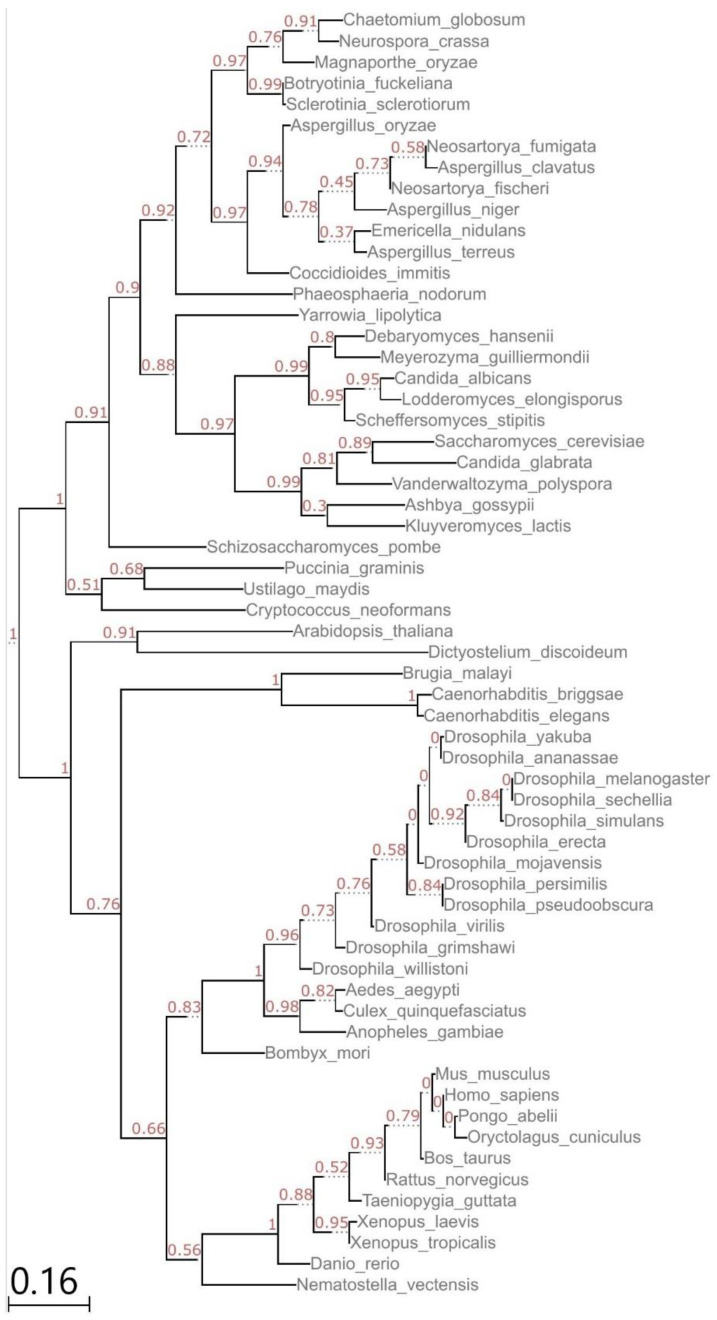
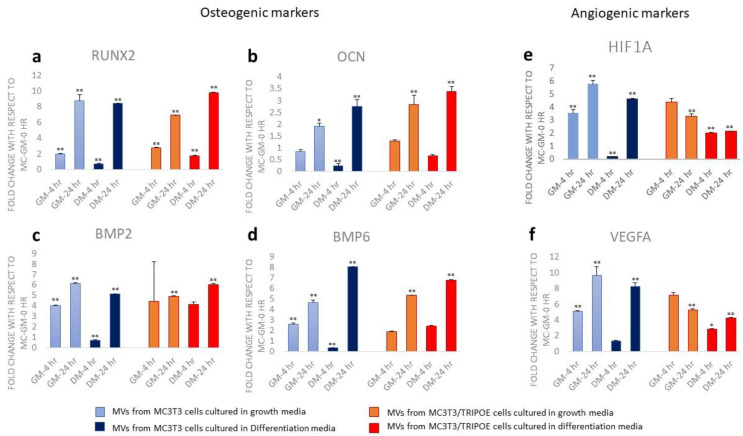
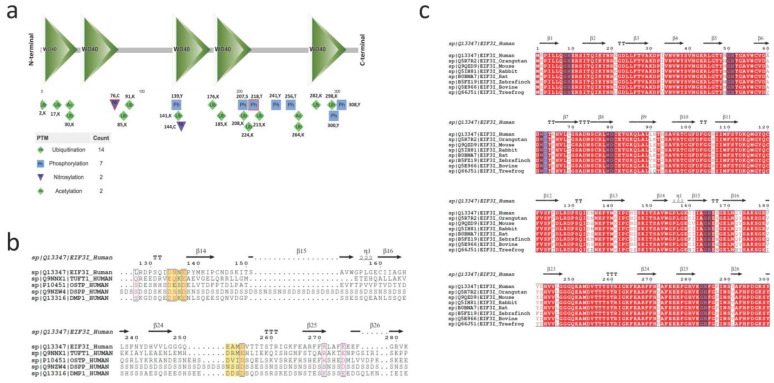
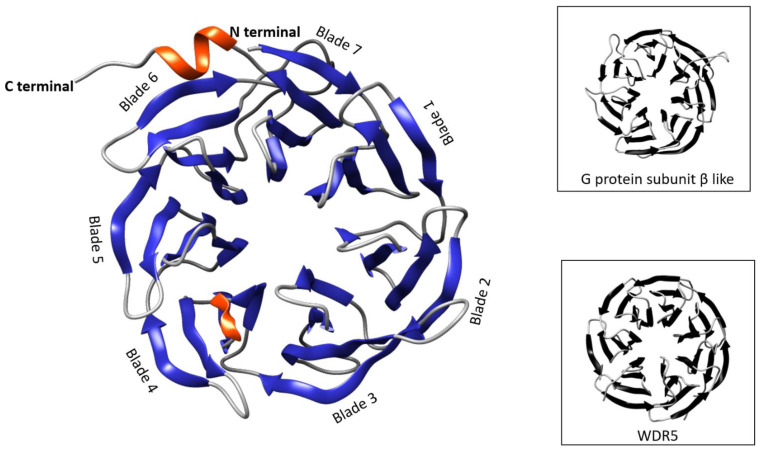
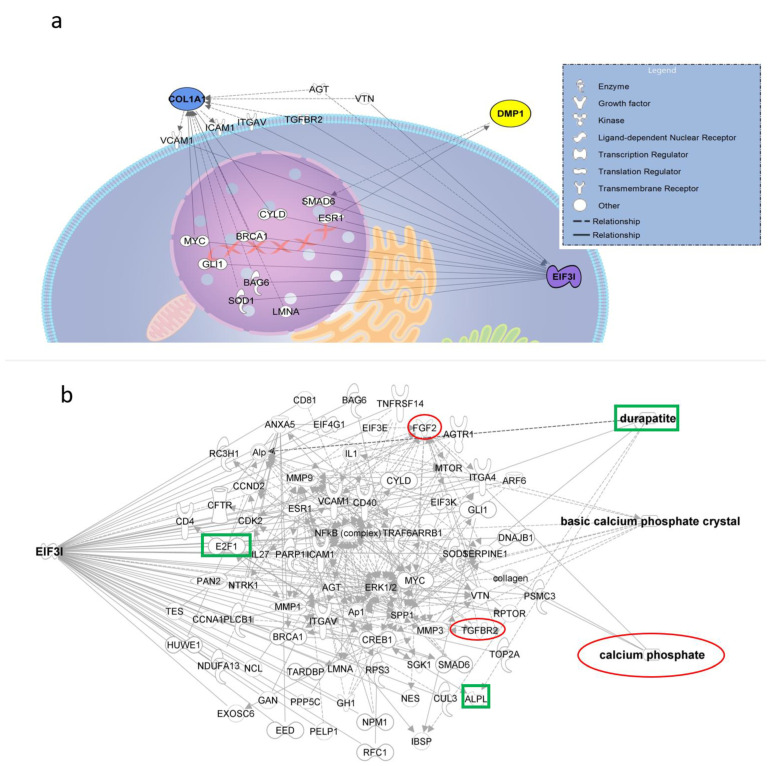
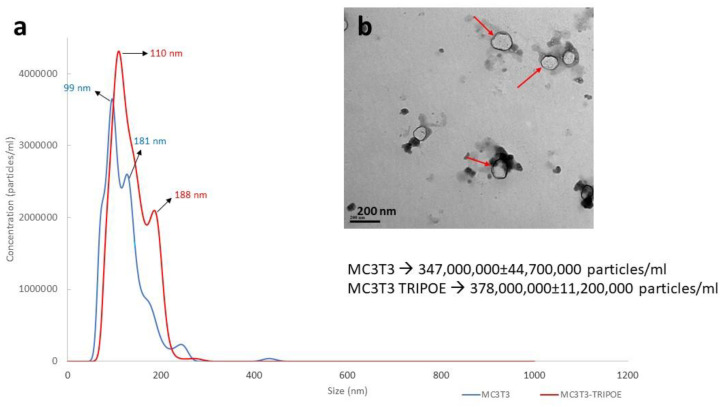
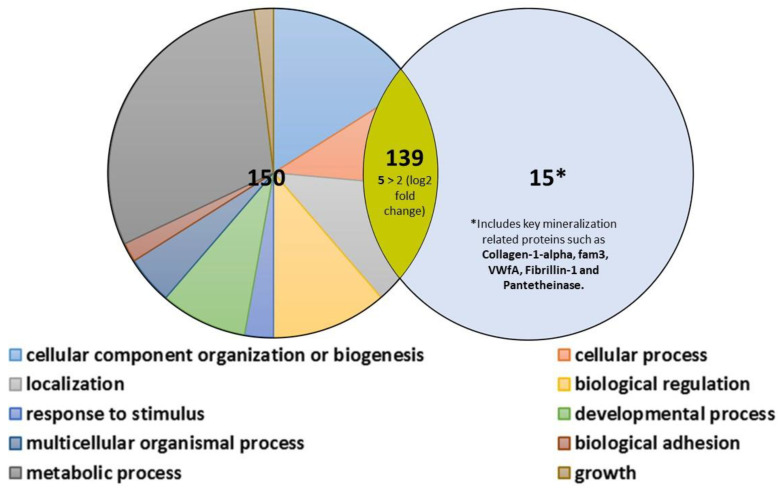
Eukaryotic initiation factor subunit I (EIF3i), also called as p36 or TRIP-1, is a component of the translation initiation complex and acts as a modulator of TGF-β signaling. We demonstrated earlier that this intracellular protein is not only exported to the extracellular matrix via exosomes but also binds calcium phosphate and promotes hydroxyapatite nucleation. To assess other functional roles of TRIP-1, we first examined their phylogeny and showed that it is highly conserved in eukaryotes. Comparing human EIF3i sequence with that of 63 other eukaryotic species showed that more than 50% of its sequence is conserved, suggesting the preservation of its important functional role (translation initiation) during evolution. TRIP-1 contains WD40 domains and predicting its function based on this structural motif is difficult as it is present in a vast array of proteins with a wide variety of functions. Therefore, bioinformatics analysis was performed to identify putative regulatory functions for TRIP-1 by examining the structural domains and post-translational modifications and establishing an interactive network using known interacting partners such as type I collagen. Insight into the function of TRIP-1 was also determined by examining structurally similar proteins such as Wdr5 and GPSß, which contain a ß-propeller structure which has been implicated in the calcification process. Further, proteomic analysis of matrix vesicles isolated from TRIP-1-overexpressing preosteoblastic MC3T3-E1 cells demonstrated the expression of several key biomineralization-related proteins, thereby confirming its role in the calcification process. Finally, we demonstrated that the proteomic signature in TRIP1-OE MVs facilitated osteogenic differentiation of stem cells. Overall, we demonstrated by bioinformatics that TRIP-1 has a unique structure and proteomic analysis suggested that the unique osteogenic cargo within the matrix vesicles facilitates matrix mineralization.
真核起始因子 3 亚基 I(EIF3i),也称为 p36 或 TRIP-1,是翻译起始复合物的组成部分,作为 TGF-β 信号的调节剂。我们之前证明,这种细胞内蛋白不仅通过外泌体被输出到细胞外基质,还能结合磷酸钙并促进羟基磷灰石成核。为了评估 TRIP-1 的其他功能作用,我们首先检查了它们的系统发育,发现它在真核生物中高度保守。将人类 EIF3i 序列与其他 63 种真核生物的序列进行比较,发现其序列有超过 50%被保守,这表明在进化过程中保留了其重要的功能作用(翻译起始)。TRIP-1 含有 WD40 结构域,根据这一结构基序预测其功能较为困难,因为它存在于具有广泛功能的大量蛋白质中。因此,进行了生物信息学分析,通过检查结构域和翻译后修饰,利用已知的相互作用伙伴(如 I 型胶原)建立交互网络,来识别 TRIP-1 的潜在调节功能。通过检查具有β-推进器结构的结构相似蛋白(如 Wdr5 和 GPSβ),也确定了 TRIP-1 的功能,该结构已被证明与钙化过程有关。此外,从过表达 TRIP-1 的前成骨细胞 MC3T3-E1 细胞分离的基质小泡的蛋白质组分析表明,表达了几种关键的生物矿化相关蛋白,从而证实了其在钙化过程中的作用。最后,我们证明了 TRIP1-OE MVs 的蛋白质组学特征促进了干细胞的成骨分化。总之,我们通过生物信息学证明了 TRIP-1 具有独特的结构,蛋白质组分析表明,基质小泡中独特的成骨货物促进了基质矿化。