Palazzuoli Alberto, Beltrami Matteo, McCullough Peter A
Cardiovascular Diseases Unit, Department of Medical Sciences, Le Scotte Hospital University of Siena Italy, 53100 Siena, Italy.
Cardiology Unit, San Giovanni di Dio Hospital, Azienda USL Toscana Centro, 50134 Florence, Italy.
Biomedicines. 2023 Mar 6;11(3):790. doi: 10.3390/biomedicines11030790.
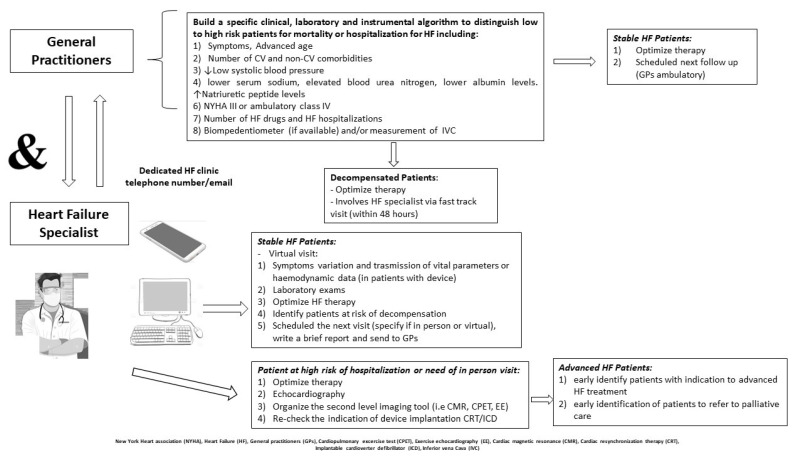
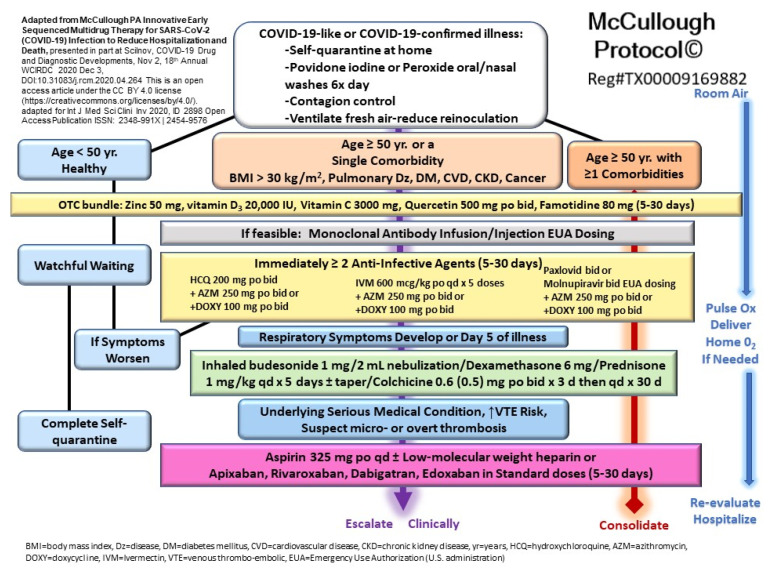
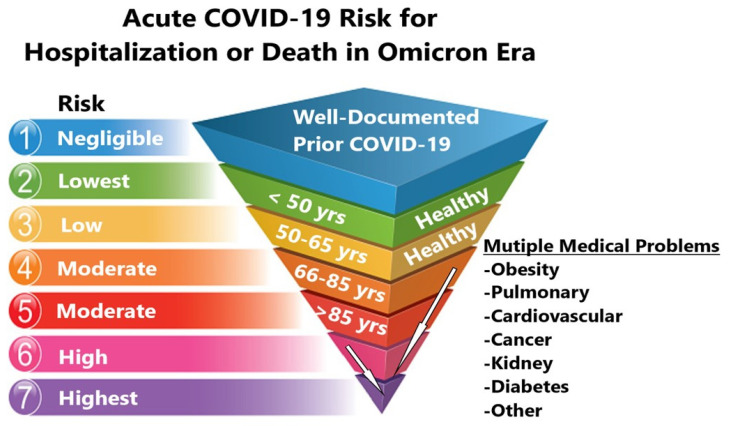
The relationship existing between heart failure (HF) and COVID-19 remains questioned and poorly elucidated. Many reports suggest that HF events are reduced during pandemics, although other studies have demonstrated higher mortality and sudden death in patients affected by HF. Several vascular, thrombotic, and respiratory features may deteriorate stable HF patients; therefore, the infection may directly cause direct myocardial damage, leading to cardiac function deterioration. Another concern is related to the possibility that antiviral, anti-inflammatory, and corticosteroid agents commonly employed during acute COVID-19 infection may have potentially deleterious effects on the cardiovascular (CV) system. For these reasons, HF patients deserve specific management with a tailored approach in order to avoid arrhythmic complications and fluid retention events. In this review, we describe the complex interplay between COVID-19 and HF, the evolving trend of infection with related CV events, and the specific management strategy to adopt in this setting.
心力衰竭(HF)与2019冠状病毒病(COVID-19)之间的关系仍存在疑问且尚未得到充分阐明。许多报告表明,在大流行期间心力衰竭事件有所减少,尽管其他研究显示,心力衰竭患者的死亡率和猝死率更高。一些血管、血栓形成和呼吸方面的特征可能会使稳定型心力衰竭患者病情恶化;因此,感染可能直接导致心肌损伤,进而导致心功能恶化。另一个担忧是,急性COVID-19感染期间常用的抗病毒、抗炎和皮质类固醇药物可能对心血管(CV)系统产生潜在有害影响。出于这些原因,心力衰竭患者需要采用量身定制的方法进行特殊管理,以避免心律失常并发症和液体潴留事件。在这篇综述中,我们描述了COVID-19与HF之间的复杂相互作用、感染与相关CV事件的演变趋势,以及在这种情况下应采取的具体管理策略。