Kesavan Chandrasekhar, Gomez Gustavo A, Pourteymoor Sheila, Mohan Subburaman
Musculoskeletal Disease Center, VA Loma Linda Healthcare System, Loma Linda, CA 92357, USA.
Department of Medicine, Loma Linda University, Loma Linda, CA 92354, USA.
Biomedicines. 2023 Mar 18;11(3):943. doi: 10.3390/biomedicines11030943.
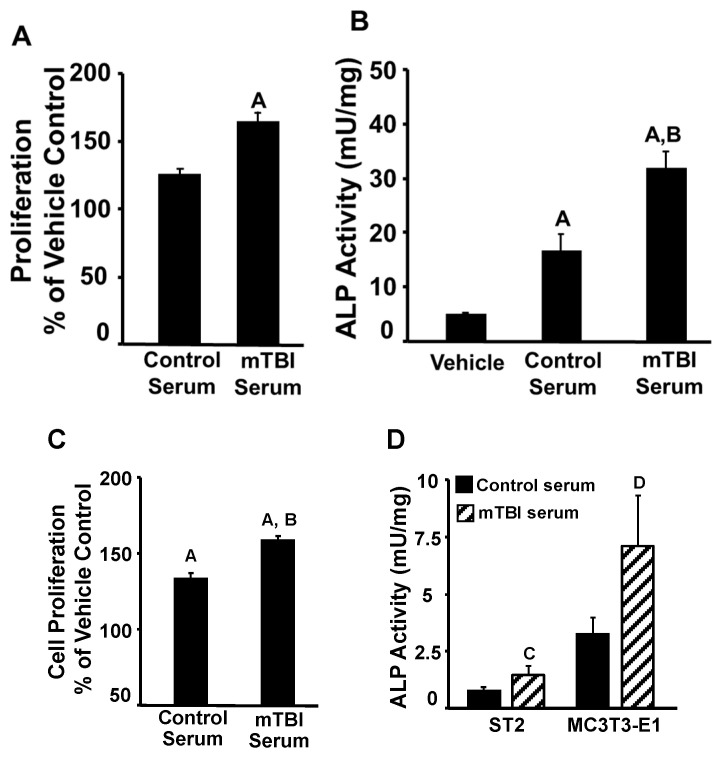
Heterotopic ossification (HO) is the abnormal growth of bone in soft connective tissues that occurs as a frequent complication in individuals with traumatic brain injury (TBI) and in rare genetic disorders. Therefore, understanding the mechanisms behind ectopic bone formation in response to TBI is likely to have a significant impact on identification of novel therapeutic targets for HO treatment. In this study, we induced repetitive mild TBI (mTBI) using a weight drop model in mice and then stimulated HO formation via a local injury to the Achilles tendon or fibula. The amount of ectopic bone, as evaluated by micro-CT analyses, was increased by four-fold in the injured leg of mTBI mice compared to control mice. However, there was no evidence of HO formation in the uninjured leg of mTBI mice. Since tissue injury leads to the activation of hypoxia signaling, which is known to promote endochondral ossification, we evaluated the effect of IOX2, a chemical inhibitor of PHD2 and a known inducer of hypoxia signaling on HO development in response to fibular injury. IOX2 treatment increased HO volume by five-fold compared to vehicle. Since pericytes located in the endothelium of microvascular capillaries are known to function as multipotent tissue-resident progenitors, we determined if activation of hypoxia signaling promotes pericyte recruitment at the injury site. We found that markers of pericytes, NG2 and PDGFRβ, were abundantly expressed at the site of injury in IOX2 treated mice. Treatment of pericytes with IOX2 for 72 h stimulated expression of targets of hypoxia signaling ( and ), as well as markers of chondrocyte differentiation ( and ). Furthermore, serum collected from TBI mice was more effective in promoting the proliferation and differentiation of pericytes than control mouse serum. In conclusion, our data show that the hypoxic state at the injury site in soft tissues of TBI mice provides an environment leading to increased accumulation and activation of pericytes to form endochondral bone.
异位骨化(HO)是指在软结缔组织中发生的异常骨生长,它是创伤性脑损伤(TBI)患者常见的并发症,在罕见的遗传疾病中也会出现。因此,了解TBI后异位骨形成的机制可能对确定HO治疗的新靶点产生重大影响。在本研究中,我们使用重物坠落模型在小鼠中诱导重复性轻度TBI(mTBI),然后通过对跟腱或腓骨的局部损伤刺激HO形成。通过微计算机断层扫描(micro-CT)分析评估,与对照小鼠相比,mTBI小鼠受伤腿部的异位骨量增加了四倍。然而,在mTBI小鼠未受伤的腿部没有HO形成的证据。由于组织损伤会导致缺氧信号的激活,而缺氧信号已知会促进软骨内骨化,我们评估了IOX2(一种PHD2的化学抑制剂和已知的缺氧信号诱导剂)对腓骨损伤后HO发展的影响。与载体相比,IOX2处理使HO体积增加了五倍。由于位于微血管内皮的周细胞已知具有多能组织驻留祖细胞的功能,我们确定缺氧信号的激活是否会促进损伤部位的周细胞募集。我们发现,在IOX2处理的小鼠的损伤部位,周细胞标志物NG2和血小板衍生生长因子受体β(PDGFRβ)大量表达。用IOX2处理周细胞72小时可刺激缺氧信号靶点(和)以及软骨细胞分化标志物(和)的表达。此外,从TBI小鼠收集的血清在促进周细胞增殖和分化方面比对照小鼠血清更有效。总之,我们的数据表明,TBI小鼠软组织损伤部位的缺氧状态提供了一个环境,导致周细胞的积累和激活增加,从而形成软骨内骨。