Hatami Hossein, Jamshidi Parnian, Arbabi Mahta, Safavi-Naini Seyed Amir Ahmad, Farokh Parisa, Izadi-Jorshari Ghazal, Mohammadzadeh Benyamin, Nasiri Mohammad Javad, Zandi Milad, Nayebzade Amirhossein, Sechi Leonardo A
Department of Public Health, School of Public Health and Environmental and Occupational Hazards Control Research Center, Shahid Beheshti University of Medical Sciences, Tehran 1985717443, Iran
Department of Microbiology, School of Medicine, Shahid Beheshti University of Medical Sciences, Tehran 1985717443, Iran.
Biomedicines. 2023 Mar 20;11(3):957. doi: 10.3390/biomedicines11030957.
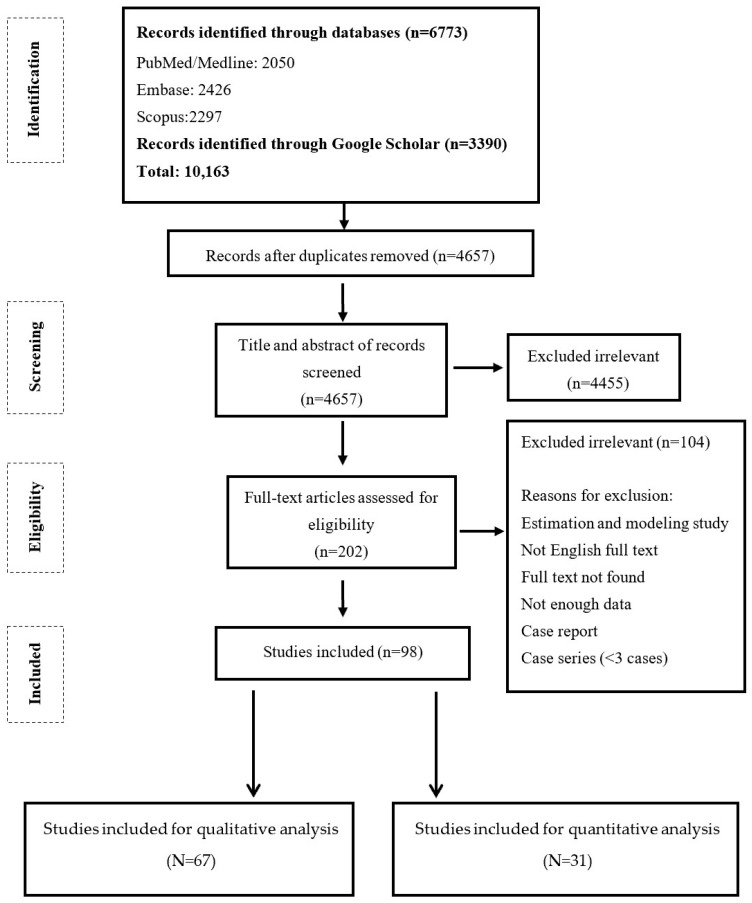
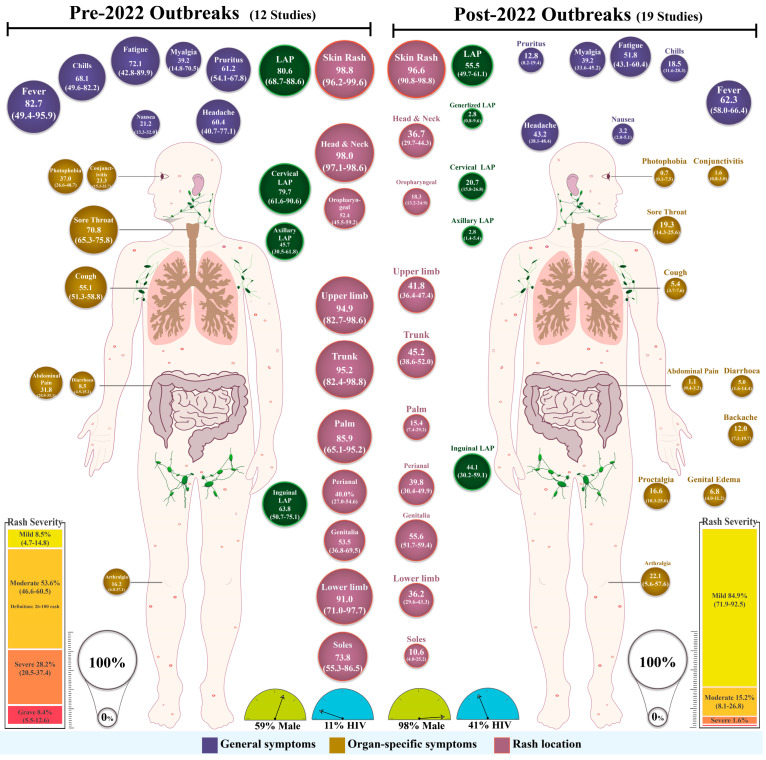
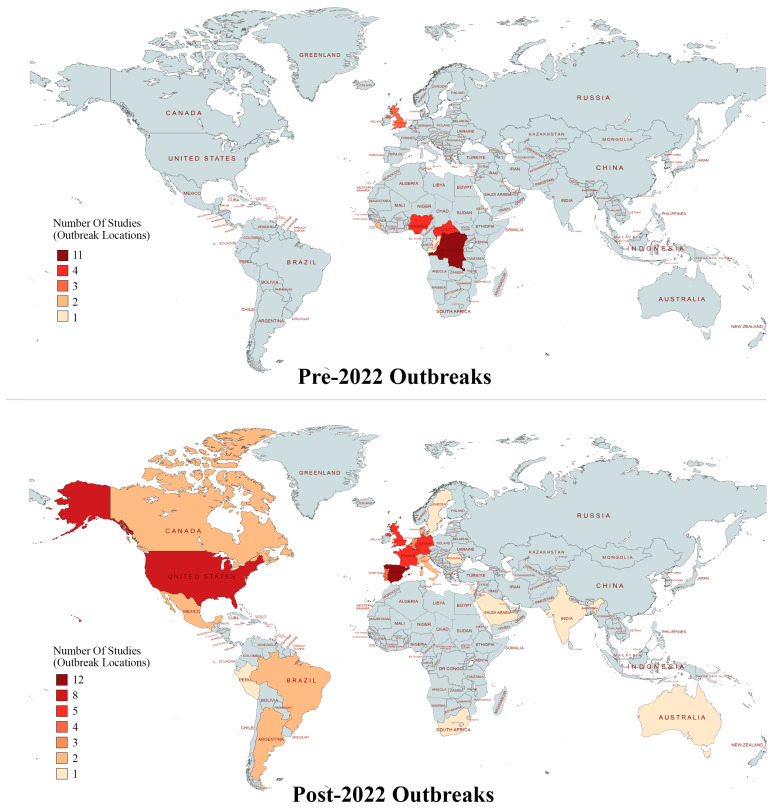
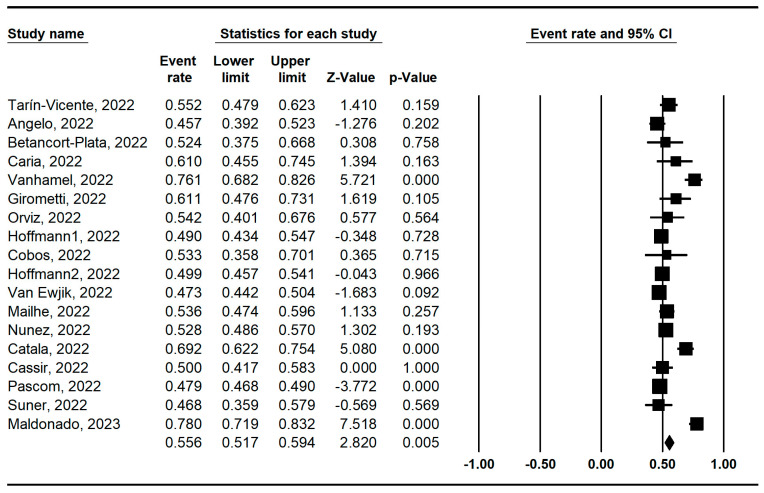
(1) Background: In early May 2022, an increasing number of human monkeypox (mpox) cases were reported in non-endemic disparate regions of the world, which raised concerns. Here, we provide a systematic review and meta-analysis of mpox-confirmed patients presented in peer-reviewed publications over the 10 years before and during the 2022 outbreak from demographic, epidemiological, and clinical perspectives. (2) Methods: A systematic search was performed for relevant studies published in Pubmed/Medline, Embase, Scopus, and Google Scholar from 1 January 2012 up to 15 February 2023. Pooled frequencies with 95% confidence intervals (CIs) were assessed using the random or fixed effect model due to the estimated heterogeneity of the true effect sizes. (3) Results: Out of 10,163 articles, 67 met the inclusion criteria, and 31 cross-sectional studies were included for meta-analysis. Animal-to-human transmission was dominant in pre-2022 cases (61.64%), but almost all post-2022 reported cases had a history of human contact, especially sexual contact. The pooled frequency of MSM individuals was 93.5% (95% CI 91.0-95.4, I: 86.60%) and was reported only in post-2022 included studies. The male gender was predominant in both pre- and post-2022 outbreaks, and the mean age of confirmed cases was 29.92 years (5.77-41, SD: 9.38). The most common clinical manifestations were rash, fever, lymphadenopathy, and malaise/fatigue. Proctalgia/proctitis (16.6%, 95% CI 10.3-25.6, I: 97.76) and anal/perianal lesions (39.8%, 95% CI 30.4-49.9, I: 98.10) were the unprecedented clinical manifestations during the 2022 outbreak, which were not described before. Genitalia involvement was more common in post-2022 mpox patients (55.6%, 95% CI 51.7-59.4, I: 88.11). (4) Conclusions: There are speculations about the possibility of changes in the pathogenic properties of the virus. It seems that post-2022 mpox cases experience a milder disease with fewer rashes and lower mortality rates. Moreover, the vast majority of post-2022 cases are managed on an outpatient basis. Our study could serve as a basis for ongoing investigations to identify the different aspects of previous mpox outbreaks and compare them with the current ones.
(1) 背景:2022年5月初,世界上非猴痘流行的不同地区报告了越来越多的人类猴痘(mpox)病例,这引发了人们的担忧。在此,我们从人口统计学、流行病学和临床角度,对2022年疫情爆发前及期间10年内在同行评审出版物中呈现的猴痘确诊患者进行了系统综述和荟萃分析。(2) 方法:对2012年1月1日至2023年2月15日在Pubmed/Medline、Embase、Scopus和谷歌学术上发表的相关研究进行系统检索。由于估计真实效应大小存在异质性,使用随机或固定效应模型评估合并频率及95%置信区间(CI)。(3) 结果:在10163篇文章中,67篇符合纳入标准,31项横断面研究纳入荟萃分析。2022年之前的病例中动物传人占主导(61.64%),但2022年之后报告的几乎所有病例都有与人接触的历史,尤其是性接触。男男性行为者(MSM)个体的合并频率为93.5%(95%CI 91.0 - 95.4,I²:86.60%),且仅在2022年之后纳入的研究中报告。2022年之前和之后的疫情爆发中男性均占主导,确诊病例的平均年龄为29.92岁(5.77 - 41,标准差:9.38)。最常见的临床表现为皮疹、发热、淋巴结病和不适/疲劳。直肠疼痛/直肠炎(16.6%,95%CI 10.3 - 25.6,I²:97.76)和肛门/肛周病变(39.8%,95%CI 30.4 - 49.9,I²:98.10)是2022年疫情爆发期间前所未有的临床表现,之前未被描述过。生殖器受累在2022年之后的猴痘患者中更常见(55.6%,95%CI 51.7 - 59.4,I²:88.11)。(4) 结论:关于病毒致病特性发生变化的可能性存在推测。2022年之后的猴痘病例似乎病情较轻,皮疹较少,死亡率较低。此外,2022年之后的绝大多数病例在门诊治疗。我们的研究可为正在进行的调查提供依据,以确定既往猴痘疫情的不同方面,并与当前疫情进行比较。