Lee Jihyun, Lee Taeyang, Jung Hoi-In, Park Wonse, Song Je Seon
Department of Pediatric Dentistry, College of Dentistry, Yonsei University, Seoul 03722, Republic of Korea.
Department of Preventive Dentistry & Public Oral Health, College of Dentistry, Yonsei University, Seoul 03722, Republic of Korea.
Children (Basel). 2023 Feb 22;10(3):429. doi: 10.3390/children10030429.
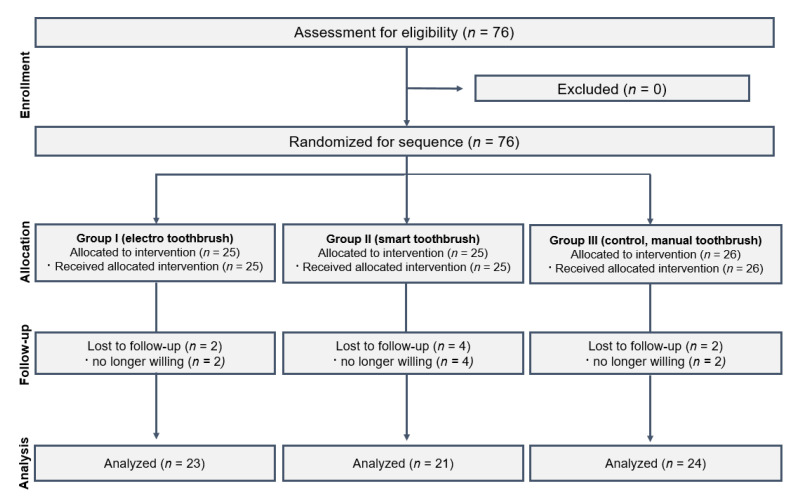
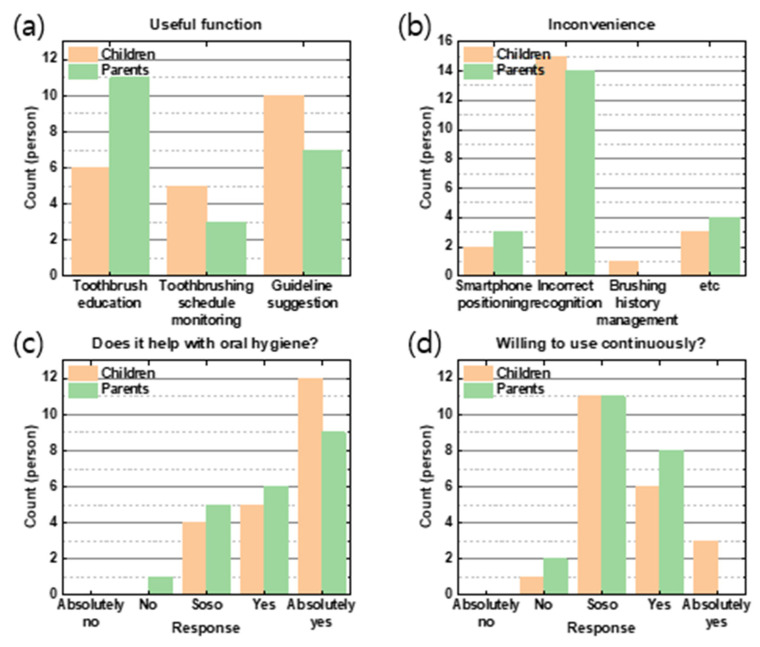
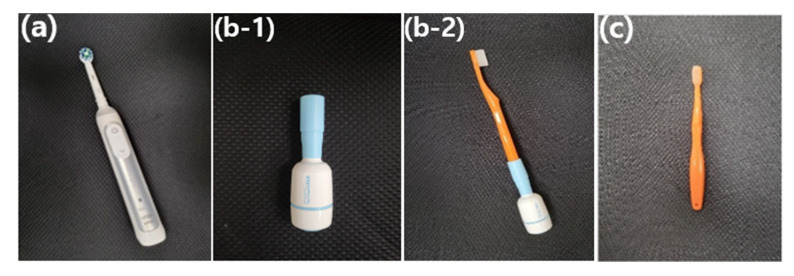
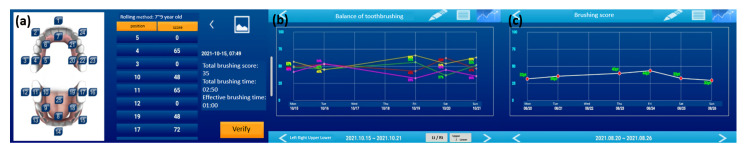
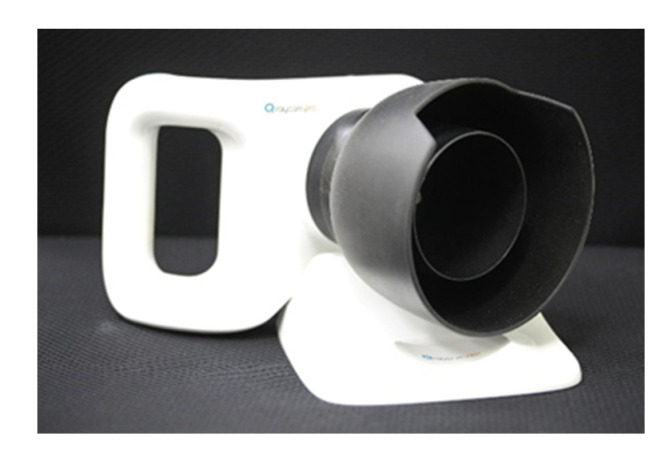
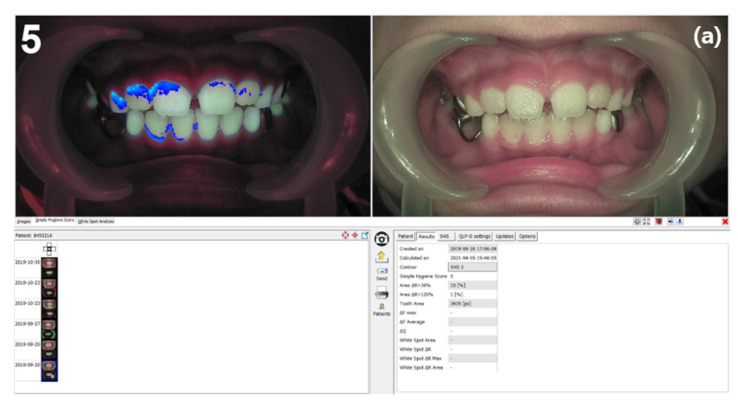
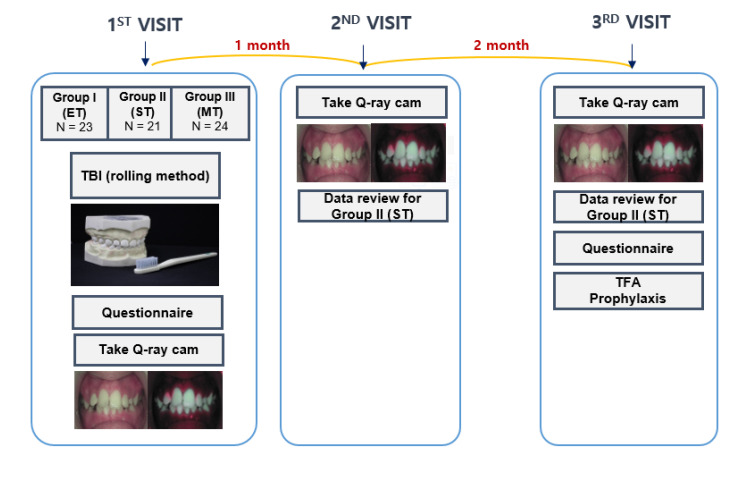
This randomized controlled trial aimed to educate patients and manage oral hygiene remotely via a smart toothbrush (ST) by using mobile applications and to improve oral hygiene and habits by evaluating the plaque state via images from a Q-ray cam, which is a quantitative light-induced fluorescence (QLF) digital imaging device. In total, 68 children (aged 6-12 years) were randomly divided into three groups. Group I was assigned an electro-toothbrush (ET), group II was assigned a smart toothbrush (ST), and group III used a manual toothbrush (MT). Each group used an assigned toothbrush and was checked after 1 and 3 months. Oral hygiene status was evaluated using the patient hygiene performance (PHP) index and fluorescent plaque index (FPI), which are presented in the QLF program. In addition, questionnaires on oral health behaviors and attitudes were also evaluated. There was a 0.24 decrease in the PHP index and a 1.40 decrease in the simple hygiene score three months later compared with the baseline in the ST group, with no significant difference between the three methods ( = 0.518, = 0.626). Many group II participants said that ST helped with oral hygiene, and they were willing to use it continuously. In addition, all participants' brushing times and attitudes toward oral hygiene improved after oral hygiene education using a Q-ray cam. Therefore, the use of STs provided good dental health education and a plaque-decreasing effect to children aged 6-12 years old. Furthermore, the QLF device can be used as a useful tool for maintaining good oral hygiene in children.
这项随机对照试验旨在通过智能牙刷(ST)利用移动应用程序对患者进行远程口腔卫生教育和管理,并通过定量光诱导荧光(QLF)数字成像设备Q射线相机拍摄的图像评估牙菌斑状态,以改善口腔卫生和习惯。总共68名6至12岁的儿童被随机分为三组。第一组被分配使用电动牙刷(ET),第二组被分配使用智能牙刷(ST),第三组使用手动牙刷(MT)。每组使用分配的牙刷,并在1个月和3个月后进行检查。使用QLF程序中显示的患者卫生表现(PHP)指数和荧光牙菌斑指数(FPI)评估口腔卫生状况。此外,还评估了关于口腔健康行为和态度的问卷。三个月后,ST组的PHP指数下降了0.24,简单卫生评分下降了1.40,与基线相比,三种方法之间无显著差异(=0.518,=0.626)。许多第二组参与者表示,智能牙刷有助于口腔卫生,他们愿意继续使用。此外,使用Q射线相机进行口腔卫生教育后,所有参与者的刷牙时间和对口腔卫生的态度都有所改善。因此,使用智能牙刷为6至12岁的儿童提供了良好的口腔健康教育和减少牙菌斑的效果。此外,QLF设备可作为维持儿童良好口腔卫生的有用工具。