Solanki Ratika, Tuli Avantika, Dhawan Preeti, Khanduri Nitin, Singh Aditi
Department of Pediatric and Preventive Dentistry, Seema Dental College and Hospital, Rishikesh, Uttarakhand, India.
Department of Pedodontics and Preventive Dentistry, BRS Dental College, Panchkula, Haryana, India.
Int J Clin Pediatr Dent. 2021 Jul-Aug;14(4):502-505. doi: 10.5005/jp-journals-10005-2001.
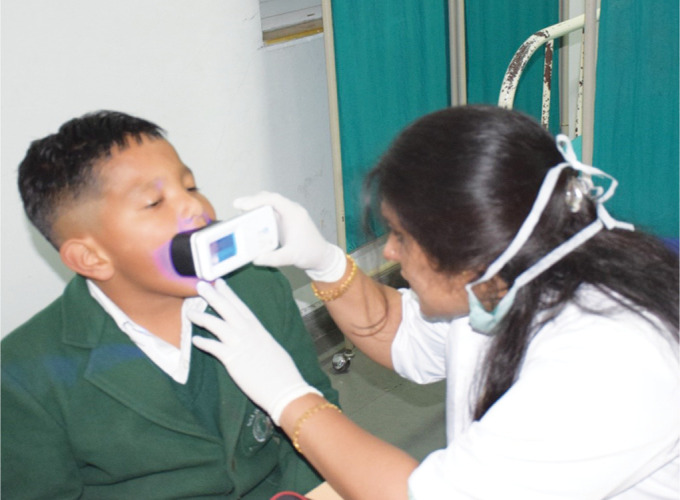
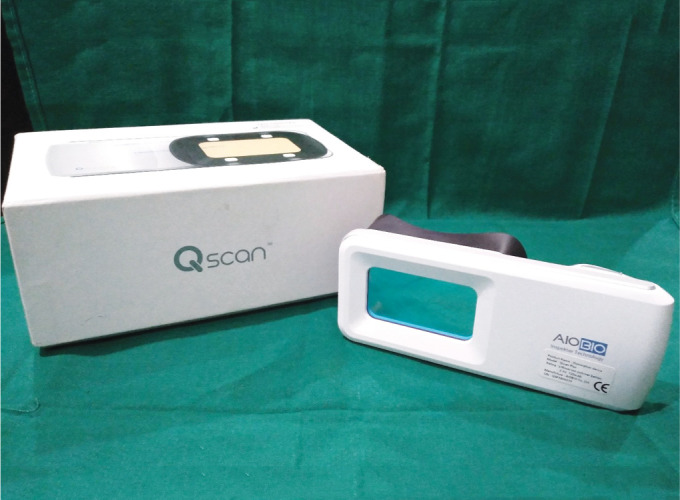
The main causative factors for maximum periodontal diseases are dental plaque and oral biofilms. This study was done to check the impact of quantitative light-induced fluorescence-digital (QLF-D) as a motivational tool for plaque control among children from various schools situated in Dehradun district along with education using audiovisual aids.
A total sample of 800 school-going children including both males and females aged 6 to 12 years from various schools situated in Dehradun district of Uttarakhand were surveyed. A pro forma was prepared and the demographics of the students were noted. All the students were first examined for the Oral Hygiene Index-Simplified (OHI-S) and then the random division was done into two groups, group A (Q-scan) and group B (basic diagnostic aids) for examination of plaque index.
The results of the study revealed that good OHI-S scores increased significantly from 1st visit to 3rd visit. The plaque scores for the control group, when examined with basic diagnostic aids of all three visits, were significantly good which increased subsequently from 1st visit to 3rd visit. Good plaque index score increased significantly for the test group from 1st to 3rd visit when examined with QLF-D.
We found in our study that QLF technology is of paramount importance in epidemiological surveys and plays a pivotal role in evaluating masses in maintaining oral health care.
Solanki R, Tuli A, Dhawan P, QLF-D: A Contemporary Plaque Control Tool in Children. Int J Clin Pediatr Dent 2021;14(4):502-505.
大多数牙周疾病的主要致病因素是牙菌斑和口腔生物膜。本研究旨在检验定量光诱导荧光数字成像(QLF-D)作为一种激励工具,对位于德拉敦地区各学校儿童控制牙菌斑的影响,并同时使用视听辅助工具进行教育。
对来自北阿坎德邦德拉敦地区各学校的800名6至12岁的在校儿童(包括男童和女童)进行了抽样调查。编制了一份表格并记录了学生的人口统计学信息。所有学生首先接受简化口腔卫生指数(OHI-S)检查,然后随机分为两组,A组(Q扫描)和B组(基本诊断工具),用于检查菌斑指数。
研究结果显示,从第一次就诊到第三次就诊,良好的OHI-S评分显著提高。对照组在所有三次就诊时使用基本诊断工具检查的菌斑评分均显著良好,且从第一次就诊到第三次就诊后有所增加。当使用QLF-D检查时,测试组从第一次就诊到第三次就诊的良好菌斑指数评分显著提高。
我们在研究中发现,QLF技术在流行病学调查中至关重要,在评估人群维持口腔保健方面发挥着关键作用。
索兰基R、图利A、达万P,《QLF-D:儿童当代牙菌斑控制工具》。《国际临床儿科牙科杂志》2021年;14(4):502 - 505。