Research Center of Biotechnology of the Russian Academy of Sciences, 119071 Moscow, Russia.
Kurchatov Center for Genomic Research, National Research Centre "Kurchatov Institute", 123182 Moscow, Russia.
Genes (Basel). 2023 Mar 12;14(3):700. doi: 10.3390/genes14030700.
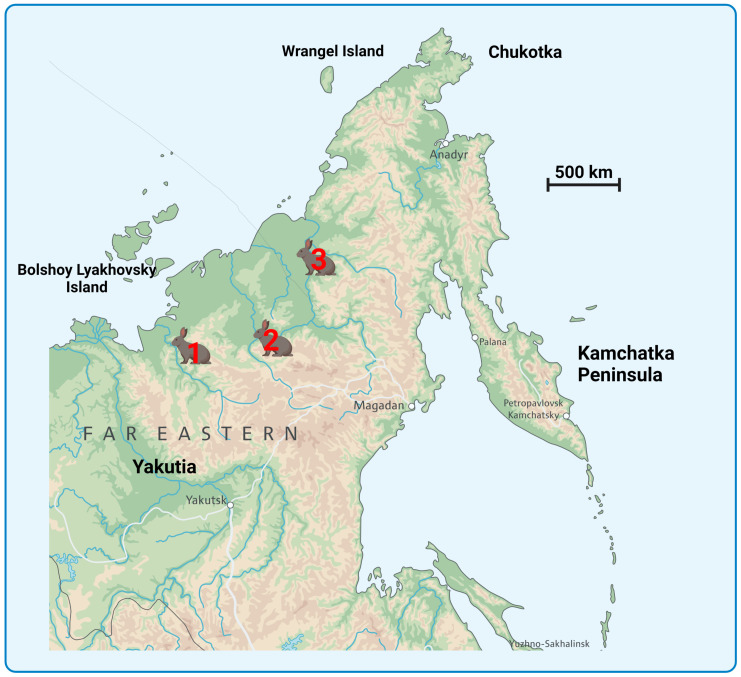
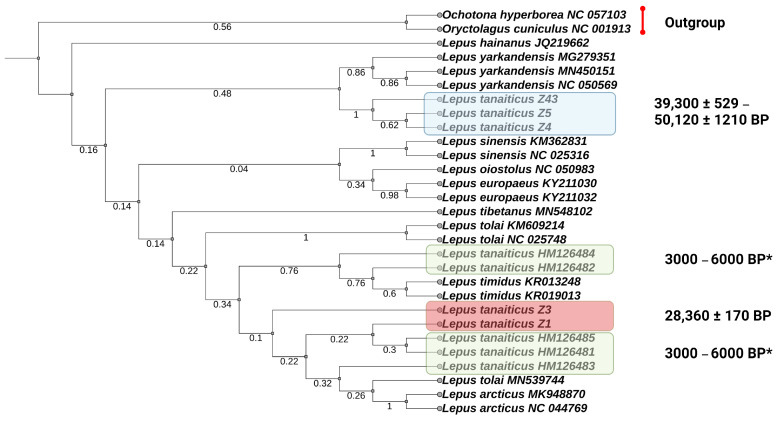
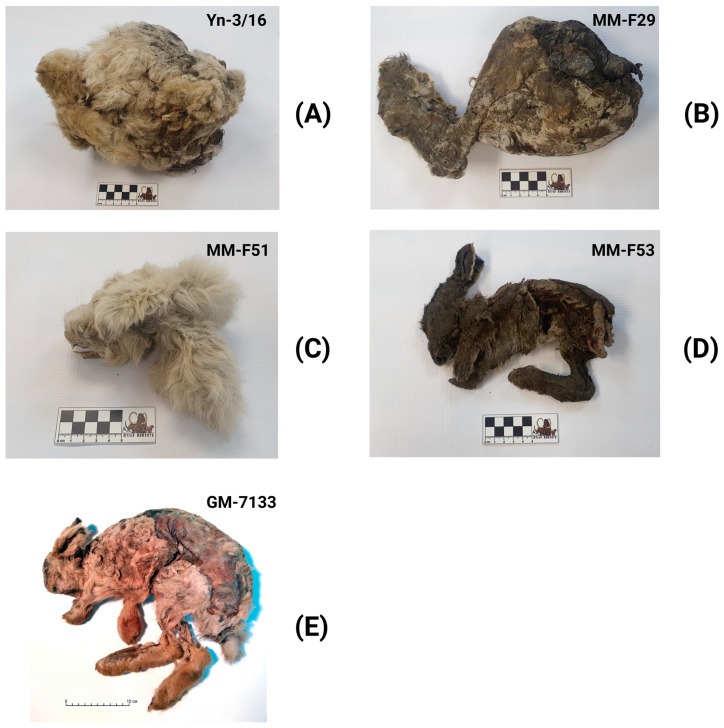
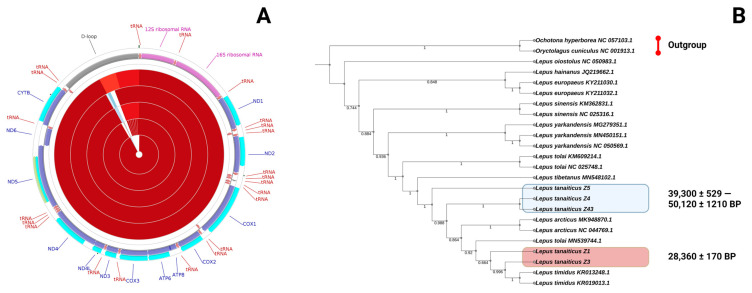
Paleoclimatic changes during the Pleistocene-Holocene transition is suggested as a main factor that led to species extinction, including the woolly mammoth (), Steller's sea cow () and the Don-hare (). These species inhabited the territory of Eurasia during the Holocene, but eventually went extinct. The Don-hare is an extinct species of the genus (Leporidae, Lagomorpha), which lived in the Late Pleistocene-Early Holocene in Eastern Europe and Northern Asia. For a long time, the Don-hare was considered a separate species, but at the same time, its species status was disputed, taking into account both morphological data and mitochondrial DNA. In this study, mitochondrial genomes of five Don-hares, whose remains were found on the territory of Northeastern Eurasia were reconstructed. Firstly, we confirm the phylogenetic proximity of the "young" specimens of Don-hare and mountain or white hare, and secondly, that samples older than 39 Kya form a completely distinct mitochondrial clade.
古气候在更新世-全新世过渡期的变化被认为是导致物种灭绝的主要因素,其中包括猛犸象(Mammuthus primigenius)、斯特勒海牛(Hydrodamalis gigas)和堪察加旱獭(Marmota sibirica)。这些物种在全新世期间栖息在欧亚大陆,但最终灭绝了。堪察加旱獭是兔形目兔科兔属(Leporidae, Lagomorpha)的一个已灭绝物种,生活在东欧和北亚的更新世晚期-全新世早期。长期以来,堪察加旱獭被认为是一个单独的物种,但同时,它的物种地位也存在争议,这既考虑了形态学数据,也考虑了线粒体 DNA。在这项研究中,重建了在东北欧亚大陆发现的 5 只堪察加旱獭遗骸的线粒体基因组。首先,我们证实了“年轻”标本的亲缘关系,其次,比 39 Kya 更老的样本形成了一个完全不同的线粒体分支。