Department of Biological Sciences, University at Buffalo, Buffalo, NY 14260.
Daicel Arbor Biosciences, Ann Arbor, MI 48103.
Proc Natl Acad Sci U S A. 2022 Jun 14;119(24):e2200016119. doi: 10.1073/pnas.2200016119. Epub 2022 Jun 6.
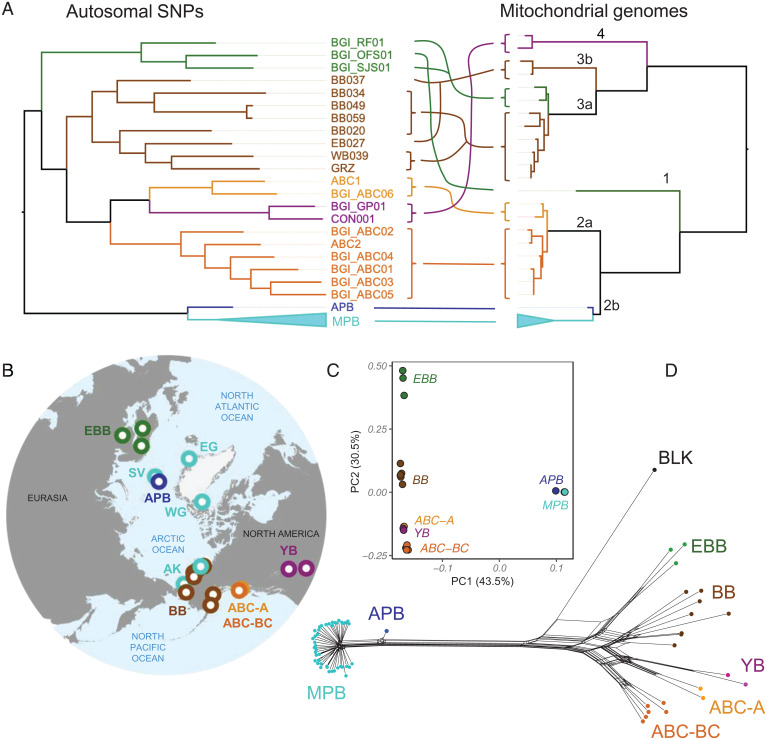
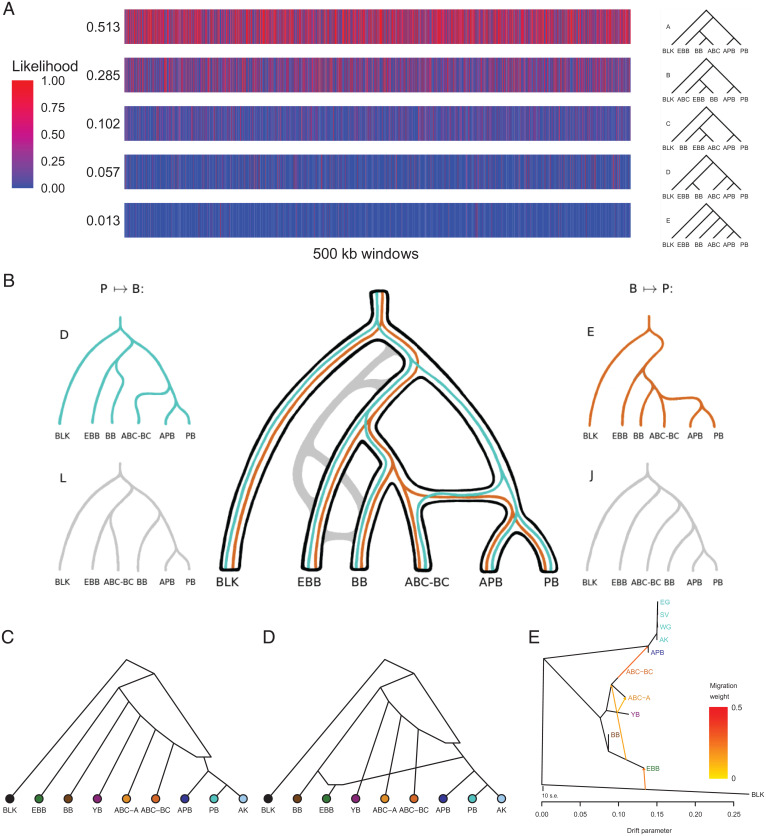
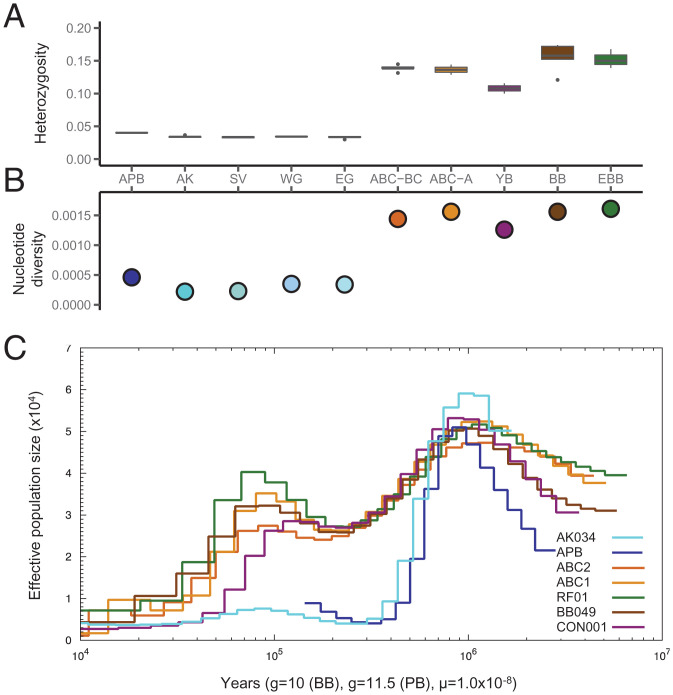
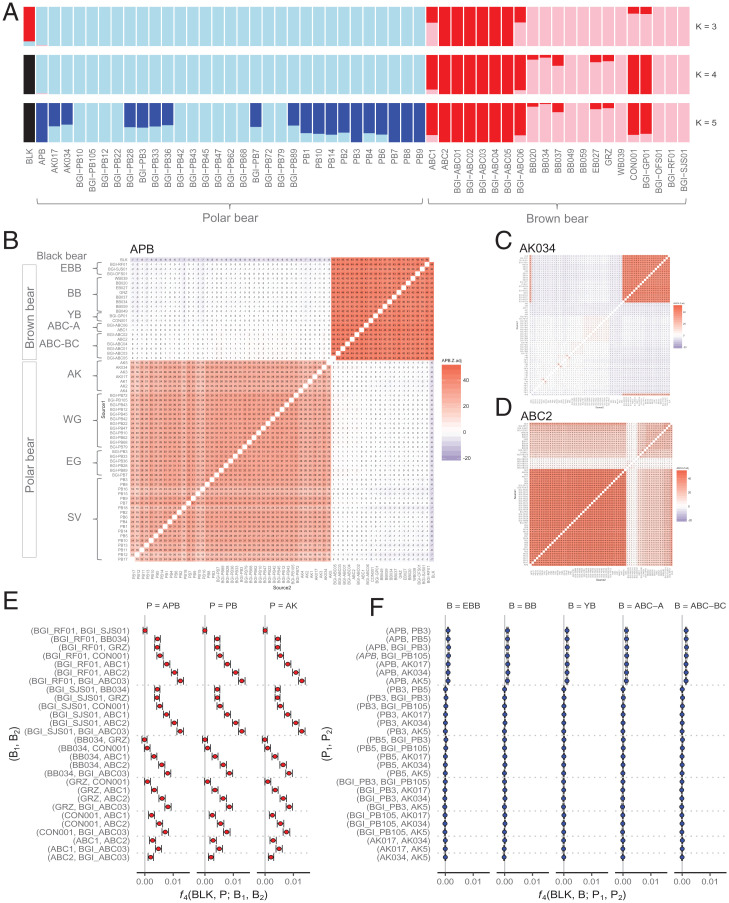
The polar bear (Ursus maritimus) has become a symbol of the threat to biodiversity from climate change. Understanding polar bear evolutionary history may provide insights into apex carnivore responses and prospects during periods of extreme environmental perturbations. In recent years, genomic studies have examined bear speciation and population history, including evidence for ancient admixture between polar bears and brown bears (Ursus arctos). Here, we extend our earlier studies of a 130,000- to 115,000-y-old polar bear from the Svalbard Archipelago using a 10× coverage genome sequence and 10 new genomes of polar and brown bears from contemporary zones of overlap in northern Alaska. We demonstrate a dramatic decline in effective population size for this ancient polar bear’s lineage, followed by a modest increase just before its demise. A slightly higher genetic diversity in the ancient polar bear suggests a severe genetic erosion over a prolonged bottleneck in modern polar bears. Statistical fitting of data to alternative admixture graph scenarios favors at least one ancient introgression event from brown bears into the ancestor of polar bears, possibly dating back over 150,000 y. Gene flow was likely bidirectional, but allelic transfer from brown into polar bear is the strongest detected signal, which contrasts with other published work. These findings may have implications for our understanding of climate change impacts: Polar bears, a specialist Arctic lineage, may not only have undergone severe genetic bottlenecks but also been the recipient of generalist, boreal genetic variants from brown bears during critical phases of Northern Hemisphere glacial oscillations.
北极熊(Ursus maritimus)已成为气候变化对生物多样性威胁的象征。了解北极熊的进化历史可以深入了解顶级食肉动物在极端环境干扰时期的反应和前景。近年来,基因组研究已经研究了熊的物种形成和种群历史,包括北极熊和棕熊(Ursus arctos)之间存在古老混合的证据。在这里,我们扩展了我们之前对来自斯瓦尔巴群岛的一只 130000-115000 年前北极熊的研究,使用了 10×覆盖的基因组序列和来自阿拉斯加北部当代重叠区域的 10 只新的北极熊和棕熊基因组。我们证明了这只古老北极熊谱系的有效种群数量急剧下降,随后在其灭绝之前略有增加。古老北极熊的遗传多样性略高,表明在现代北极熊的长期瓶颈中发生了严重的遗传侵蚀。数据对替代混合图情景的统计拟合有利于至少一次来自棕熊的古老基因渗入到北极熊的祖先中,可能追溯到 150000 年前。基因流可能是双向的,但从棕熊到北极熊的等位基因转移是检测到的最强信号,这与其他已发表的工作形成对比。这些发现可能对我们理解气候变化的影响具有重要意义:北极熊是一种专门的北极谱系,不仅经历了严重的遗传瓶颈,而且在北半球冰川振荡的关键阶段还从棕熊那里获得了一般的北方遗传变体。