Dietzel Joanna, Habermann Isabel V, Hörder Sebastian, Hahn Katrin, Meyer-Hamme Gesa, Ortiz Miriam, Hua Kevin, Stöckigt Barbara, Bolster Marie, Grabowska Weronika, Roll Stephanie, Binting Sylvia, Willich Stefan N, Schröder Sven, Brinkhaus Benno
Institute of Social Medicine, Epidemiology and Health Economics, Charité-Universitätsmedizin Berlin, Corporate Member of Freie Universität Berlin, Humboldt-Universität zu Berlin, and Berlin Institute of Health, Luisenstr. 57, 10117 Berlin, Germany.
Department of Neurology with Experimental Neurology, Charité-Universitätsmedizin Berlin, Corporate Member of Freie Universität Berlin, Humboldt-Universität zu Berlin, and Berlin Institute of Health, 10117 Berlin, Germany.
J Clin Med. 2023 Mar 7;12(6):2103. doi: 10.3390/jcm12062103.
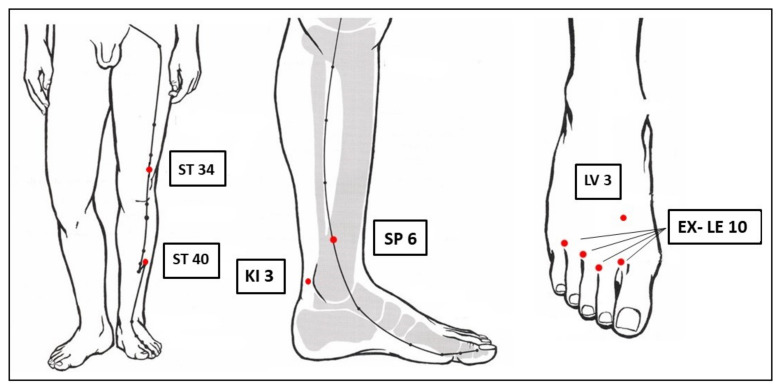
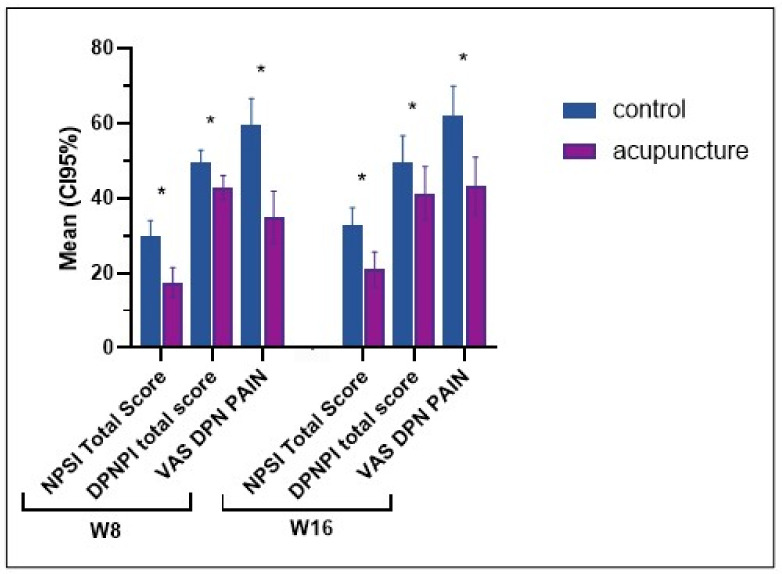
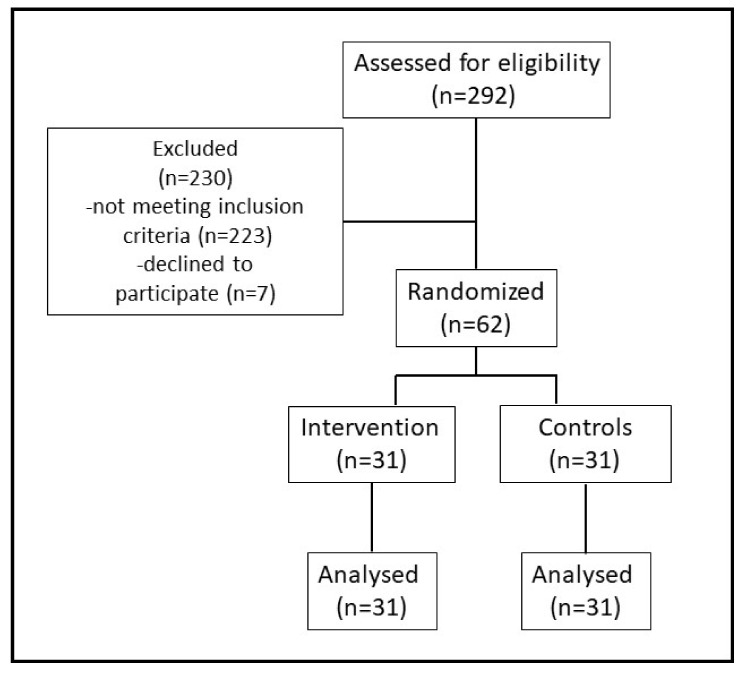
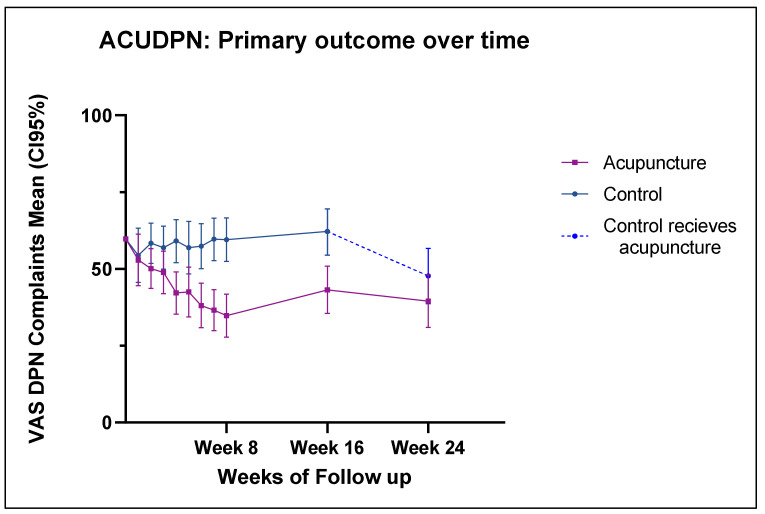
: Diabetic polyneuropathy (DPN) is a common complication of diabetes, which presents with a loss of sensorimotor function or pain. This study assessed the effectiveness and safety of acupuncture as a treatment for DPN-related complaints. : In this randomized controlled trial, patients with type II diabetes and symptoms of neuropathy in the lower limbs were included. A total of 12 acupuncture treatments were administered over 8 weeks. The waitlist control group received the same acupuncture treatment starting at week 16 (after baseline). : A total of 62 patients were randomized (acupuncture group = 31; control group = 31). The primary outcome was overall complaints, and it was reduced with a significant difference of 24.7 on a VAS (CI 95% 14.8;34.7, < 0.001) between both groups in favor of acupuncture. Reductions were recorded for the secondary outcomes VAS pain, neuropathic pain symptom inventory (NPSI), emotional dimensions of pain, SF-12, and diabetic peripheral neuropathic pain impact (DPNPI) after the intervention and at the follow-ups in the acupuncture group. Adverse reactions were minor and transient. : Acupuncture leads to a significant and lasting reduction in DPN-related complaints when compared to routine care and is well tolerated, with minor side effects.
糖尿病性多发性神经病变(DPN)是糖尿病常见的并发症,表现为感觉运动功能丧失或疼痛。本研究评估了针刺治疗DPN相关症状的有效性和安全性。
在这项随机对照试验中,纳入了患有II型糖尿病且有下肢神经病变症状的患者。在8周内共进行12次针刺治疗。等待名单对照组在第16周(基线后)开始接受相同的针刺治疗。
共有62名患者被随机分组(针刺组 = 31;对照组 = 31)。主要结局是总体症状,两组之间在视觉模拟评分(VAS)上有显著差异,针刺组降低了24.7(95%置信区间14.8;34.7,P < 0.001),表明针刺组更优。针刺组在干预后及随访时,次要结局如VAS疼痛、神经病理性疼痛症状量表(NPSI)、疼痛的情感维度、SF - 12以及糖尿病周围神经病理性疼痛影响量表(DPNPI)均有下降。不良反应轻微且短暂。
与常规护理相比,针刺可显著且持久地减轻DPN相关症状,耐受性良好,副作用轻微。