Diaz Michael Joseph, Mark Isabella, Rodriguez Daphnee, Gelman Beata, Tran Jasmine Thuy, Kleinberg Giona, Levin Anna, Beneke Alice, Root Kevin Thomas, Tran Andrew Xuan Vinh, Lucke-Wold Brandon
College of Medicine, University of Florida, Gainesville, FL 32611, USA.
College of Medicine, University of Central Florida, Orlando, FL 32827, USA.
Life (Basel). 2023 Mar 19;13(3):828. doi: 10.3390/life13030828.
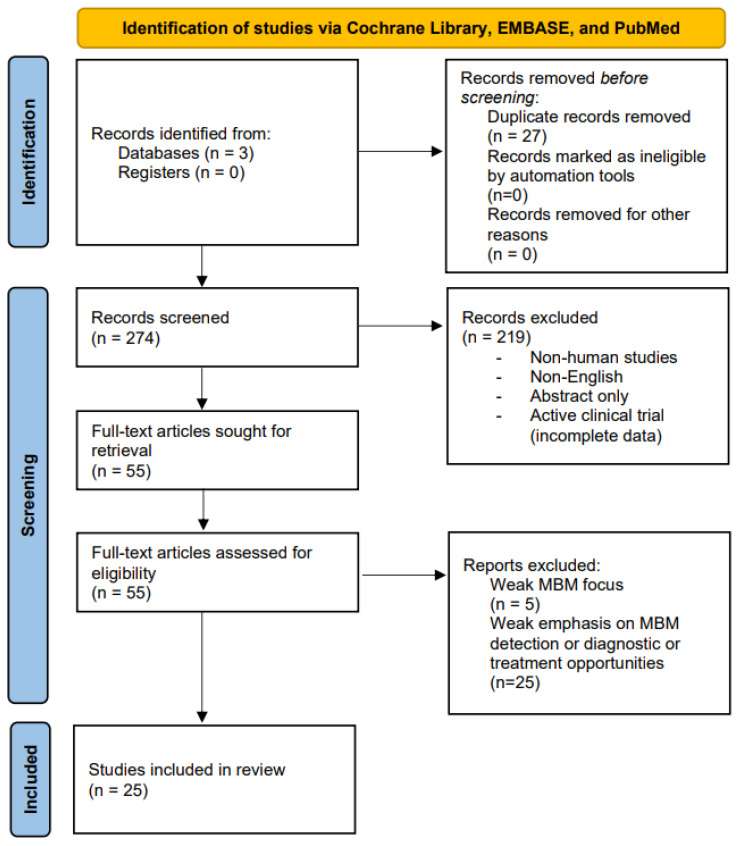
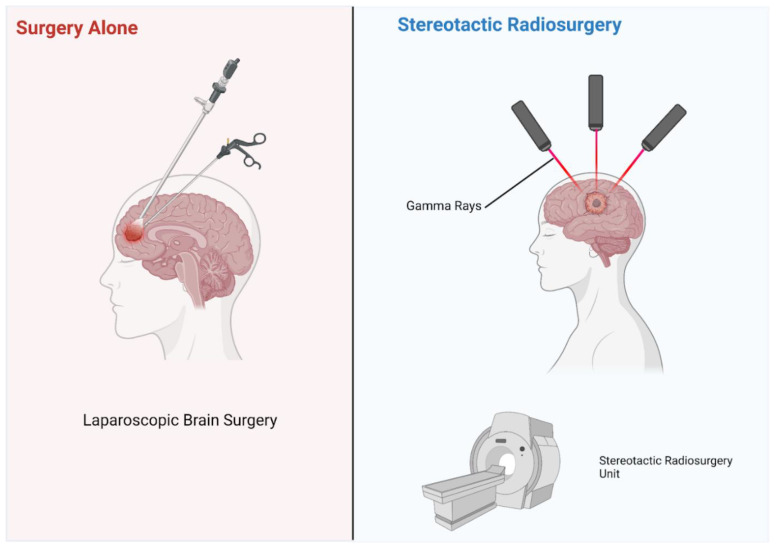
Melanoma continues to represent the most serious skin cancer worldwide. However, few attempts have been made to connect the body of research on advanced melanoma. In the present review, we report on strides made in the diagnosis and treatment of intracranial metastatic melanoma. Relevant Cochrane reviews and randomized-controlled trials published by November 2022 were systematically retrieved from the Cochrane Library, EMBASE, and PubMed databases (N = 27). Search and screening methods adhered to the 2020 revision of the Preferred Reporting Items for Systematic reviews and Meta-Analyses guidelines. Although the research surrounding the earlier detection of melanoma brain metastasis is scarce, several studies have highlighted specific markers associated with MBM. Such factors include elevated BRAFV600 mutant ctDNA, high LDH concentration, and high IGF-1R. The approach to treating MBM is moving away from surgery and toward nonsurgical management, namely, a combination of stereotactic radiosurgery (SRS) and immunotherapeutic agents. There is an abundance of emerging research seeking to identify and improve both novel and established treatment options and diagnostic approaches for MBM, however, more research is still needed to maximize the clinical efficacy, especially for new immunotherapeutics. Early detection is optimal for the efficacy of treatment and MBM prognosis. Current treatment utilizes chemotherapies and targeted therapies. Emerging approaches emphasize biomarkers and joint treatments. Further exploration toward preliminary identification, the timing of therapies, and methods to ameliorate adverse treatment effects are needed to advance MBM patient care.
黑色素瘤仍然是全球最严重的皮肤癌。然而,很少有人尝试将晚期黑色素瘤的研究成果联系起来。在本综述中,我们报告了颅内转移性黑色素瘤在诊断和治疗方面所取得的进展。从Cochrane图书馆、EMBASE和PubMed数据库中系统检索了截至2022年11月发表的相关Cochrane综述和随机对照试验(N = 27)。检索和筛选方法遵循《系统评价和Meta分析的首选报告项目》2020年修订版指南。尽管关于早期发现黑色素瘤脑转移的研究很少,但一些研究已经突出了与黑色素瘤脑转移相关的特定标志物。这些因素包括BRAFV600突变型循环肿瘤DNA(ctDNA)升高、乳酸脱氢酶(LDH)浓度高和胰岛素样生长因子1受体(IGF-1R)高。治疗黑色素瘤脑转移的方法正从手术转向非手术管理,即立体定向放射外科(SRS)和免疫治疗药物的联合使用。有大量新兴研究试图确定并改进黑色素瘤脑转移的新的和已有的治疗方案及诊断方法,然而,仍需要更多研究以最大化临床疗效,特别是对于新的免疫治疗药物。早期发现对于治疗效果和黑色素瘤脑转移的预后最为理想。目前的治疗采用化疗和靶向治疗。新兴方法强调生物标志物和联合治疗。需要进一步探索初步识别、治疗时机以及改善不良治疗效果的方法,以推进黑色素瘤脑转移患者的护理。