Kumar Girish, Virmani Tarun, Sharma Ashwani, Pathak Kamla
School of Pharmaceutical Sciences, MVN University, Aurangabad 121105, India.
Faculty of Pharmacy, Uttar Pradesh University of Medical Sciences, Saifai 206001, India.
Pharmaceutics. 2023 Mar 9;15(3):889. doi: 10.3390/pharmaceutics15030889.
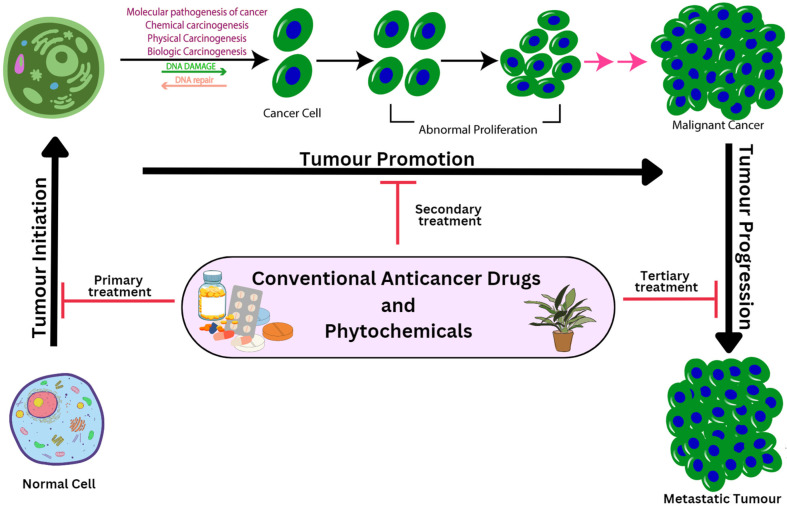
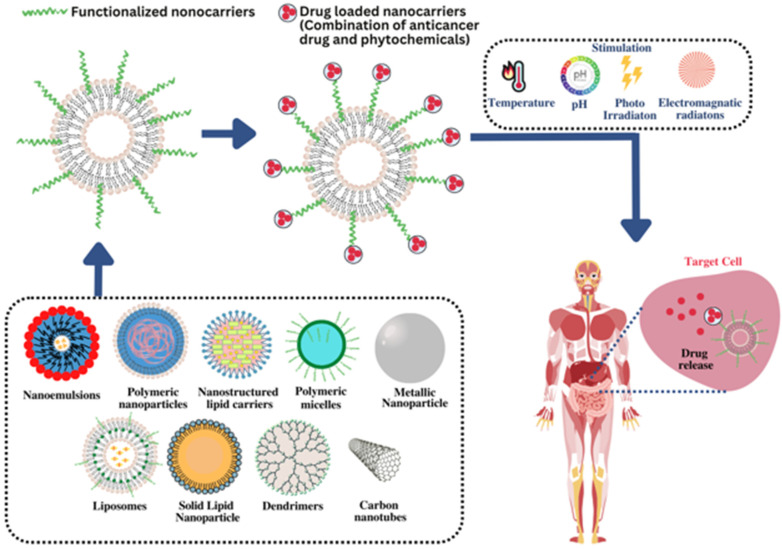
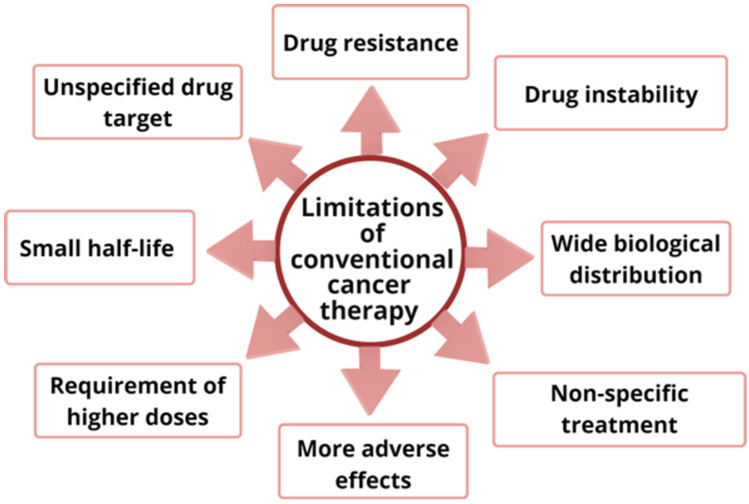
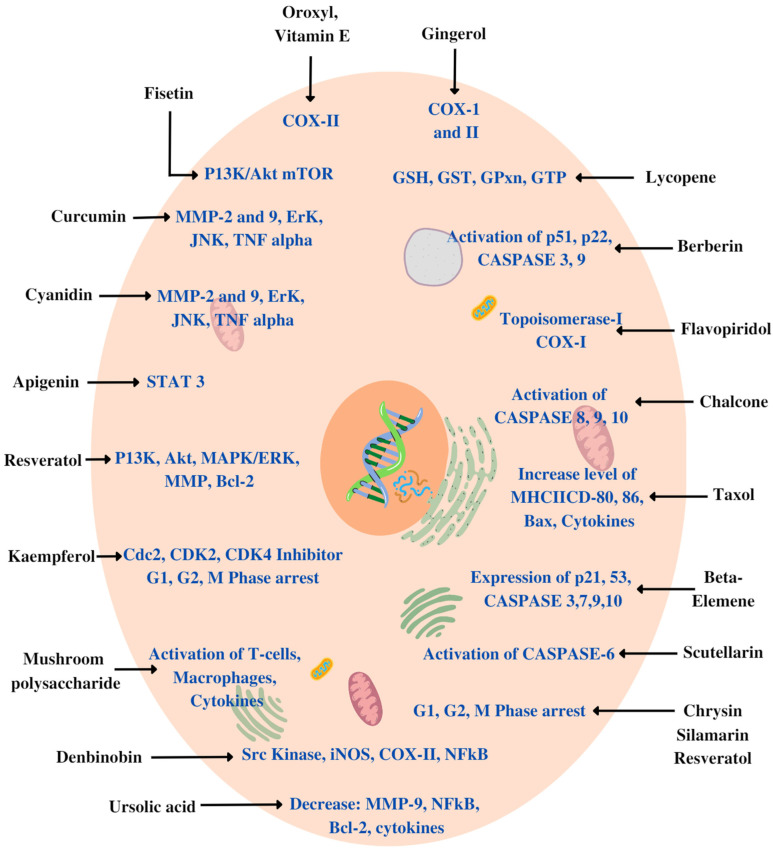
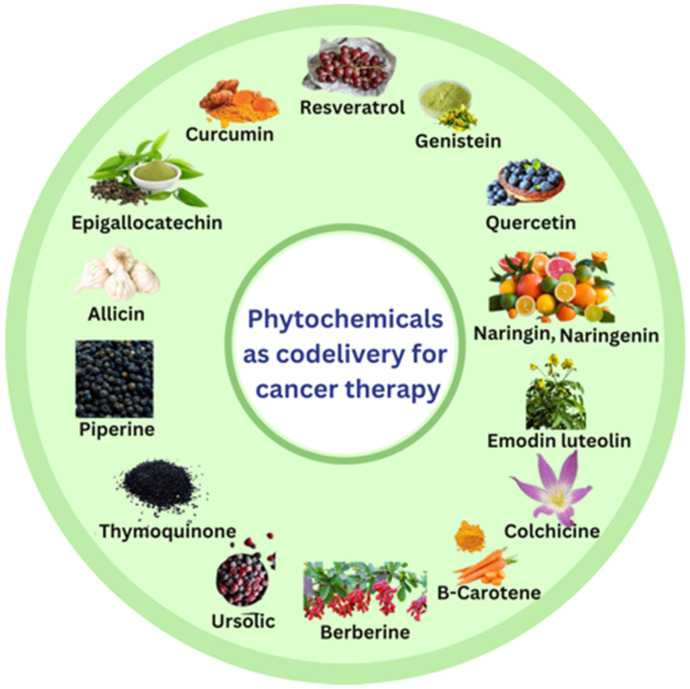
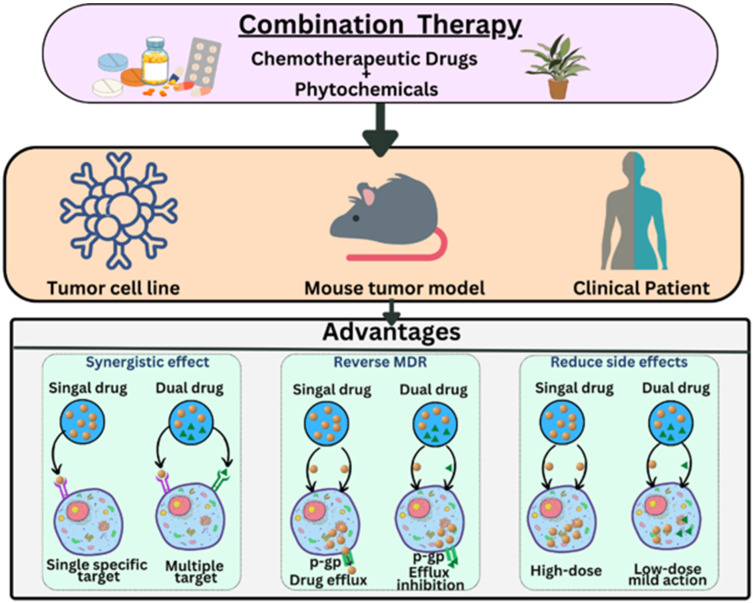
Anticancer drugs in monotherapy are ineffective to treat various kinds of cancer due to the heterogeneous nature of cancer. Moreover, available anticancer drugs possessed various hurdles, such as drug resistance, insensitivity of cancer cells to drugs, adverse effects and patient inconveniences. Hence, plant-based phytochemicals could be a better substitute for conventional chemotherapy for treatment of cancer due to various properties: lesser adverse effects, action via multiple pathways, economical, etc. Various preclinical studies have demonstrated that a combination of phytochemicals with conventional anticancer drugs is more efficacious than phytochemicals individually to treat cancer because plant-derived compounds have lower anticancer efficacy than conventional anticancer drugs. Moreover, phytochemicals suffer from poor aqueous solubility and reduced bioavailability, which must be resolved for efficacious treatment of cancer. Therefore, nanotechnology-based novel carriers are employed for codelivery of phytochemicals and conventional anticancer drugs for better treatment of cancer. These novel carriers include nanoemulsion, nanosuspension, nanostructured lipid carriers, solid lipid nanoparticles, polymeric nanoparticles, polymeric micelles, dendrimers, metallic nanoparticles, carbon nanotubes that provide various benefits of improved solubility, reduced adverse effects, higher efficacy, reduced dose, improved dosing frequency, reduced drug resistance, improved bioavailability and higher patient compliance. This review summarizes various phytochemicals employed in treatment of cancer, combination therapy of phytochemicals with anticancer drugs and various nanotechnology-based carriers to deliver the combination therapy in treatment of cancer.
由于癌症的异质性,单一疗法中的抗癌药物对治疗各种癌症无效。此外,现有的抗癌药物存在各种障碍,如耐药性、癌细胞对药物不敏感、副作用以及给患者带来不便等。因此,基于植物的植物化学物质因其多种特性,如副作用较小、通过多种途径起作用、经济等,可能是传统化疗治疗癌症的更好替代品。各种临床前研究表明,植物化学物质与传统抗癌药物联合使用比单独使用植物化学物质治疗癌症更有效,因为植物衍生化合物的抗癌效果低于传统抗癌药物。此外,植物化学物质存在水溶性差和生物利用度降低的问题,这必须得到解决才能有效治疗癌症。因此,基于纳米技术的新型载体被用于植物化学物质和传统抗癌药物的共递送,以更好地治疗癌症。这些新型载体包括纳米乳剂、纳米混悬液、纳米结构脂质载体、固体脂质纳米粒、聚合物纳米粒、聚合物胶束、树枝状大分子、金属纳米颗粒、碳纳米管,它们具有提高溶解度、降低副作用、提高疗效、减少剂量、改善给药频率、降低耐药性、提高生物利用度和提高患者依从性等多种益处。本综述总结了用于癌症治疗的各种植物化学物质、植物化学物质与抗癌药物的联合疗法以及用于递送联合疗法治疗癌症的各种基于纳米技术的载体。