• 文献检索
  • 文档翻译
  • 深度研究
  • 学术资讯
  • Suppr Zotero 插件Zotero 插件
  • 邀请有礼
  • 套餐&价格
  • 历史记录
应用&插件
Suppr Zotero 插件Zotero 插件浏览器插件Mac 客户端Windows 客户端微信小程序
定价
高级版会员购买积分包购买API积分包
服务
文献检索文档翻译深度研究API 文档MCP 服务
关于我们
关于 Suppr公司介绍联系我们用户协议隐私条款
关注我们

Suppr 超能文献

核心技术专利:CN118964589B侵权必究
粤ICP备2023148730 号-1Suppr @ 2026

文献检索

告别复杂PubMed语法,用中文像聊天一样搜索,搜遍4000万医学文献。AI智能推荐,让科研检索更轻松。

立即免费搜索

文件翻译

保留排版,准确专业,支持PDF/Word/PPT等文件格式,支持 12+语言互译。

免费翻译文档

深度研究

AI帮你快速写综述,25分钟生成高质量综述,智能提取关键信息,辅助科研写作。

立即免费体验

基于微观可视化实验的水力压裂地层中压裂液返排研究

Investigation of Fracturing Fluid Flowback in Hydraulically Fractured Formations Based on Microscopic Visualization Experiments.

作者信息

Zou Guodong, Pan Bin, Zhu Weiyao, Liu Yuwei, Ma Shou, Liu Mingming

机构信息

School of Civil and Resource Engineering, University of Science and Technology Beijing, Beijing 100083, China.

SinoFTS Petroleum Services Ltd., Beijing 100083, China.

出版信息

Polymers (Basel). 2023 Mar 21;15(6):1560. doi: 10.3390/polym15061560.

DOI:10.3390/polym15061560
PMID:36987341
原文链接:https://pmc.ncbi.nlm.nih.gov/articles/PMC10051806/
Abstract

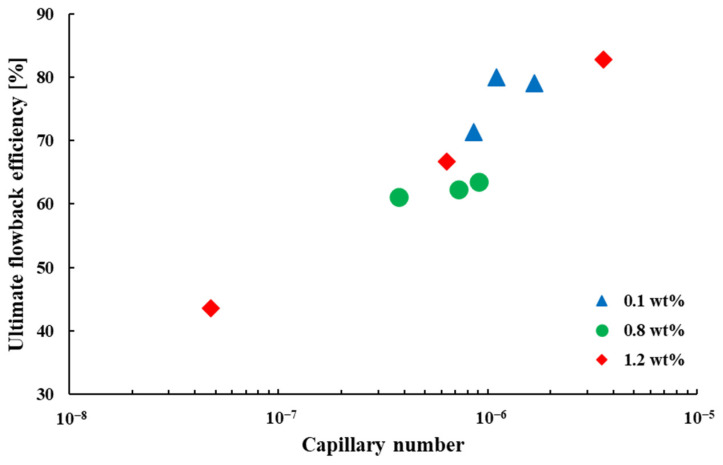
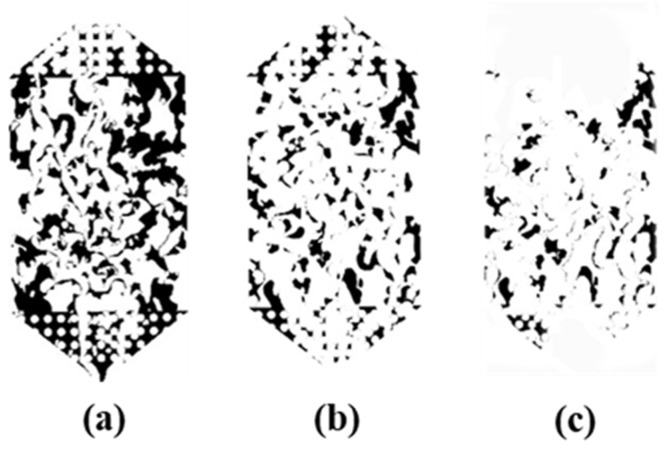
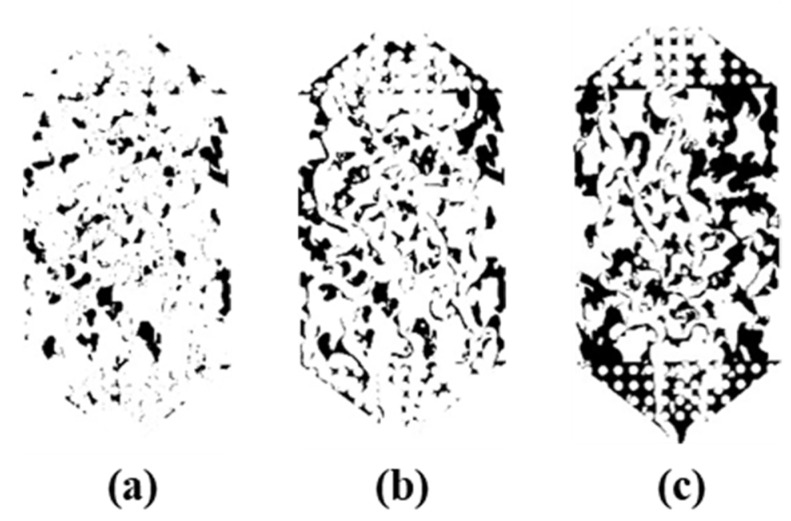
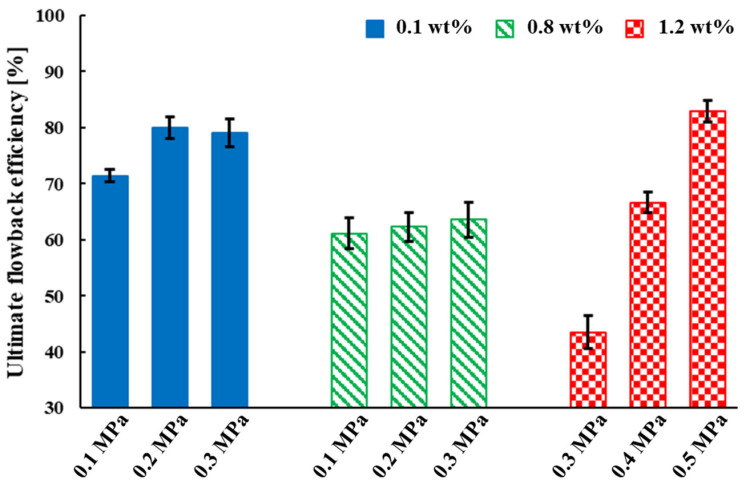
Fracturing fluids are widely applied in the hydraulic fracturing of shale gas reservoirs, but the fracturing fluid flowback efficiency is typically less than 50%, severely limiting the shale gas recovery. Additionally, the mechanism and main influencing factors of fracturing fluid flowback are unclear. In this study, microscopic experiments are conducted to simulate the fracturing fluid flowback progress in shale gas reservoirs. The mechanism and factors affecting fracturing fluid flowback/retention in the fracture zone were analyzed and clarified. Results show that the ultimate flowback efficiency of fracturing fluid is positively correlated with the fracturing fluid concentration and the gas driving pressure difference. There are four kinds of mechanisms responsible for fracturing fluid retention in the pore network: viscous resistance, the Jamin effect, the gas blockage effect and the dead end of the pore. Additionally, the ultimate flowback efficiency of the fracturing fluid increases linearly with increasing capillary number. These insights will advance the fundamental understanding of fracturing fluid flowback in shale gas reservoirs and provide useful guidance for shale gas reservoirs development.

摘要

压裂液广泛应用于页岩气藏水力压裂中,但压裂液返排效率通常低于50%,严重限制了页岩气采收率。此外,压裂液返排的机理及主要影响因素尚不清楚。本研究通过微观实验模拟页岩气藏压裂液返排过程。分析并阐明了影响压裂液在裂缝带返排/滞留的机理和因素。结果表明,压裂液的最终返排效率与压裂液浓度和气驱压差呈正相关。孔隙网络中导致压裂液滞留的机制有四种:粘性阻力、贾敏效应、气锁效应和孔隙死端。此外,压裂液的最终返排效率随毛细管数的增加呈线性增加。这些认识将加深对页岩气藏压裂液返排的基本理解,并为页岩气藏开发提供有益指导。

https://cdn.ncbi.nlm.nih.gov/pmc/blobs/f331/10051806/e01d2677c46f/polymers-15-01560-g017.jpg
https://cdn.ncbi.nlm.nih.gov/pmc/blobs/f331/10051806/206329b2e0ff/polymers-15-01560-g001.jpg
https://cdn.ncbi.nlm.nih.gov/pmc/blobs/f331/10051806/efc5c23107a3/polymers-15-01560-g002.jpg
https://cdn.ncbi.nlm.nih.gov/pmc/blobs/f331/10051806/9779eb133c3b/polymers-15-01560-g003.jpg
https://cdn.ncbi.nlm.nih.gov/pmc/blobs/f331/10051806/c0a19d3b6fb2/polymers-15-01560-g004.jpg
https://cdn.ncbi.nlm.nih.gov/pmc/blobs/f331/10051806/13c15e7dd3df/polymers-15-01560-g005.jpg
https://cdn.ncbi.nlm.nih.gov/pmc/blobs/f331/10051806/f08dc4ef48e2/polymers-15-01560-g006a.jpg
https://cdn.ncbi.nlm.nih.gov/pmc/blobs/f331/10051806/2f59f17b0dbe/polymers-15-01560-g007.jpg
https://cdn.ncbi.nlm.nih.gov/pmc/blobs/f331/10051806/3b48172610fc/polymers-15-01560-g008a.jpg
https://cdn.ncbi.nlm.nih.gov/pmc/blobs/f331/10051806/82cc51f93677/polymers-15-01560-g009.jpg
https://cdn.ncbi.nlm.nih.gov/pmc/blobs/f331/10051806/eb30c5f8a16e/polymers-15-01560-g010a.jpg
https://cdn.ncbi.nlm.nih.gov/pmc/blobs/f331/10051806/b89ea895fe85/polymers-15-01560-g011.jpg
https://cdn.ncbi.nlm.nih.gov/pmc/blobs/f331/10051806/64d6baf48d2d/polymers-15-01560-g012.jpg
https://cdn.ncbi.nlm.nih.gov/pmc/blobs/f331/10051806/bb3821d8cdd8/polymers-15-01560-g013.jpg
https://cdn.ncbi.nlm.nih.gov/pmc/blobs/f331/10051806/387a71b4498d/polymers-15-01560-g014.jpg
https://cdn.ncbi.nlm.nih.gov/pmc/blobs/f331/10051806/5b7e8772f71c/polymers-15-01560-g015.jpg
https://cdn.ncbi.nlm.nih.gov/pmc/blobs/f331/10051806/d03540660672/polymers-15-01560-g016.jpg
https://cdn.ncbi.nlm.nih.gov/pmc/blobs/f331/10051806/e01d2677c46f/polymers-15-01560-g017.jpg
https://cdn.ncbi.nlm.nih.gov/pmc/blobs/f331/10051806/206329b2e0ff/polymers-15-01560-g001.jpg
https://cdn.ncbi.nlm.nih.gov/pmc/blobs/f331/10051806/efc5c23107a3/polymers-15-01560-g002.jpg
https://cdn.ncbi.nlm.nih.gov/pmc/blobs/f331/10051806/9779eb133c3b/polymers-15-01560-g003.jpg
https://cdn.ncbi.nlm.nih.gov/pmc/blobs/f331/10051806/c0a19d3b6fb2/polymers-15-01560-g004.jpg
https://cdn.ncbi.nlm.nih.gov/pmc/blobs/f331/10051806/13c15e7dd3df/polymers-15-01560-g005.jpg
https://cdn.ncbi.nlm.nih.gov/pmc/blobs/f331/10051806/f08dc4ef48e2/polymers-15-01560-g006a.jpg
https://cdn.ncbi.nlm.nih.gov/pmc/blobs/f331/10051806/2f59f17b0dbe/polymers-15-01560-g007.jpg
https://cdn.ncbi.nlm.nih.gov/pmc/blobs/f331/10051806/3b48172610fc/polymers-15-01560-g008a.jpg
https://cdn.ncbi.nlm.nih.gov/pmc/blobs/f331/10051806/82cc51f93677/polymers-15-01560-g009.jpg
https://cdn.ncbi.nlm.nih.gov/pmc/blobs/f331/10051806/eb30c5f8a16e/polymers-15-01560-g010a.jpg
https://cdn.ncbi.nlm.nih.gov/pmc/blobs/f331/10051806/b89ea895fe85/polymers-15-01560-g011.jpg
https://cdn.ncbi.nlm.nih.gov/pmc/blobs/f331/10051806/64d6baf48d2d/polymers-15-01560-g012.jpg
https://cdn.ncbi.nlm.nih.gov/pmc/blobs/f331/10051806/bb3821d8cdd8/polymers-15-01560-g013.jpg
https://cdn.ncbi.nlm.nih.gov/pmc/blobs/f331/10051806/387a71b4498d/polymers-15-01560-g014.jpg
https://cdn.ncbi.nlm.nih.gov/pmc/blobs/f331/10051806/5b7e8772f71c/polymers-15-01560-g015.jpg
https://cdn.ncbi.nlm.nih.gov/pmc/blobs/f331/10051806/d03540660672/polymers-15-01560-g016.jpg
https://cdn.ncbi.nlm.nih.gov/pmc/blobs/f331/10051806/e01d2677c46f/polymers-15-01560-g017.jpg

相似文献

1
Investigation of Fracturing Fluid Flowback in Hydraulically Fractured Formations Based on Microscopic Visualization Experiments.基于微观可视化实验的水力压裂地层中压裂液返排研究
Polymers (Basel). 2023 Mar 21;15(6):1560. doi: 10.3390/polym15061560.
2
Fracture Characterization Using Flowback Water Transients from Hydraulically Fractured Shale Gas Wells.利用水力压裂页岩气井返排液瞬变特征进行裂缝表征
ACS Omega. 2019 Sep 9;4(12):14688-14698. doi: 10.1021/acsomega.9b01117. eCollection 2019 Sep 17.
3
Fracturing-Fluid Flowback Simulation with Consideration of Proppant Transport in Hydraulically Fractured Shale Wells.考虑水力压裂页岩气井支撑剂运移的压裂液返排模拟
ACS Omega. 2020 Apr 14;5(16):9491-9502. doi: 10.1021/acsomega.0c00714. eCollection 2020 Apr 28.
4
Impacts of Proppant Flowback on Fracture Conductivity in Different Fracturing Fluids and Flowback Conditions.支撑剂返排对不同压裂液和返排条件下裂缝导流能力的影响
ACS Omega. 2022 Feb 15;7(8):6682-6690. doi: 10.1021/acsomega.1c06151. eCollection 2022 Mar 1.
5
Toxic effects of shale gas fracturing flowback fluid on microbial communities in polluted soil.页岩气压裂返排液对污染土壤中微生物群落的毒害作用。
Environ Monit Assess. 2021 Nov 10;193(12):786. doi: 10.1007/s10661-021-09544-7.
6
The water footprint of hydraulic fracturing for shale gas extraction in China.中国页岩气开采水力压裂的水足迹。
Sci Total Environ. 2024 Jan 10;907:168135. doi: 10.1016/j.scitotenv.2023.168135. Epub 2023 Oct 27.
7
Hydrochemistry, Sources and Management of Fracturing Flowback Fluid in Tight Sandstone Gasfield in Sulige Gasfield (China).苏里格气田(中国)致密砂岩气田压裂返排液的水化学、来源及管理
Arch Environ Contam Toxicol. 2023 Feb;84(2):284-298. doi: 10.1007/s00244-023-00983-6. Epub 2023 Feb 3.
8
Understanding hydraulic fracturing: a multi-scale problem.理解水力压裂:一个多尺度问题。
Philos Trans A Math Phys Eng Sci. 2016 Oct 13;374(2078). doi: 10.1098/rsta.2015.0426.
9
A Review of Weak Gel Fracturing Fluids for Deep Shale Gas Reservoirs.深层页岩气藏弱凝胶压裂液综述
Gels. 2024 May 18;10(5):345. doi: 10.3390/gels10050345.
10
Evolution of water chemistry during Marcellus Shale gas development: A case study in West Virginia.马塞勒斯页岩气开发过程中的水化学演变:以西弗吉尼亚州为例
Chemosphere. 2015 Sep;134:224-31. doi: 10.1016/j.chemosphere.2015.04.040. Epub 2015 May 15.

引用本文的文献

1
Enhancing Tight Oil Recovery in Aqueous-Affected Reservoirs: Experimental Investigation of Triphilic Surfactant Synergy with CO Huff-and-Puff Stimulation.提高受水影响油藏的致密油采收率:三元表面活性剂与CO2吞吐增产措施协同作用的实验研究
ACS Omega. 2025 Jul 31;10(31):35057-35070. doi: 10.1021/acsomega.5c04576. eCollection 2025 Aug 12.
2
Review of the environmental and health risks of hydraulic fracturing fluids.水力压裂液的环境与健康风险综述。
Heliyon. 2024 Dec 3;11(1):e40883. doi: 10.1016/j.heliyon.2024.e40883. eCollection 2025 Jan 15.

本文引用的文献

1
Experimental Investigation of Shale Tensile Failure under Thermally Conditioned Linear Fracturing Fluid (LFF) System and Reservoir Temperature Controlled Conditions.热条件下线性压裂液(LFF)体系及储层温度控制条件下页岩拉伸破坏的实验研究
Polymers (Basel). 2022 Jun 14;14(12):2417. doi: 10.3390/polym14122417.
2
Perspective Review of Polymers as Additives in Water-Based Fracturing Fluids.聚合物作为水基压裂液添加剂的综述
ACS Omega. 2022 Feb 23;7(9):7431-7443. doi: 10.1021/acsomega.1c06739. eCollection 2022 Mar 8.
3
Wetting dynamics of nanoliter water droplets in nanoporous media.
纳米多孔介质中纳升水滴的润湿性动力学
J Colloid Interface Sci. 2021 May;589:411-423. doi: 10.1016/j.jcis.2020.12.108. Epub 2020 Dec 31.
4
Flow Patterns of Viscoelastic Fracture Fluids in Porous Media: Influence of Pore-Throat Structures.多孔介质中粘弹性压裂液的流动模式:孔喉结构的影响
Polymers (Basel). 2019 Aug 2;11(8):1291. doi: 10.3390/polym11081291.
5
Single- and two-phase flow in microfluidic porous media analogs based on Voronoi tessellation.基于 Voronoi 胞腔的微流控多孔介质模拟中的单相和两相流。
Lab Chip. 2012 Jan 21;12(2):253-61. doi: 10.1039/c1lc20838a. Epub 2011 Nov 17.
6
Percolation effects in immiscible displacement.不混溶驱替中的渗流效应。
Phys Rev A Gen Phys. 1986 Aug;34(2):1380-1391. doi: 10.1103/physreva.34.1380.