Marine College, Shandong University, Weihai, People's Republic of China.
Institute for Environmental Genomics, University of Oklahoma, Norman, Oklahoma, USA.
mBio. 2023 Apr 25;14(2):e0353522. doi: 10.1128/mbio.03535-22. Epub 2023 Mar 29.
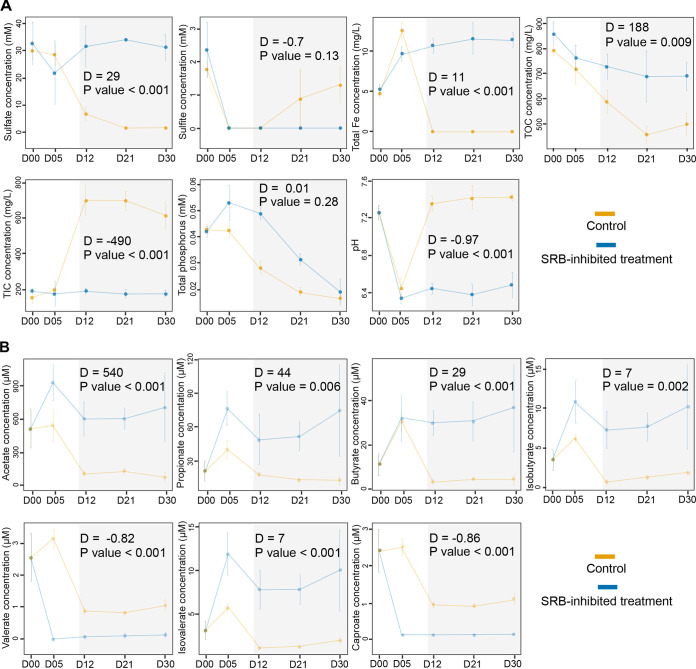
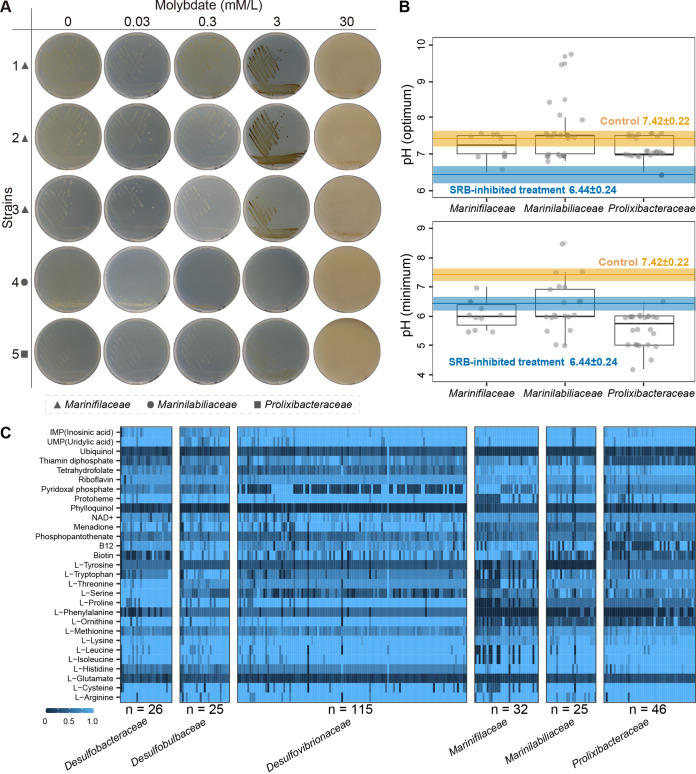
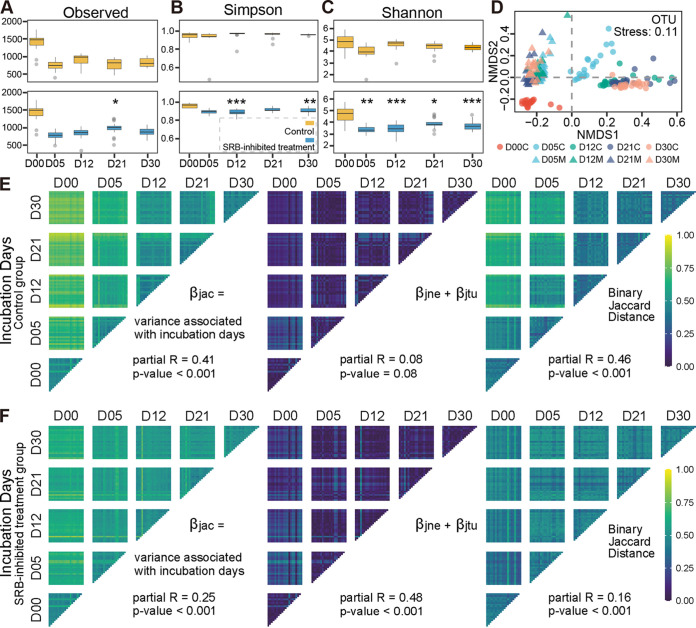
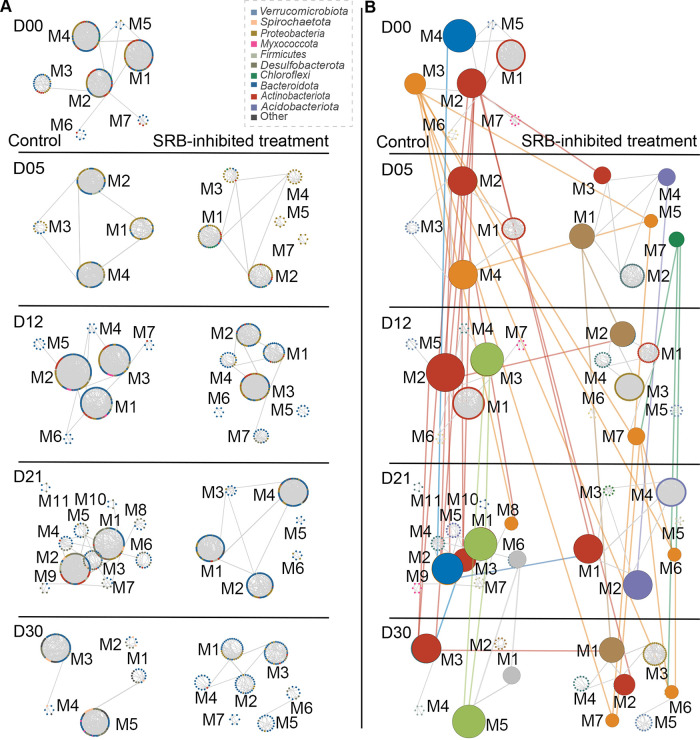
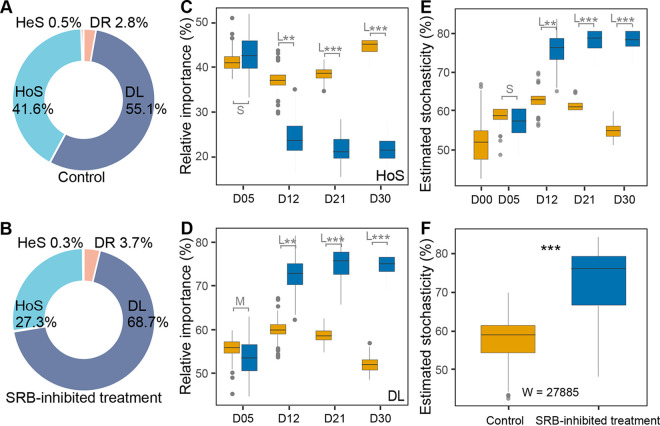
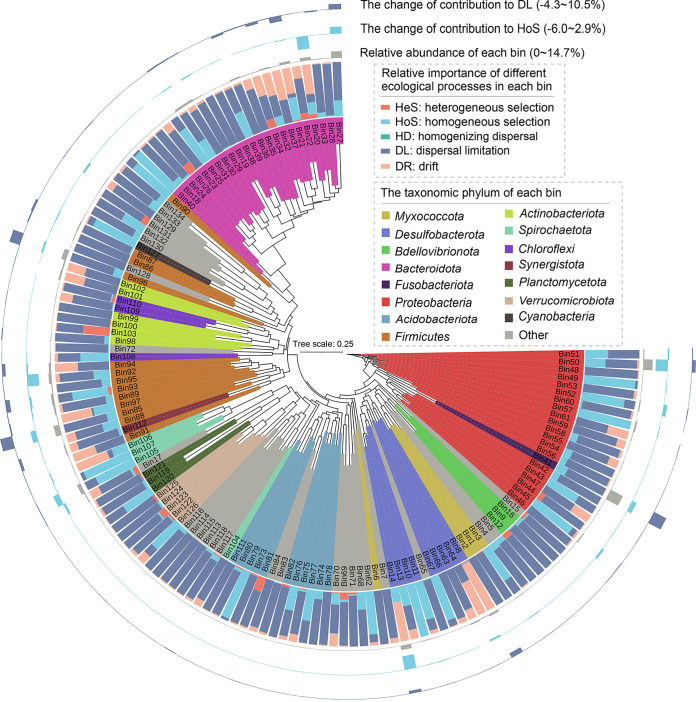
Sulfate-reducing bacteria (SRB) are essential functional microbial taxa for degrading organic matter (OM) in anoxic marine environments. However, there are little experimental data regarding how SRB regulates microbial communities. Here, we applied a top-down microbial community management approach by inhibiting SRB to elucidate their contributions to the microbial community during OM degradation. Based on the highly replicated microcosms ( = 20) of five different incubation stages, we found that many microbial community properties were influenced after inhibiting SRB, including the composition, structure, network, and community assembly processes. We also found a strong coexistence pattern between SRB and other abundant phylogenetic lineages via positive frequency-dependent selection. The relative abundances of the families , , , , , and were simultaneously suppressed after inhibiting SRB during OM degradation. A close association between SRB and the order among coexisting taxa was most prominent. They contributed to preserved modules during network successions, were keystone nodes mediating the networked community, and contributed to homogeneous ecological selection. The molybdate tolerance test of the isolated strains of showed that inhibited SRB (not the inhibitor of SRB itself) triggered a decrease in the relative abundance of . We also found that inhibiting SRB resulted in reduced pH, which is unsuitable for the growth of most strains, while the addition of pH buffer (HEPES) in SRB-inhibited treatment microcosms restored the pH and the relative abundances of these bacteria. These data supported that SRB could modify niches to affect species coexistence. Our model offers insight into the ecological properties of SRB and identifies a previously undocumented dimension of OM degradation. This targeted inhibition approach could provide a novel framework for illustrating how functional microbial taxa associate the composition and structure of the microbial community, molecular ecological network, and community assembly processes. These findings emphasize the importance of SRB during OM degradation. Our results proved the feasibility of the proposed study framework, inhibiting functional taxa at the community level, for illustrating when and to what extent functional taxa can contribute to ecosystem services.
硫酸盐还原菌(SRB)是缺氧海洋环境中降解有机物质(OM)的重要功能微生物类群。然而,关于 SRB 如何调节微生物群落的实验数据很少。在这里,我们通过抑制 SRB 应用了一种自上而下的微生物群落管理方法,以阐明它们在 OM 降解过程中对微生物群落的贡献。基于五个不同孵育阶段的高度复制微宇宙(= 20),我们发现抑制 SRB 后许多微生物群落特性受到影响,包括组成、结构、网络和群落组装过程。我们还通过正频率依赖性选择发现了 SRB 与其他丰富的系统发育谱系之间存在强烈的共存模式。在 OM 降解过程中抑制 SRB 后,家族的相对丰度 、 、 、 、 和 同时受到抑制。SRB 与共存分类群中的目 之间存在密切的关联,在网络演替过程中,它们有助于保存模块,是介导网络化群落的关键节点,并有助于同质生态选择。钼酸盐耐受试验表明,抑制 SRB(而不是 SRB 抑制剂本身)会降低 相对丰度。我们还发现抑制 SRB 会导致 pH 值降低,这不利于大多数 菌株的生长,而在 SRB 抑制处理微宇宙中添加 pH 缓冲液(HEPES)可以恢复 pH 值和这些细菌的相对丰度。这些数据支持 SRB 可以修饰生境以影响物种共存。我们的模型提供了对 SRB 生态特性的深入了解,并确定了 OM 降解的一个以前未记录的维度。这种靶向抑制方法可以为阐明功能微生物类群如何关联微生物群落的组成和结构、分子生态网络和群落组装过程提供一个新的框架。这些发现强调了 SRB 在 OM 降解过程中的重要性。我们的结果证明了在社区层面上抑制功能类群的拟议研究框架的可行性,该框架用于说明功能类群在何时以及在何种程度上可以为生态系统服务做出贡献。