Centre for Modelling of Biological and Social Processes, Na Břehu 497/15, 190 00 Praha 9, Czech Republic; Centre for Mathematical Biology, Institute of Mathematics, Faculty of Science, University of South Bohemia, Branišovská 1760, 37005 České Budějovice, Czech Republic; Czech Academy of Sciences, Biology Centre, Institute of Entomology, Department of Ecology, Branišovská 31, 37005, České Budějovice, Czech Republic.
Centre for Modelling of Biological and Social Processes, Na Břehu 497/15, 190 00 Praha 9, Czech Republic; Department of Criminology and Mitchell Centre for Social Network Analysis, School of Social Sciences, University of Manchester, Oxford Rd, Manchester, UK.
Epidemics. 2023 Jun;43:100677. doi: 10.1016/j.epidem.2023.100677. Epub 2023 Mar 16.
Contact tracing is one of the most effective non-pharmaceutical interventions in the COVID-19 pandemic. This study uses a multi-agent model to investigate the impact of four types of contact tracing strategies to prevent the spread of COVID-19.
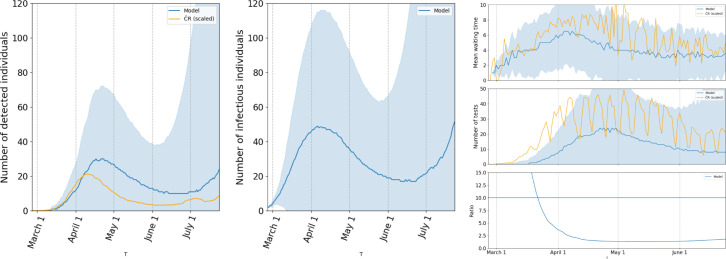
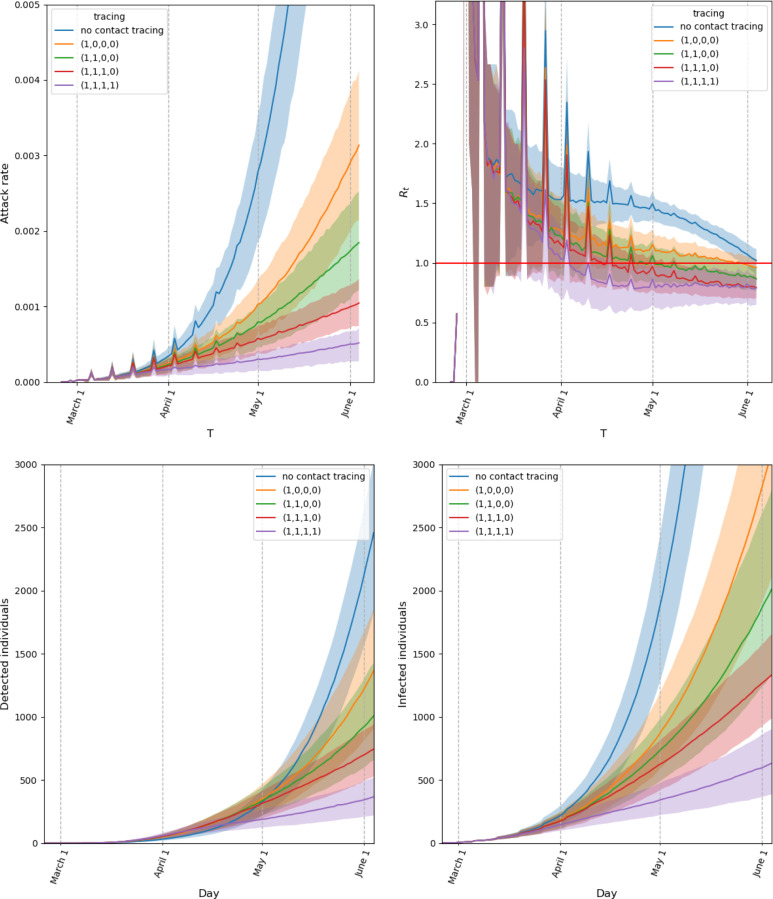
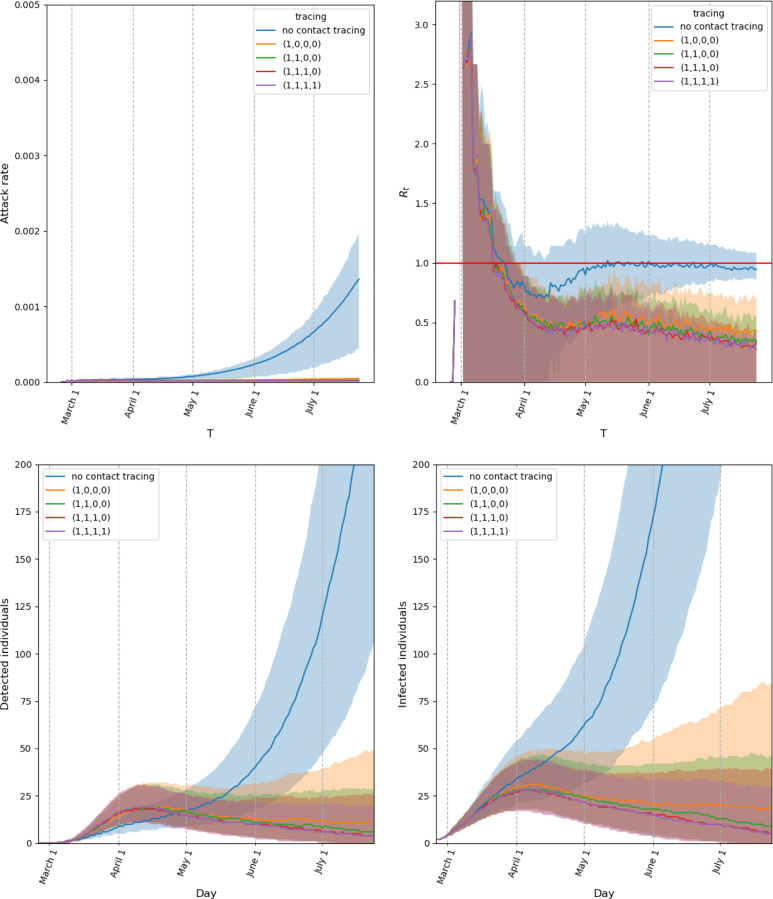
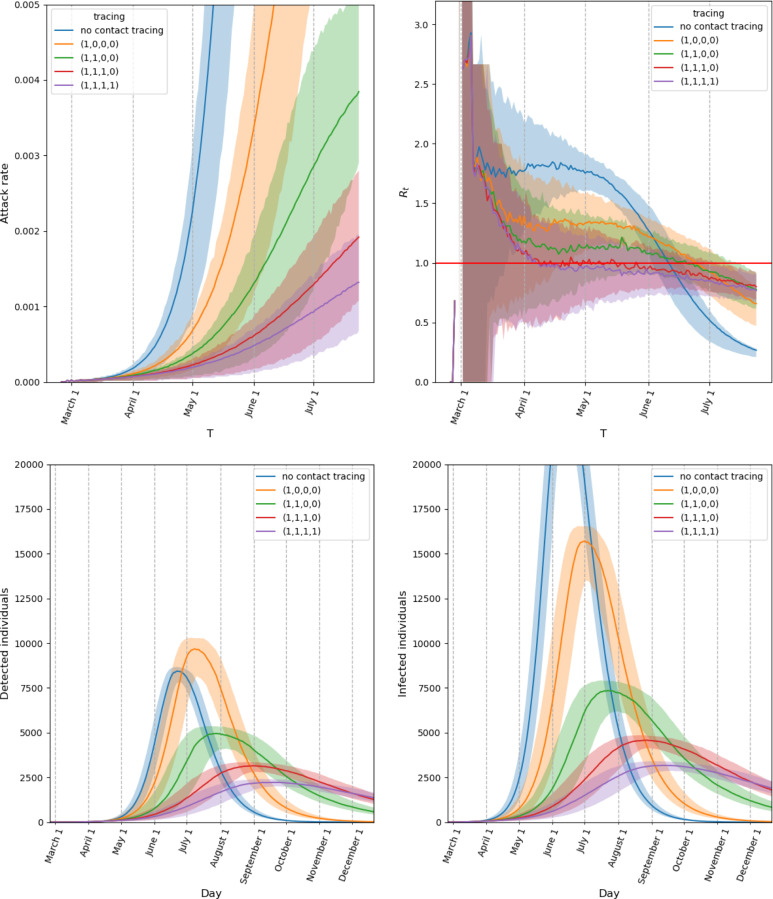
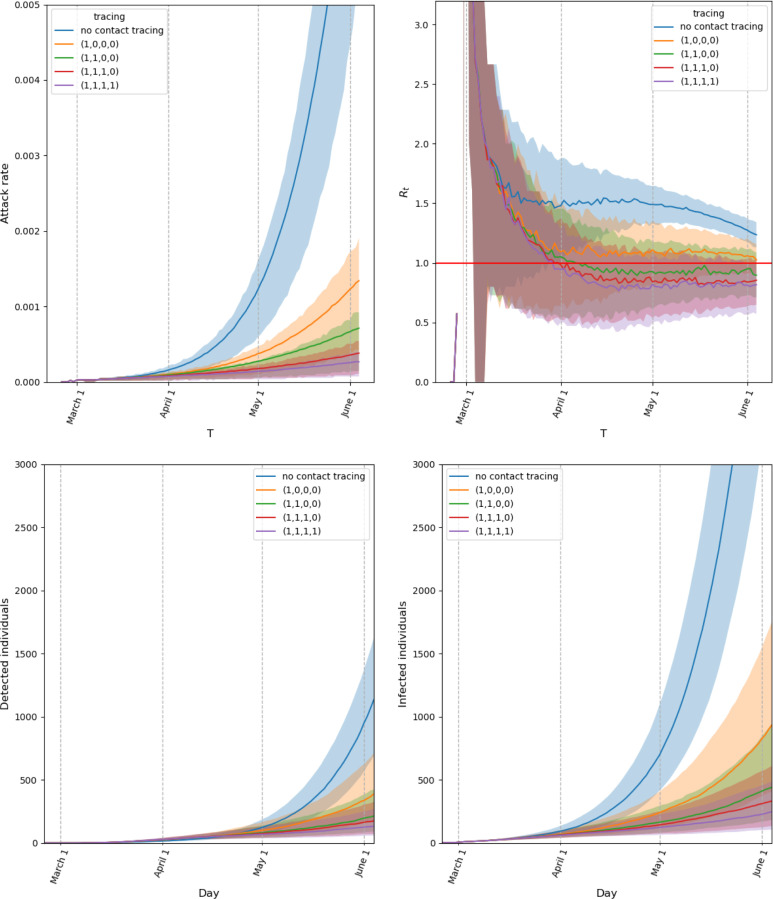
In order to analyse individual contact tracing in a reasonably realistic setup, we construct an agent-based model of a small municipality with about 60.000 inhabitants (nodes) and about 2.8 million social contacts (edges) in 30 different layers. Those layers reflect demographic, geographic, sociological and other patterns of the TTWA (Travel-to-work-area) Hodonín in Czechia. Various data sources such as census, land register, transport data or data reflecting the shopping behaviour, were employed to meet this purpose. On this multi-graph structure we run a modified SEIR model of the COVID-19 dynamics. The parameters of the model are calibrated on data from the outbreak in the Czech Republic in the period March to June 2020. The simplest type of contact tracing follows just the family, the second tracing version tracks the family and all the work contacts, the third type finds all contacts with the family, work contacts and friends (leisure activities). The last one is a complete (digital) tracing capable of recalling any and all contacts. We evaluate the performance of these contact tracing strategies in four different environments. First, we consider an environment without any contact restrictions (benchmark); second with strict contact restriction (replicating the stringent non-pharmaceutical interventions employed in Czechia in the spring 2020); third environment, where the measures were substantially relaxed, and, finally an environment with weak contact restrictions and superspreader events (replicating the situation in Czechia in the summer 2020).
There are four main findings in our paper. 1. In general, local closures are more effective than any type of tracing. 2. In an environment with strict contact restrictions there are only small differences among the four contact tracing strategies. 3. In an environment with relaxed contact restrictions the effectiveness of the tracing strategies differs substantially. 4. In the presence of superspreader events only complete contact tracing can stop the epidemic.
In situations, where many other non-pharmaceutical interventions are in place, the specific extent of contact tracing may not have a large influence on their effectiveness. In a more relaxed setting with few contact restrictions and larger events the effectiveness of contact tracing depends heavily on their extent.
接触者追踪是 COVID-19 大流行期间最有效的非药物干预措施之一。本研究使用多主体模型来研究四种接触者追踪策略对预防 COVID-19 传播的影响。
为了在合理现实的设置中分析个体接触者追踪,我们构建了一个具有约 60,000 名居民(节点)和约 280 万社交接触(边)的小市镇的基于主体的模型,这些接触在 30 个不同的层中体现了人口统计学、地理、社会学和 TTWA(出行工作区)Hodonín 的其他模式。各种数据源,如人口普查、土地登记、交通数据或反映购物行为的数据,都被用来满足这一目的。在这个多图结构上,我们运行了一个 COVID-19 动力学的修正 SEIR 模型。该模型的参数是根据 2020 年 3 月至 6 月期间捷克共和国爆发的数据进行校准的。最简单的接触者追踪只追踪家庭,第二种追踪版本则追踪家庭和所有工作接触者,第三种类型则找到所有与家庭、工作接触者和朋友(休闲活动)的接触者。最后一种是一种完整的(数字)追踪,能够回忆起任何和所有的接触者。我们在四种不同的环境中评估这些接触者追踪策略的性能。首先,我们考虑了一种没有任何接触限制的环境(基准);其次是严格的接触限制(复制 2020 年春季在捷克实施的严格非药物干预措施);第三种环境是接触限制大幅放宽的环境,最后是接触限制较弱且存在超级传播者事件的环境(复制 2020 年夏季捷克的情况)。
我们的论文有四个主要发现。1. 一般来说,局部关闭比任何类型的追踪都更有效。2. 在严格的接触限制环境中,四种接触者追踪策略之间只有很小的差异。3. 在接触限制放宽的环境中,追踪策略的有效性有很大的不同。4. 在超级传播者事件存在的情况下,只有完整的接触者追踪才能阻止疫情的传播。
在许多其他非药物干预措施已经实施的情况下,具体的接触者追踪程度可能对其效果影响不大。在接触限制较少且事件较大的更为宽松的环境中,接触者追踪的有效性在很大程度上取决于其范围。