Division of Clinical and Metabolic Genetics, The Hospital for Sick Children, Toronto, ON, Canada; Program in Genetics and Genome Biology, SickKids Research Institute, Toronto, ON, Canada.
Program in Genetics and Genome Biology, SickKids Research Institute, Toronto, ON, Canada.
Am J Hum Genet. 2023 May 4;110(5):895-900. doi: 10.1016/j.ajhg.2023.03.006. Epub 2023 Mar 28.
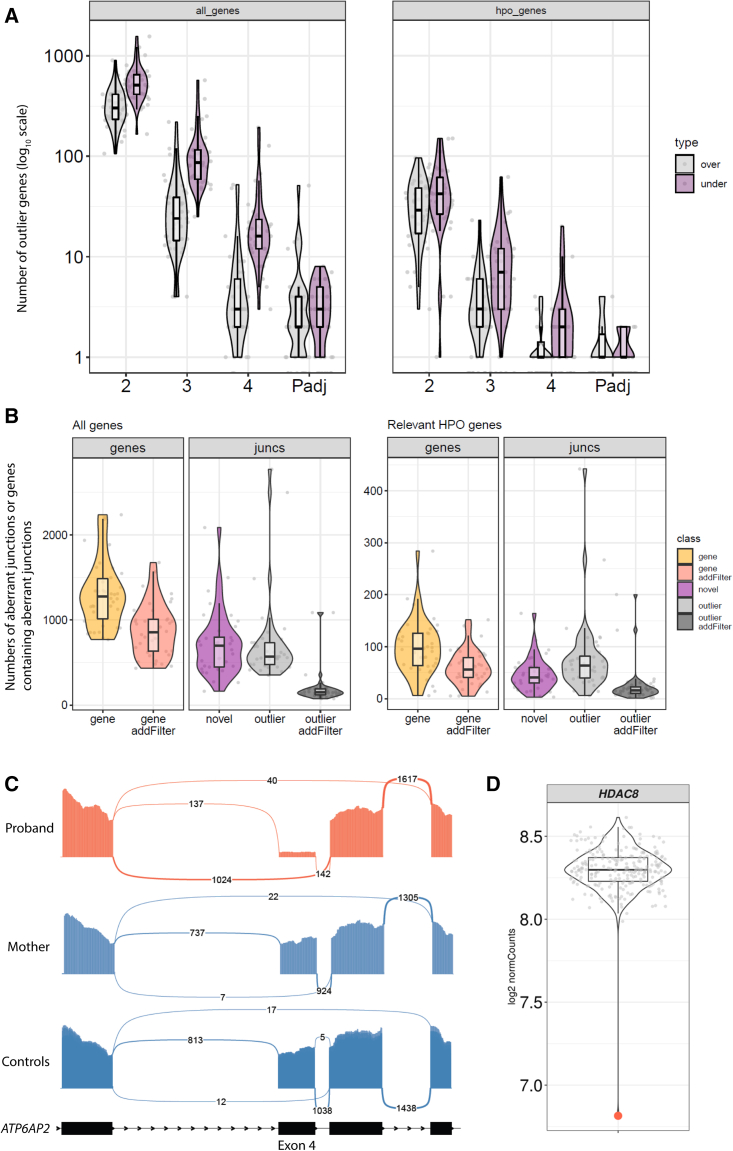
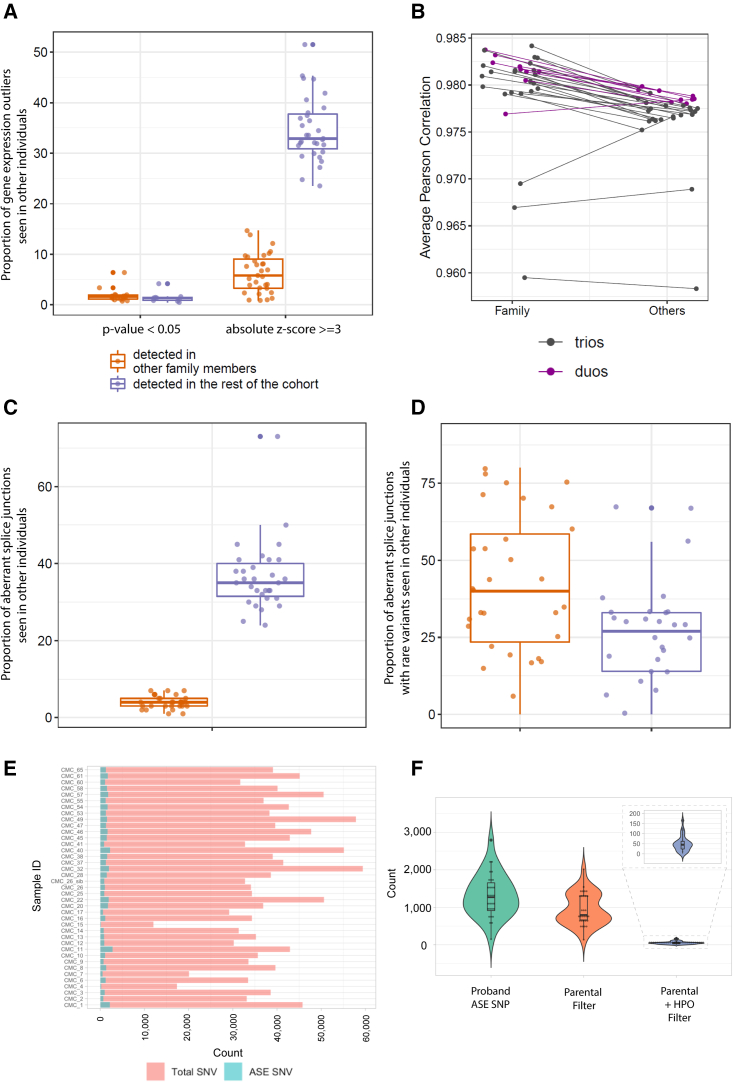
Genome sequencing (GS) is a powerful test for the diagnosis of rare genetic disorders. Although GS can enumerate most non-coding variation, determining which non-coding variants are disease-causing is challenging. RNA sequencing (RNA-seq) has emerged as an important tool to help address this issue, but its diagnostic utility remains understudied, and the added value of a trio design is unknown. We performed GS plus RNA-seq from blood using an automated clinical-grade high-throughput platform on 97 individuals from 39 families where the proband was a child with unexplained medical complexity. RNA-seq was an effective adjunct test when paired with GS. It enabled clarification of putative splice variants in three families, but it did not reveal variants not already identified by GS analysis. Trio RNA-seq decreased the number of candidates requiring manual review when filtering for de novo dominant disease-causing variants, allowing for the exclusion of 16% of gene-expression outliers and 27% of allele-specific-expression outliers. However, clear diagnostic benefit from the trio design was not observed. Blood-based RNA-seq can facilitate genome analysis in children with suspected undiagnosed genetic disease. In contrast to DNA sequencing, the clinical advantages of a trio RNA-seq design may be more limited.
基因组测序(GS)是诊断罕见遗传疾病的有力检测手段。虽然 GS 可以列举大多数非编码变异,但确定哪些非编码变体是致病的具有挑战性。RNA 测序(RNA-seq)已成为帮助解决此问题的重要工具,但它的诊断效用仍有待研究,三重设计的附加值尚不清楚。我们对 39 个家庭的 97 名个体进行了血液 GS 加 RNA-seq 检测,这些个体的先证者是患有不明原因的复杂医学疾病的儿童。当与 GS 配对时,RNA-seq 是一种有效的辅助检测方法。它能够澄清三个家庭中的假定剪接变体,但它没有揭示 GS 分析已经识别的变体。当筛选从头显性致病变体时,三重 RNA-seq 减少了需要手动审查的候选人数,从而排除了 16%的基因表达异常和 27%的等位基因特异性表达异常。然而,并没有观察到三重设计的明显诊断益处。基于血液的 RNA-seq 可以促进疑似未确诊遗传疾病儿童的基因组分析。与 DNA 测序不同,三重 RNA-seq 设计的临床优势可能更为有限。