Infectious Disease Research Center, Korea Research Institute of Bioscience and Biotechnology (KRIBB), Daejeon, South Korea.
Department of Biochemistry, Chungnam National University, Daejeon, South Korea.
Cell Death Dis. 2023 Mar 30;14(3):228. doi: 10.1038/s41419-023-05749-5.
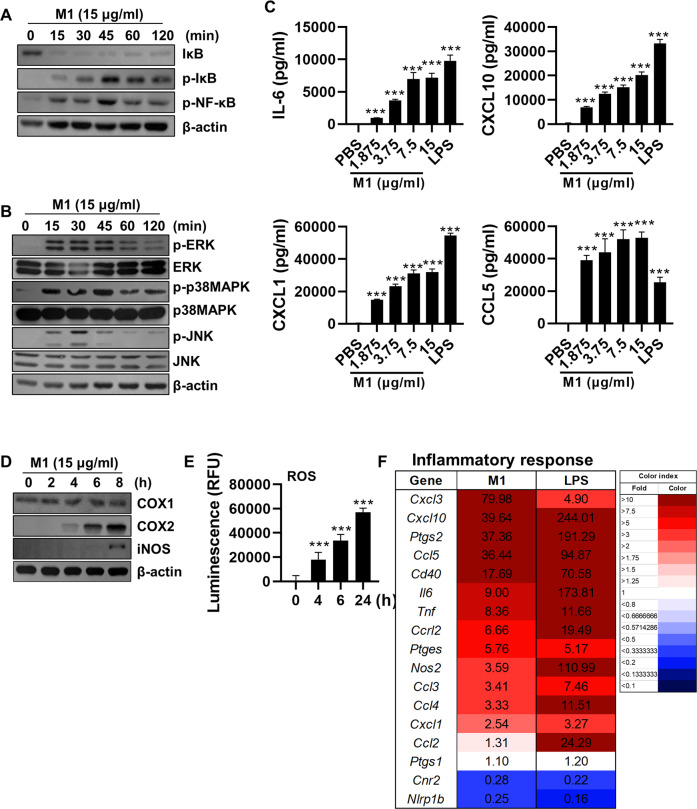
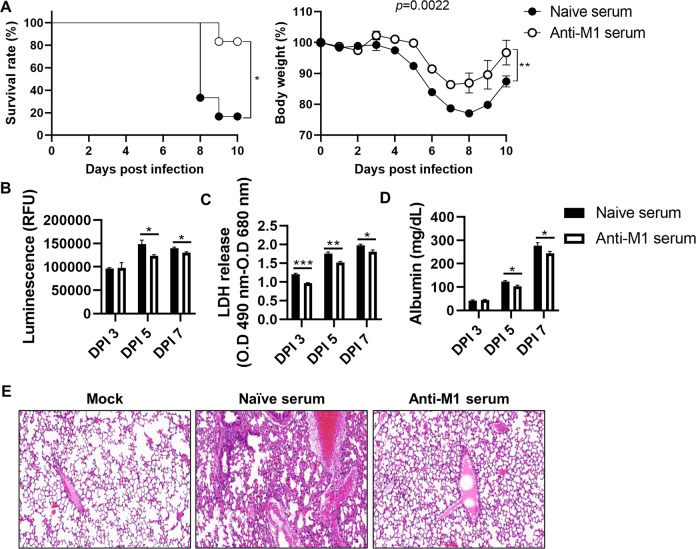
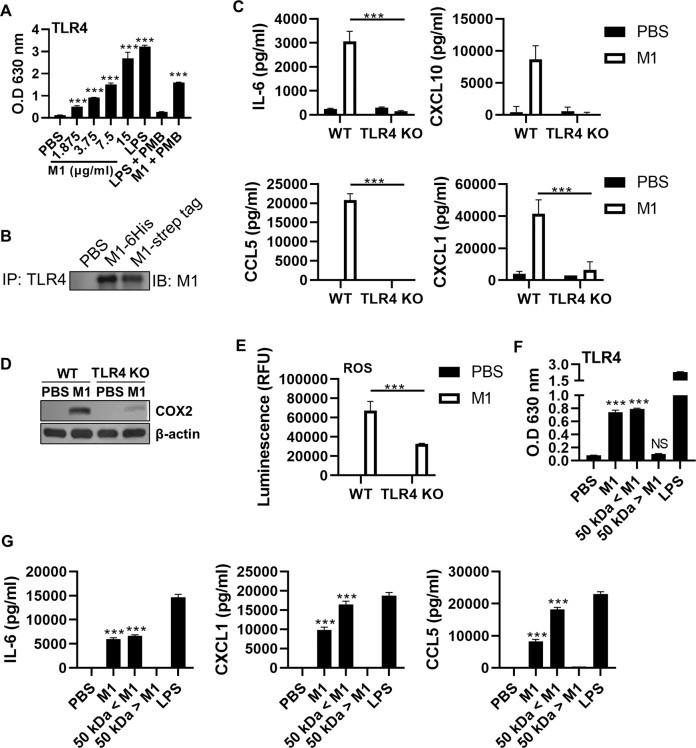
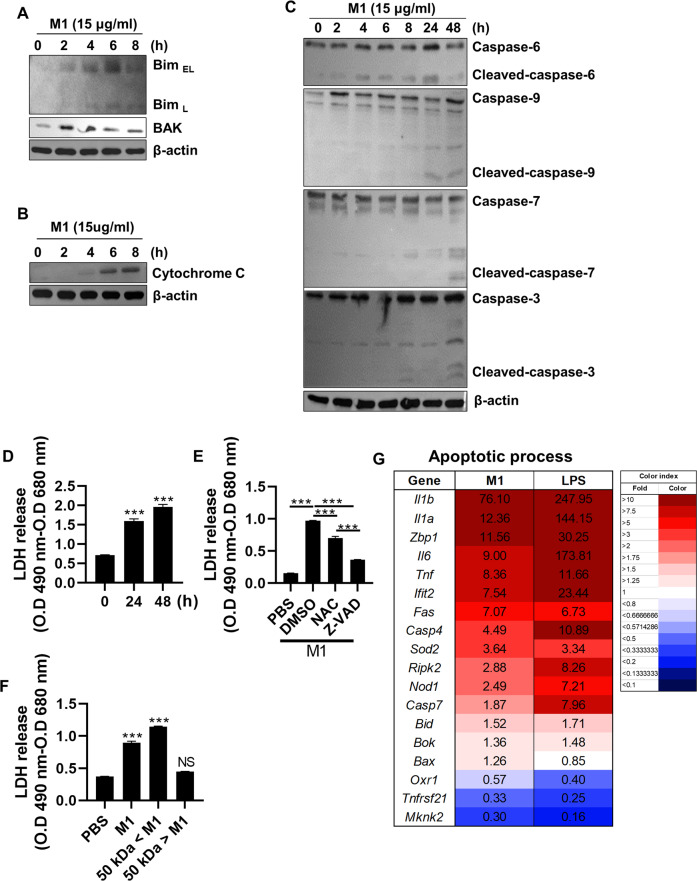
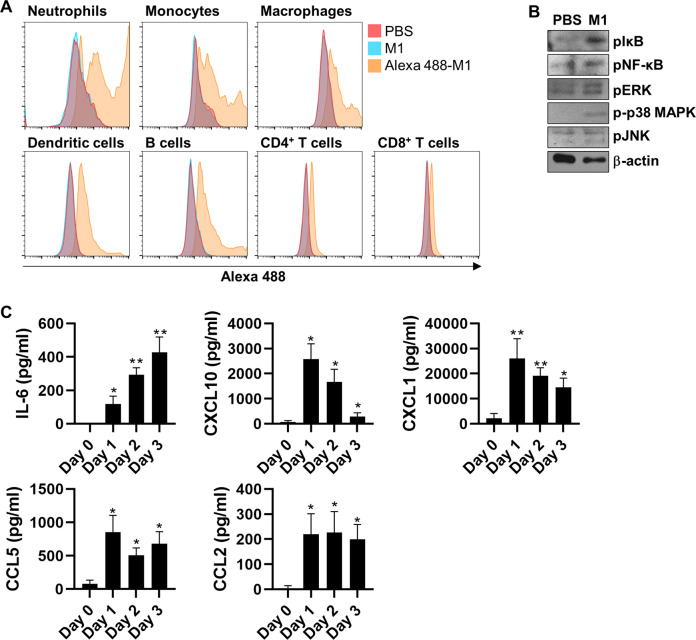
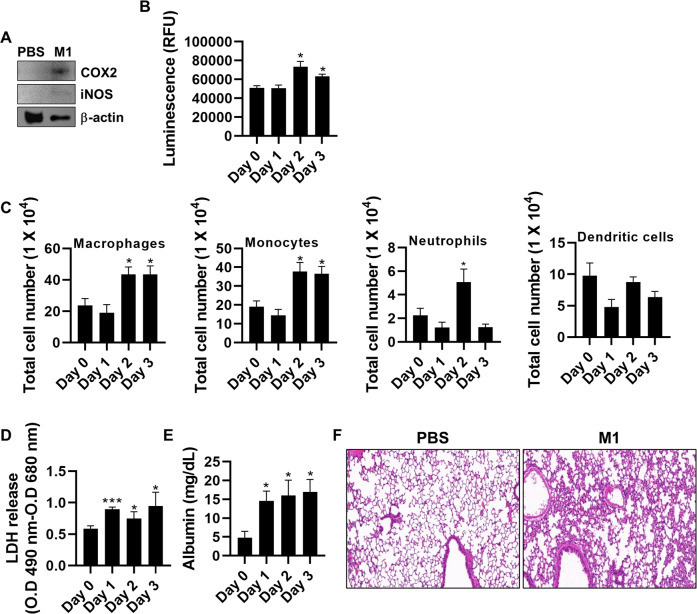
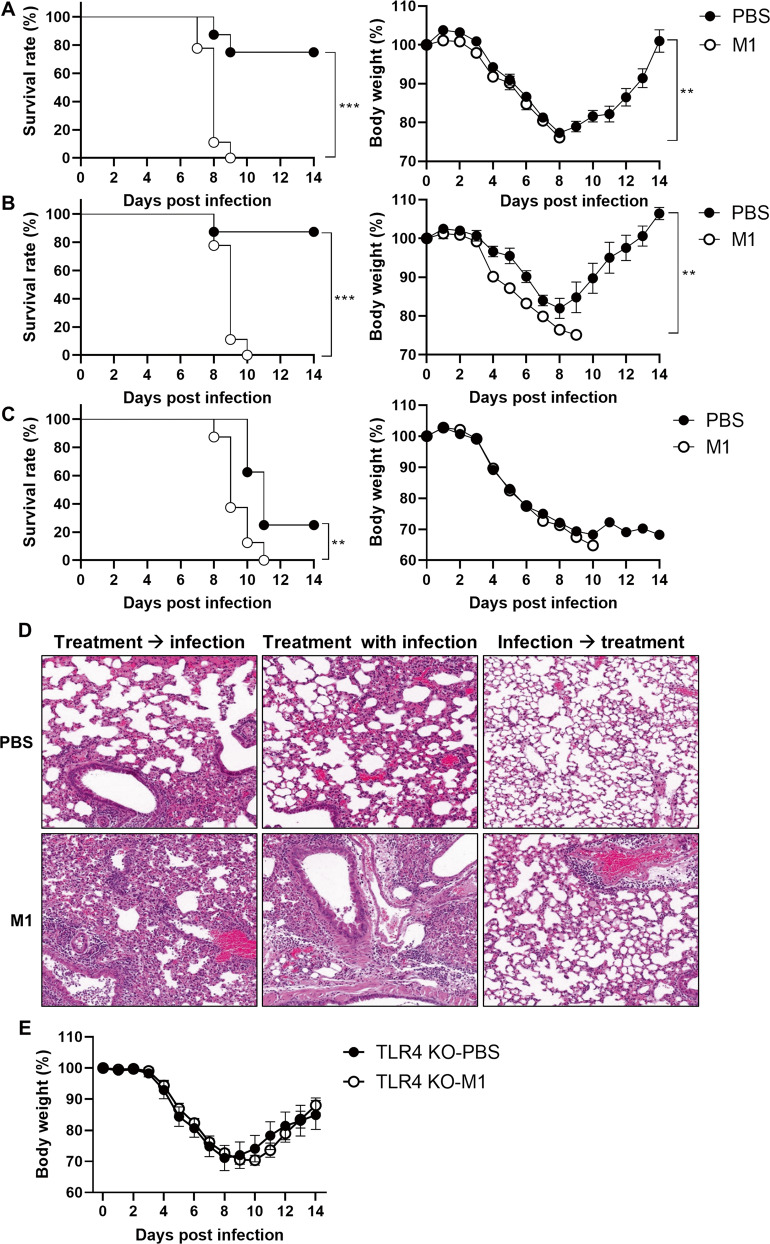
Influenza virus is one of the most challenging viruses threating human health. Since infection with influenza virus triggers inflammatory responses and induces cell death, the molecular and cellular mechanisms by which the virus-infected cells undergo apoptotic and necrotic cell death have been widely studied. However, most of the studies have focused on the molecular events occurring in the cytosol and there is limited information on the physiological correlation between virus-induced cell death and the viral pathogenesis in vivo. In this study, we demonstrate that the influenza virus matrix 1 (M1) protein is released from virus-infected cells and triggers apoptotic cell death of lung epithelial and pulmonary immune cells, through the activation of Toll-like receptor 4 (TLR4) signaling. Treatment with M1 protein led to robust cellular inflammatory responses, such as the production of proinflammatory cytokines and cellular reactive oxygen species (ROS), and induction of cell death. When M1 protein was administered in vivo, it induced the activation of inflammatory responses and cell death in the lungs. Furthermore, the administration of M1 aggravated lung pathology and mortality of the virus-infected mice in a TLR4-dependent manner. These results demonstrate that M1 is an important pathogenic factor contributing to influenza virus pathogenicity by enhancing cell death in the lungs, thereby expanding our understanding of the molecular mechanism of influenza virus-induced cell death through the interaction with an innate immune receptor.
流感病毒是威胁人类健康的最具挑战性的病毒之一。由于感染流感病毒会引发炎症反应并诱导细胞死亡,因此病毒感染细胞经历凋亡和坏死性细胞死亡的分子和细胞机制已被广泛研究。然而,大多数研究都集中在细胞质中发生的分子事件上,对于病毒诱导的细胞死亡与体内病毒发病机制之间的生理相关性知之甚少。在这项研究中,我们证明流感病毒基质蛋白 1(M1)从病毒感染的细胞中释放出来,并通过激活 Toll 样受体 4(TLR4)信号触发肺上皮细胞和肺免疫细胞的凋亡性细胞死亡。M1 蛋白的处理导致强烈的细胞炎症反应,例如促炎细胞因子和细胞活性氧物质(ROS)的产生,以及诱导细胞死亡。当 M1 蛋白在体内给药时,它会诱导肺部炎症反应和细胞死亡的激活。此外,M1 的给药以 TLR4 依赖性方式加重了病毒感染小鼠的肺部病理和死亡率。这些结果表明,M1 是通过增强肺部细胞死亡来增强流感病毒致病性的重要致病因子,从而通过与先天免疫受体相互作用扩展了我们对流感病毒诱导的细胞死亡的分子机制的理解。