Pis Diez Cristian M, Antelo Giuliano T, Dalia Triana N, Dalia Ankur B, Giedroc David P, Capdevila Daiana A
Fundación Instituto Leloir, Instituto de Investigaciones Bioquímicas de Buenos Aires (IIBBA-CONICET), C1405BWE Ciudad Autónoma de, Buenos Aires, Argentina.
Department of Chemistry, Indiana University, Bloomington, IN 47405-7102, USA.
bioRxiv. 2023 Mar 13:2023.03.13.532278. doi: 10.1101/2023.03.13.532278.
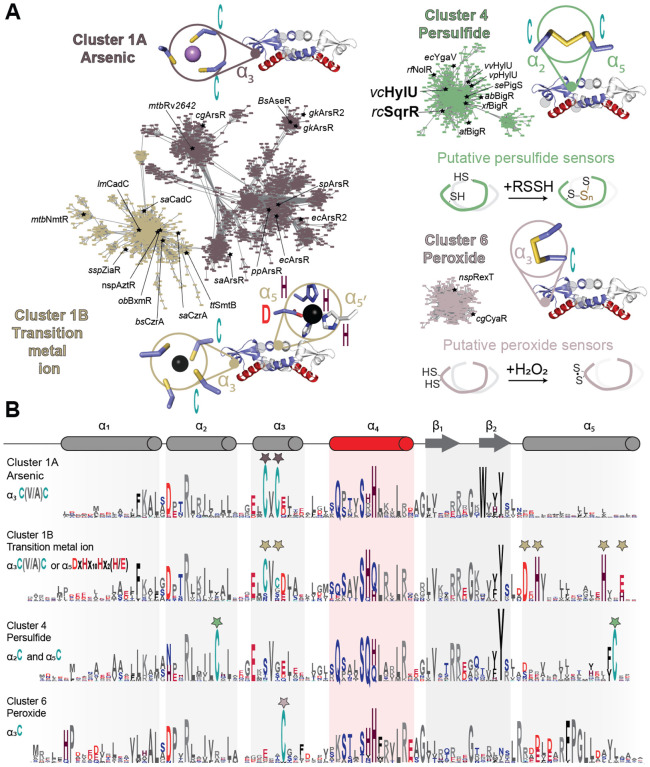
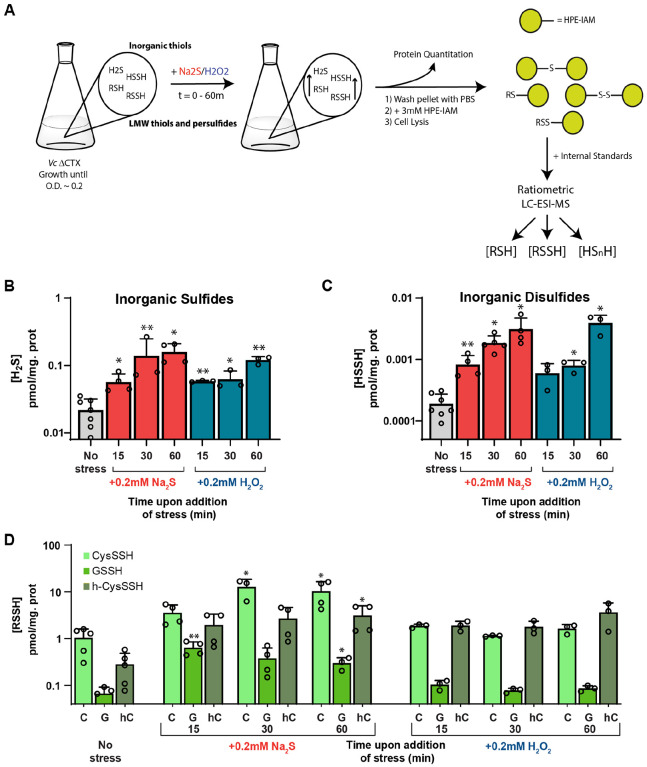
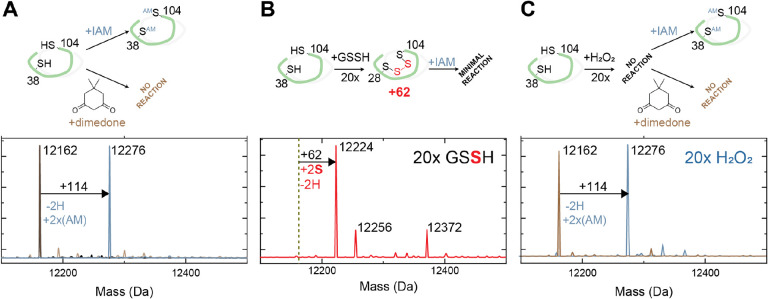
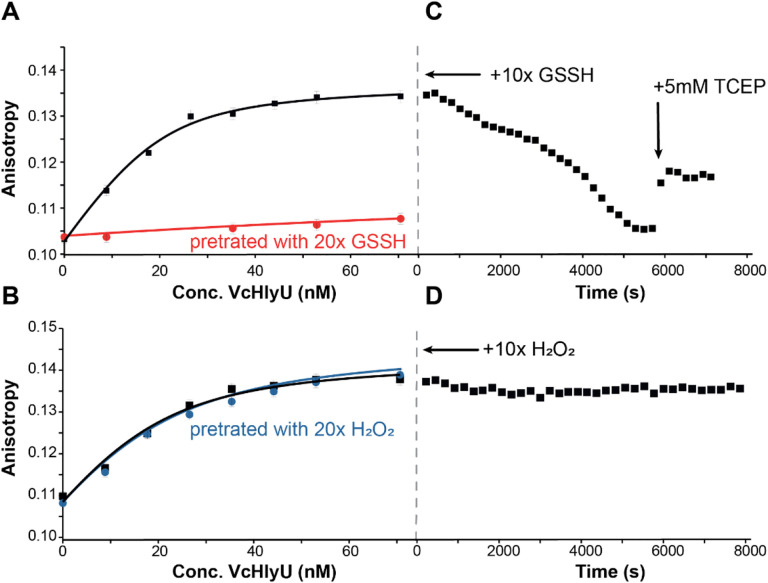
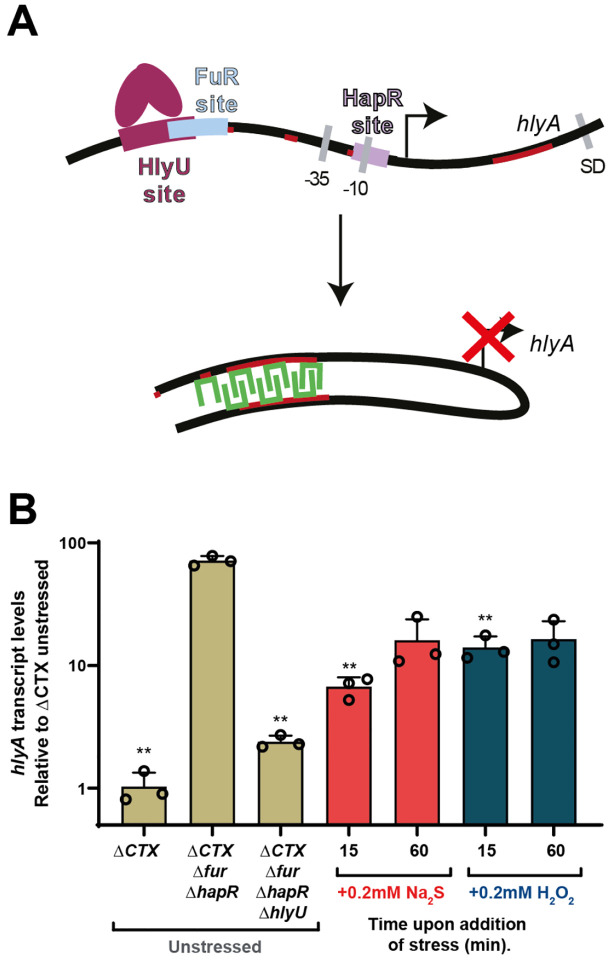
The vertebrate host’s immune system and resident commensal bacteria deploy a range of highly reactive small molecules that provide a barrier against infections by microbial pathogens. Gut pathogens, such as , sense and respond to these stressors by modulating the expression of exotoxins that are crucial for colonization. Here, we employ mass-spectrometry-based profiling, metabolomics, expression assays and biophysical approaches to show that transcriptional activation of the hemolysin gene in is regulated by intracellular reactive sulfur species (RSS), specifically sulfane sulfur. We first present a comprehensive sequence similarity network analysis of the arsenic repressor (ArsR) superfamily of transcriptional regulators where RSS and reactive oxygen species (ROS) sensors segregate into distinct clusters. We show that HlyU, transcriptional activator of in , belongs to the RSS-sensing cluster and readily reacts with organic persulfides, showing no reactivity and remaining DNA-bound following treatment with various ROS in vitro, including H O . Surprisingly, in cell cultures, both sulfide and peroxide treatment downregulate HlyU-dependent transcriptional activation of . However, RSS metabolite profiling shows that both sulfide and peroxide treatment raise the endogenous inorganic sulfide and disulfide levels to a similar extent, accounting for this crosstalk, and confirming that attenuates HlyU-mediated activation of in a specific response to intracellular RSS. These findings provide new evidence that gut pathogens may harness RSS-sensing as an evolutionary adaptation that allows them to overcome the gut inflammatory response by modulating the expression of exotoxins.
脊椎动物宿主的免疫系统和常驻共生细菌会释放一系列高反应性小分子,这些小分子构成了抵御微生物病原体感染的屏障。肠道病原体,如[具体病原体未给出],通过调节对定殖至关重要的外毒素表达来感知并应对这些应激源。在此,我们采用基于质谱的分析、代谢组学、表达分析和生物物理方法来表明,溶血素基因[具体基因未给出]在[具体物种未给出]中的转录激活受细胞内活性硫物质(RSS),特别是硫烷硫的调控。我们首先对转录调节因子的砷阻遏物(ArsR)超家族进行了全面的序列相似性网络分析,其中RSS和活性氧物质(ROS)传感器分为不同的簇。我们表明,[具体物种未给出]中溶血素的转录激活因子HlyU属于RSS感应簇,并且能与有机过硫化物迅速反应,在体外经包括H₂O₂在内的各种ROS处理后无反应并仍与DNA结合。令人惊讶的是,在[具体物种未给出]细胞培养物中,硫化物和过氧化物处理均下调了HlyU依赖的[具体基因未给出]转录激活。然而,RSS代谢物分析表明,硫化物和过氧化物处理均使内源性无机硫化物和二硫化物水平升高到相似程度,这解释了这种相互作用,并证实[具体物种未给出]在对细胞内RSS的特定反应中减弱了HlyU介导的[具体基因未给出]激活。这些发现提供了新的证据,表明肠道病原体可能利用RSS感应作为一种进化适应,使其能够通过调节外毒素表达来克服肠道炎症反应。