Shimizu Takayuki, Ida Tomoaki, Antelo Giuliano T, Ihara Yuta, Fakhoury Joseph N, Masuda Shinji, Giedroc David P, Akaike Takaaki, Capdevila Daiana A, Masuda Tatsuru
Graduate School of Arts and Sciences, The University of Tokyo, 3-8-1 Komaba, Meguro-ku, Tokyo 153-8902, Japan.
Department of 8 Environmental Medicine and Molecular Toxicology, Tohoku University Graduate School of Medicine, 2-1 Seiryo-machi, Aoba-ku, Sendai 980-8575, Japan.
PNAS Nexus. 2023 Feb 10;2(3):pgad048. doi: 10.1093/pnasnexus/pgad048. eCollection 2023 Mar.
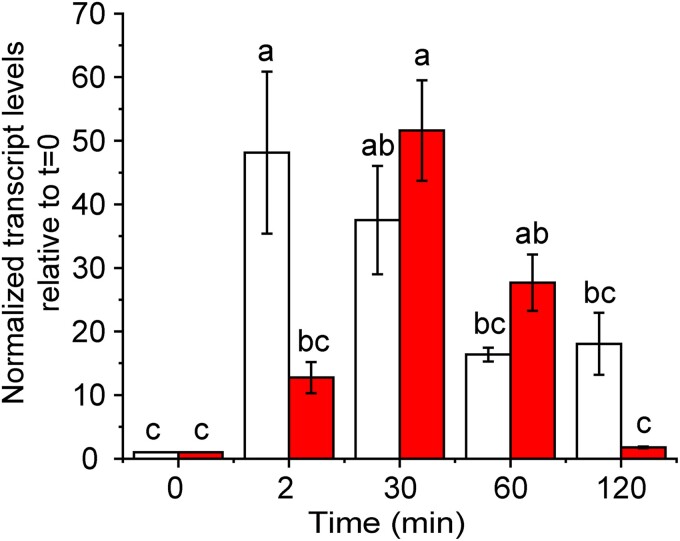
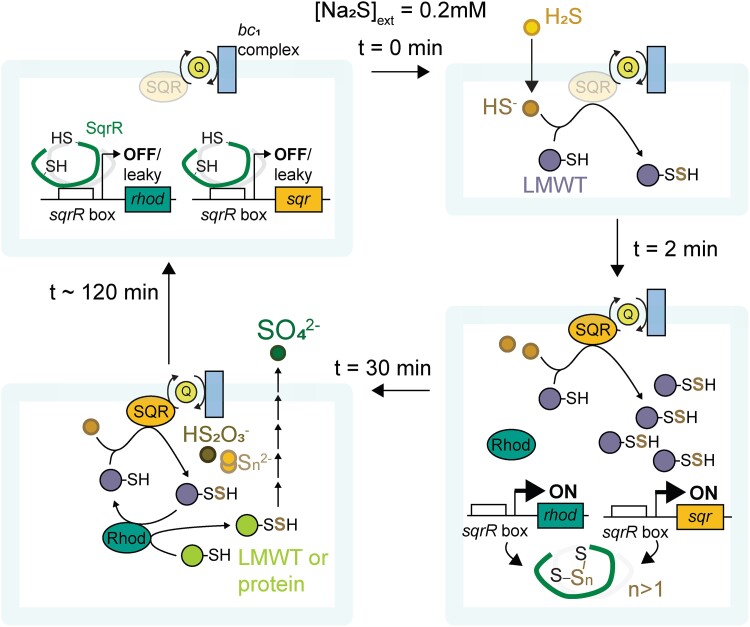
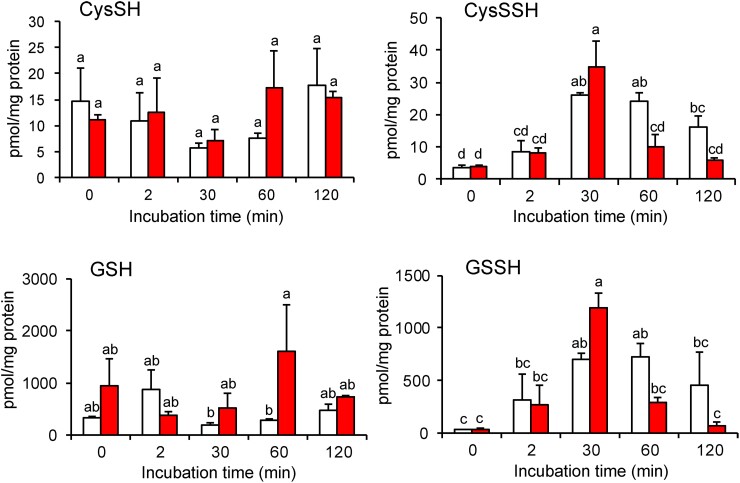
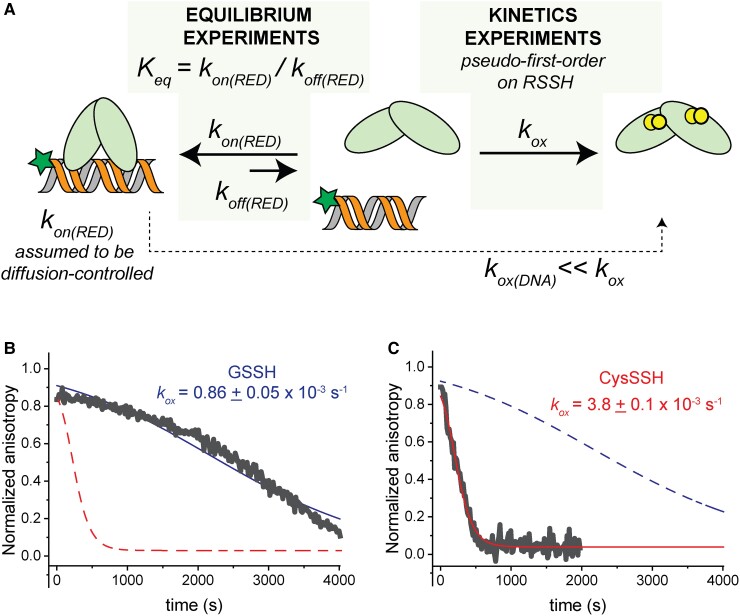
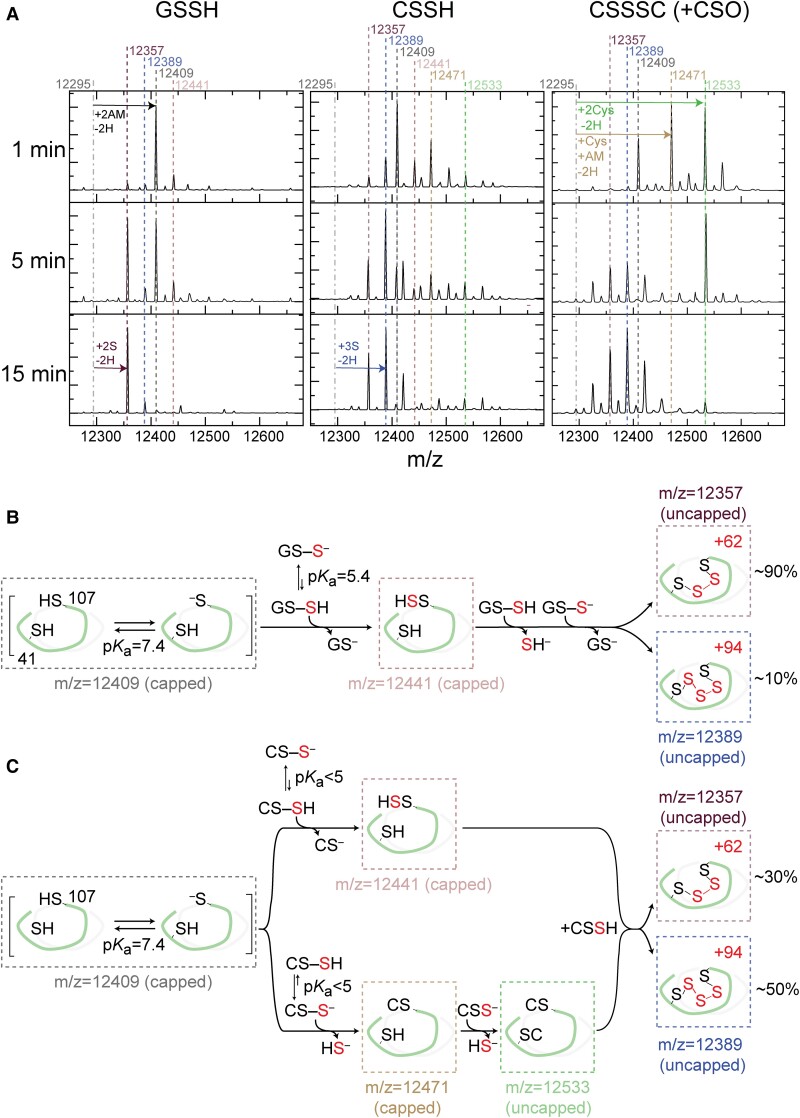
Sulfide plays essential roles in controlling various physiological activities in almost all organisms. Although recent evidence has demonstrated that sulfide is endogenously generated and metabolized into polysulfides inside the cells, the relationship between polysulfide metabolism and polysulfide-sensing mechanisms is not well understood. To better define this interplay between polysulfide metabolism and sensing in cells, we investigated the role of polysulfide-metabolizing enzymes such as sulfide:quinone oxidoreductase (SQR) on the temporal dynamics of cellular polysulfide speciation and on the transcriptional regulation by the persulfide-responsive transcription factor SqrR in . We show that disruption of the gene resulted in the loss of SqrR repression by exogenous sulfide at longer culture times, which impacts the speciation of intracellular polysulfides of Δ vs. wild-type strains. Both the attenuated response of SqrR and the change in polysulfide dynamics of the Δ strain is fully reversed by the addition to cells of cystine-derived polysulfides, but not by glutathione disulfide (GSSG)-derived polysulfides. Furthermore, cysteine persulfide (CysSSH) yields a higher rate of oxidation of SqrR relative to glutathione persulfide (GSSH), which leads to DNA dissociation . The oxidation of SqrR was confirmed by a mass spectrometry-based kinetic profiling strategy that showed distinct polysulfide-crosslinked products obtained with CysSSH vs. GSSH. Taken together, these results establish a novel association between the metabolism of polysulfides and the mechanisms for polysulfide sensing inside the cells.
硫化物在几乎所有生物体中控制各种生理活动方面发挥着重要作用。尽管最近有证据表明硫化物是内源性产生的,并在细胞内代谢为多硫化物,但多硫化物代谢与多硫化物传感机制之间的关系尚不清楚。为了更好地定义细胞中多硫化物代谢与传感之间的这种相互作用,我们研究了多硫化物代谢酶,如硫化物:醌氧化还原酶(SQR)对细胞多硫化物形态的时间动态以及对过硫化物响应转录因子SqrR在……中的转录调控的作用。我们表明,在较长培养时间下,基因的破坏导致外源性硫化物对SqrR的抑制作用丧失,这影响了Δ菌株与野生型菌株细胞内多硫化物的形态。Δ菌株中SqrR的减弱反应和多硫化物动态变化通过向细胞中添加胱氨酸衍生的多硫化物而完全逆转,但谷胱甘肽二硫化物(GSSG)衍生的多硫化物则不能。此外,半胱氨酸过硫化物(CysSSH)相对于谷胱甘肽过硫化物(GSSH)产生更高的SqrR氧化速率,这导致DNA解离。基于质谱的动力学分析策略证实了SqrR的氧化,该策略显示用CysSSH与GSSH获得的不同多硫化物交联产物。综上所述,这些结果在多硫化物代谢与细胞内多硫化物传感机制之间建立了一种新的关联。