Neitz Alex, Rice Alicia, Casiraghi Leandro, Bussi Ivana L, Buhr Ethan D, Neitz Maureen, Neitz Jay, de la Iglesia Horacio O, Kuchenbecker James A
Department of Biology and The Molecular and Cellular Biology graduate program, University of Washington, Seattle, Washington, USA.
Department of Biology, University of Washington, Seattle, Washington, USA.
Res Sq. 2023 Mar 17:rs.3.rs-2649098. doi: 10.21203/rs.3.rs-2649098/v1.
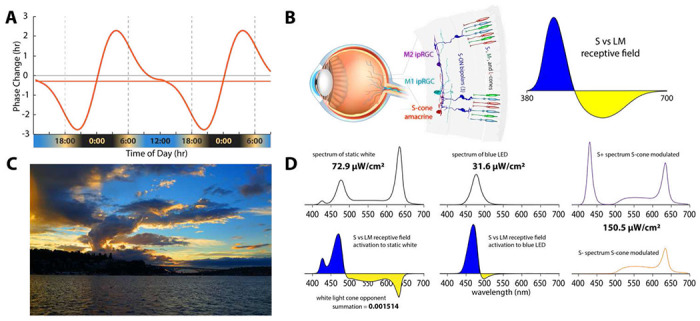
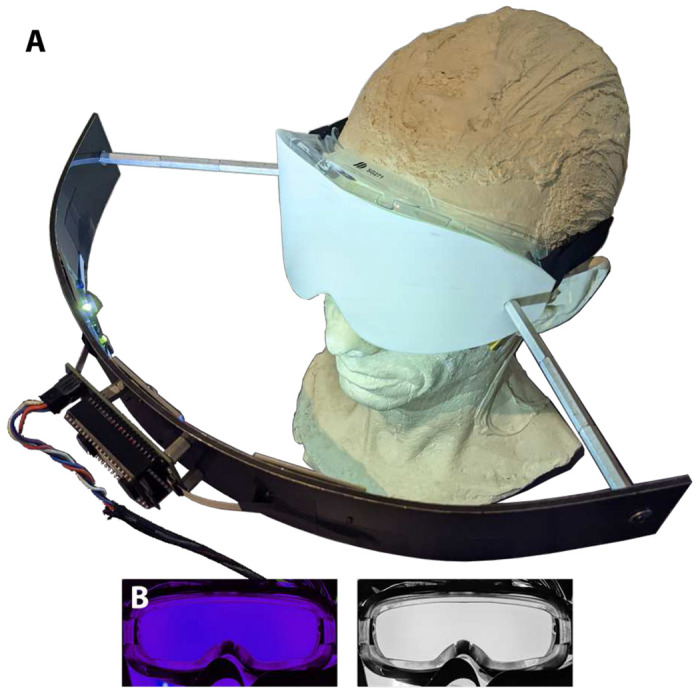
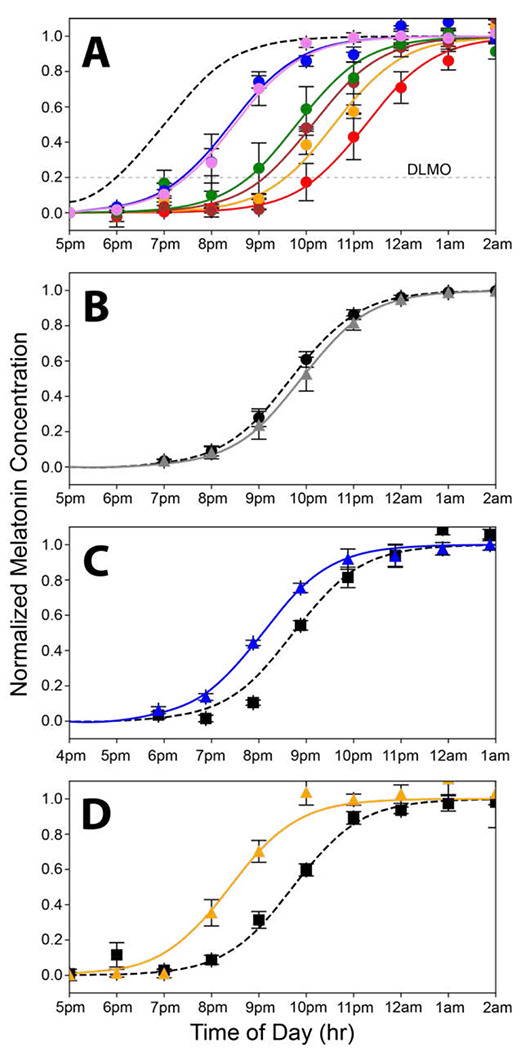
There is growing interest in developing artificial lighting that stimulates intrinsically photosensitive retinal ganglion cells (ipRGCs) to entrain circadian rhythms to improve mood, sleep, and health. Efforts have focused on stimulating the intrinsic photopigment, melanopsin; however, recently, specialized color vision circuits have been elucidated in the primate retina that transmit blue-yellow cone-opponent signals to ipRGCs. We designed a light that stimulates color-opponent inputs to ipRGCs by temporally alternating short and longer wavelength components that strongly modulate short-wavelength sensitive (S) cones. Two-hour exposure to this S-cone modulating light produced an average circadian phase advance of one hour and twenty minutes in 6 subjects (mean age = 30 years) compared to no phase advance for the subjects after exposure to a 500-lux white light equated for melanopsin effectiveness. These results are promising for developing artificial lighting that is highly effective in controlling circadian rhythms by invisibly modulating cone-opponent circuits.
开发能够刺激内在光敏视网膜神经节细胞(ipRGCs)以调节昼夜节律从而改善情绪、睡眠和健康状况的人工照明设备,正引发越来越多的关注。相关研究主要集中在刺激内在光色素黑素视蛋白;然而,最近在灵长类动物视网膜中发现了专门的色觉回路,该回路可将蓝黄对立的视锥信号传递给ipRGCs。我们设计了一种光,通过在时间上交替短波长和长波长成分来刺激ipRGCs的色觉对立输入,这些成分能强烈调节短波长敏感(S)视锥细胞。与6名受试者(平均年龄 = 30岁)在暴露于黑素视蛋白等效的500勒克斯白光后昼夜节律无相位提前相比,暴露于这种S视锥细胞调节光两小时后,平均昼夜节律相位提前了1小时20分钟。这些结果对于开发通过无形调节视锥细胞对立回路来有效控制昼夜节律的人工照明设备很有前景。