
肌节蛋白-1生物学功能的研究进展
Advances in research of biological functions of Isthmin-1.
作者信息
Menghuan Li, Yang Yang, Qianhe Ma, Na Zhang, Shicheng Cao, Bo Chang, XueJie Y I
机构信息
School of Sports and Human Sciences, Shenyang Sport University, No. 36 Qiangsong East Road, Sujiatun District, Shenyang, 110102, China.
School of Sports and Human Sciences, Shanghai Sport University, Shanghai, 200438, China.
出版信息
J Cell Commun Signal. 2023 Sep;17(3):507-521. doi: 10.1007/s12079-023-00732-3. Epub 2023 Mar 30.
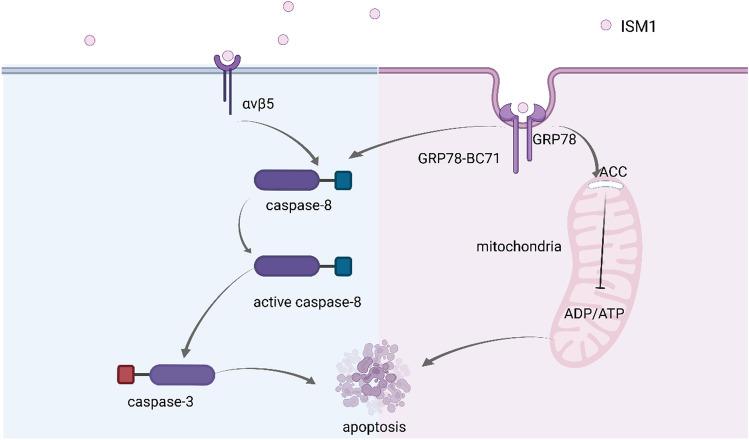
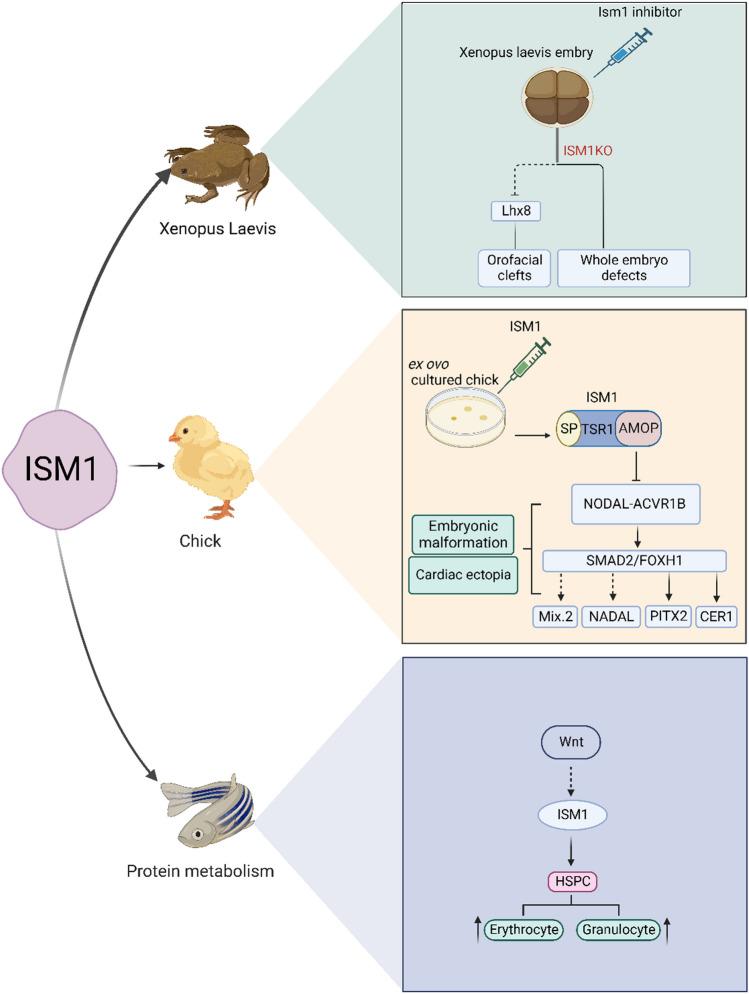
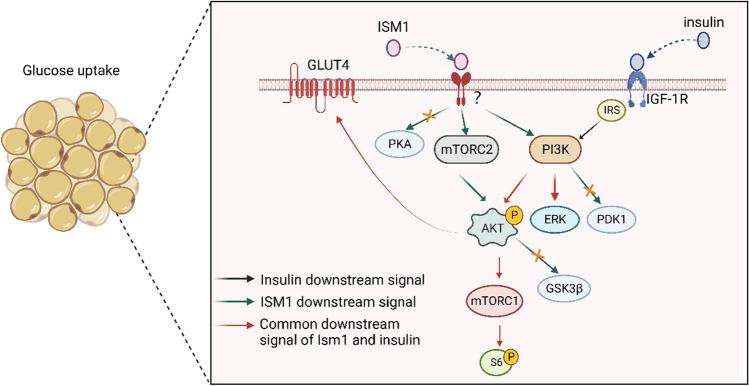
Isthmin-1 (ISM1) was initially thought to be a brain secretory factor, but with the development of technical means of research and the refinement of animal models, numerous studies have shown that this molecule is expressed in multiple tissues, suggesting that it may have multiple biological functions. As a factor that regulates growth and development, ISM1 is expressed in different animals with spatial and temporal variability and can coordinate the normal development of multiple organs. Recent studies have found that under the dependence of a non-insulin pathway, ISM1 can lower blood glucose, inhibit insulin-regulated lipid synthesis, promote protein synthesis, and affect the body's glucolipid and protein metabolism. In addition, ISM1 plays an important role in cancer development by promoting apoptosis and anti-angiogenesis, and by regulating multiple inflammatory pathways to influence the body's immune response. The purpose of this paper is to summarize relevant research results from recent years and to describe the key features of the biological functions of ISM1. We aimed to provide a theoretical basis for the study of ISM1 related diseases, and potential therapeutic strategies. The main biological functions of ISM1. Current studies on the biological functions of ISM1 focus on growth and development, metabolism, and anticancer treatment. During embryonic development, ISM1 is dynamically expressed in the zebrafish, African clawed frog, chick, mouse, and human, is associated with craniofacial malformations, abnormal heart localization, and hematopoietic dysfunction. ISM1 plays an important role in regulating glucose metabolism, lipid metabolism, and protein metabolism in the body. ISM1 affects cancer development by regulating cellular autophagy, angiogenesis, and the immune microenvironment.
肌动蛋白调节蛋白-1(ISM1)最初被认为是一种脑分泌因子,但随着研究技术手段的发展和动物模型的完善,大量研究表明该分子在多种组织中表达,这表明它可能具有多种生物学功能。作为一种调节生长发育的因子,ISM1在不同动物中表达具有时空变异性,并能协调多个器官的正常发育。最近的研究发现,在非胰岛素途径的依赖下,ISM1可以降低血糖、抑制胰岛素调节的脂质合成、促进蛋白质合成,并影响机体的糖脂和蛋白质代谢。此外,ISM1通过促进细胞凋亡和抗血管生成,以及调节多种炎症途径来影响机体的免疫反应,从而在癌症发展中发挥重要作用。本文的目的是总结近年来的相关研究成果,并描述ISM1生物学功能的关键特征。我们旨在为研究ISM1相关疾病和潜在治疗策略提供理论依据。ISM1的主要生物学功能。目前关于ISM1生物学功能的研究集中在生长发育、代谢和抗癌治疗方面。在胚胎发育过程中,ISM1在斑马鱼、非洲爪蟾、鸡、小鼠和人类中动态表达,与颅面畸形、心脏定位异常和造血功能障碍有关。ISM1在调节机体的葡萄糖代谢、脂质代谢和蛋白质代谢中发挥重要作用。ISM1通过调节细胞自噬、血管生成和免疫微环境来影响癌症发展。

 Zotero 插件