Department of Pediatric Respiratory Medicine, Immunology and Critical Care Medicine, Charité-Universitätsmedizin Berlin, Berlin, Germany
Berlin Institute of Health, Berlin, Germany.
Eur Respir J. 2023 Apr 1;61(4). doi: 10.1183/13993003.01307-2022. Print 2023 Apr.
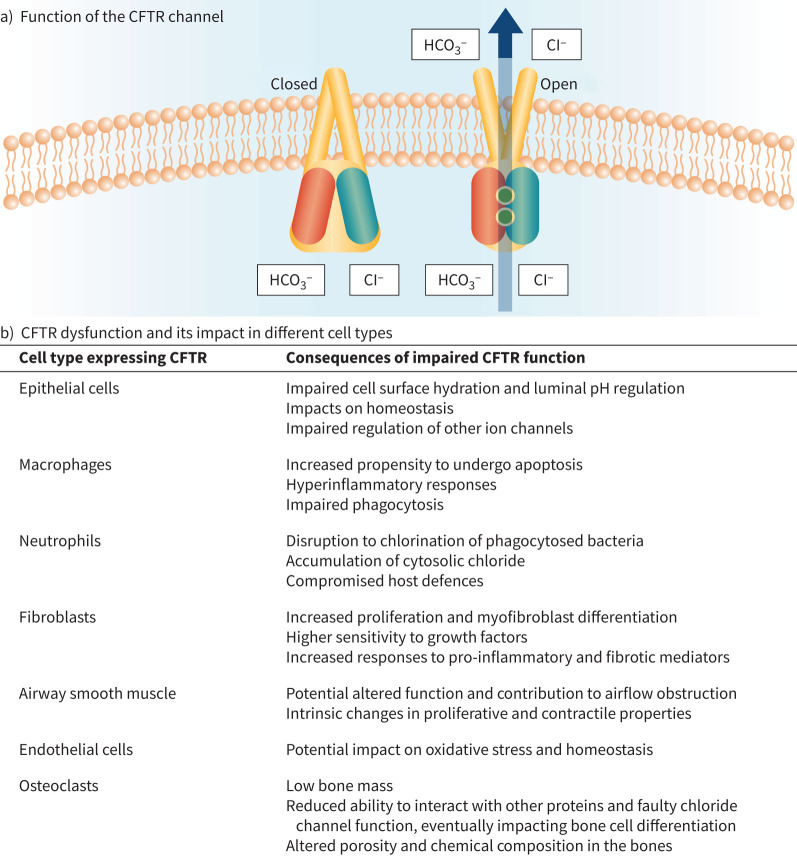
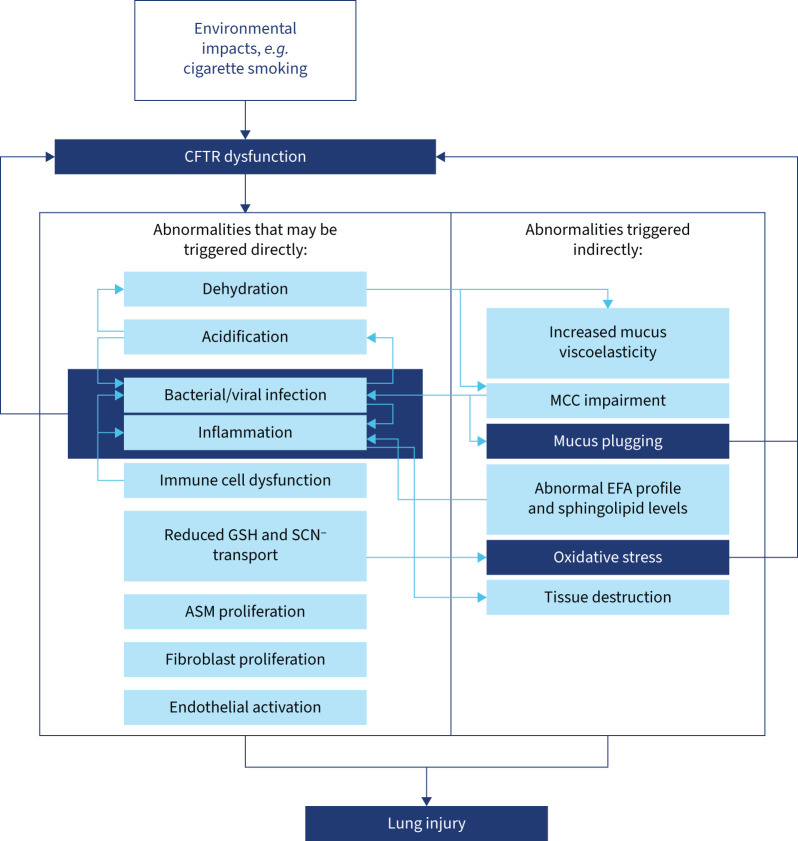
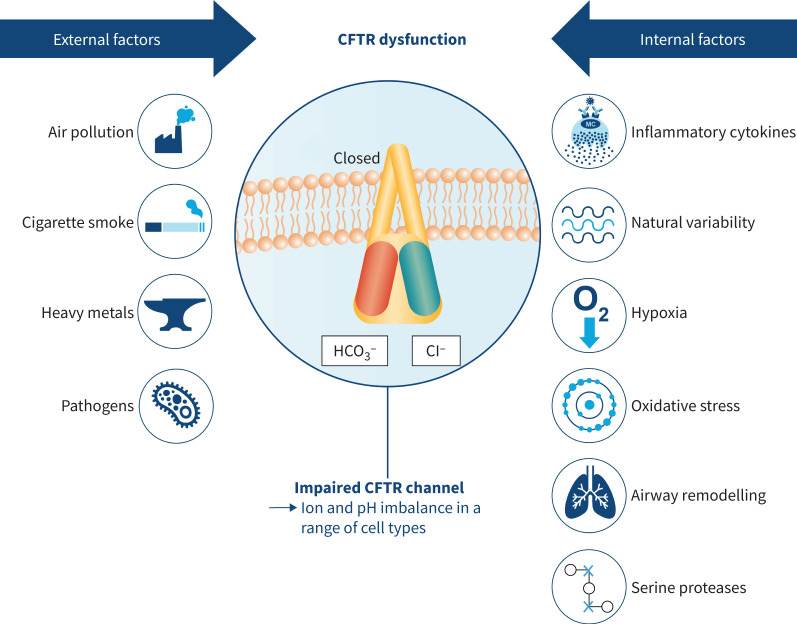
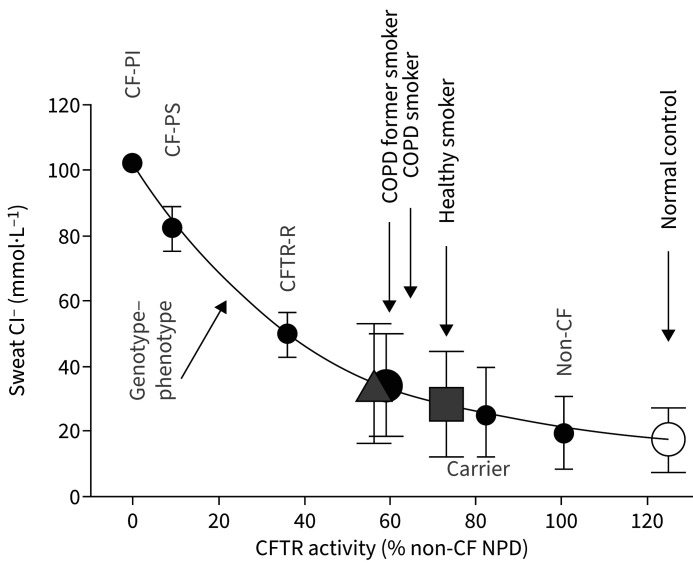
The cystic fibrosis transmembrane conductance regulator (CFTR) is a crucial ion channel for transport of chloride and bicarbonate anions. Functional roles of CFTR have been identified in a broad range of cell types including epithelial, endothelial, immune and structural cells. While CFTR has been investigated largely in the context of inborn dysfunction in cystic fibrosis, recent evidence shows that CFTR is also affected by acquired dysfunction in COPD. In patients with COPD and smokers, CFTR impairment has been demonstrated in the upper and lower airways, sweat glands and intestines, suggesting both pulmonary and systemic defects. Cigarette smoke, a key factor in COPD development, is the major cause of acquired CFTR dysfunction. Inflammation, bacterial byproducts and reactive oxygen species can further impair CFTR expression and function. CFTR dysfunction could contribute directly to disease manifestation and progression of COPD including disturbed airway surface liquid homeostasis, airway mucus obstruction, pathogen colonisation and inflammation. Mucus plugging and neutrophilic inflammation contribute to tissue destruction, development of dysfunction at the level of the small airways and COPD progression. Acquired CFTR dysfunction in extrapulmonary organs could add to common comorbidities and the disease burden. This review explores how CFTR dysfunction may be acquired and its potential effects on patients with COPD, particularly those with chronic bronchitis. The development of CFTR potentiators and the probable benefits of CFTR potentiation to improve tissue homeostasis, reduce inflammation, improve host defence and potentially reduce remodelling in the lungs will be discussed.
囊性纤维化跨膜电导调节因子(CFTR)是一种重要的离子通道,负责转运氯离子和碳酸氢根阴离子。CFTR 的功能作用已在多种细胞类型中得到鉴定,包括上皮细胞、内皮细胞、免疫细胞和结构细胞。虽然 CFTR 在囊性纤维化的先天性功能障碍方面已经得到了广泛的研究,但最近的证据表明,CFTR 也受到 COPD 获得性功能障碍的影响。在 COPD 患者和吸烟者中,已经在上呼吸道、下呼吸道、汗腺和肠道中证明了 CFTR 的功能障碍,这表明存在肺部和全身缺陷。香烟烟雾是 COPD 发展的关键因素,是获得性 CFTR 功能障碍的主要原因。炎症、细菌副产物和活性氧可以进一步损害 CFTR 的表达和功能。CFTR 功能障碍可能直接导致 COPD 的发病和进展,包括气道表面液体平衡紊乱、气道黏液阻塞、病原体定植和炎症。黏液堵塞和中性粒细胞炎症导致组织破坏,小气道功能障碍和 COPD 进展。肺外器官的获得性 CFTR 功能障碍可能会增加常见的合并症和疾病负担。本文探讨了 CFTR 功能障碍如何获得及其对 COPD 患者,特别是慢性支气管炎患者的潜在影响。还将讨论 CFTR 增强剂的开发以及 CFTR 增强对改善组织稳态、减轻炎症、增强宿主防御和潜在减少肺部重塑的可能益处。