College of Nursing and Rehabilitation, North China University of Science and Technology, Tangshan, 063210, China.
Hebei Provincial Key Laboratory of Cerebral Networks and Cognitive Disorders, Shijiazhuang, 050000, China.
BMC Neurol. 2023 Mar 31;23(1):136. doi: 10.1186/s12883-023-03150-5.
Seeking positive and comprehensive rehabilitation methods after stroke is an urgent problem to be solved, which is very important to improve the dysfunction of stroke. The aim of this study was to investigate the effects of motor imagery-based brain-computer interface training (MI-BCI) on upper limb function and attention in stroke patients with hemiplegia.
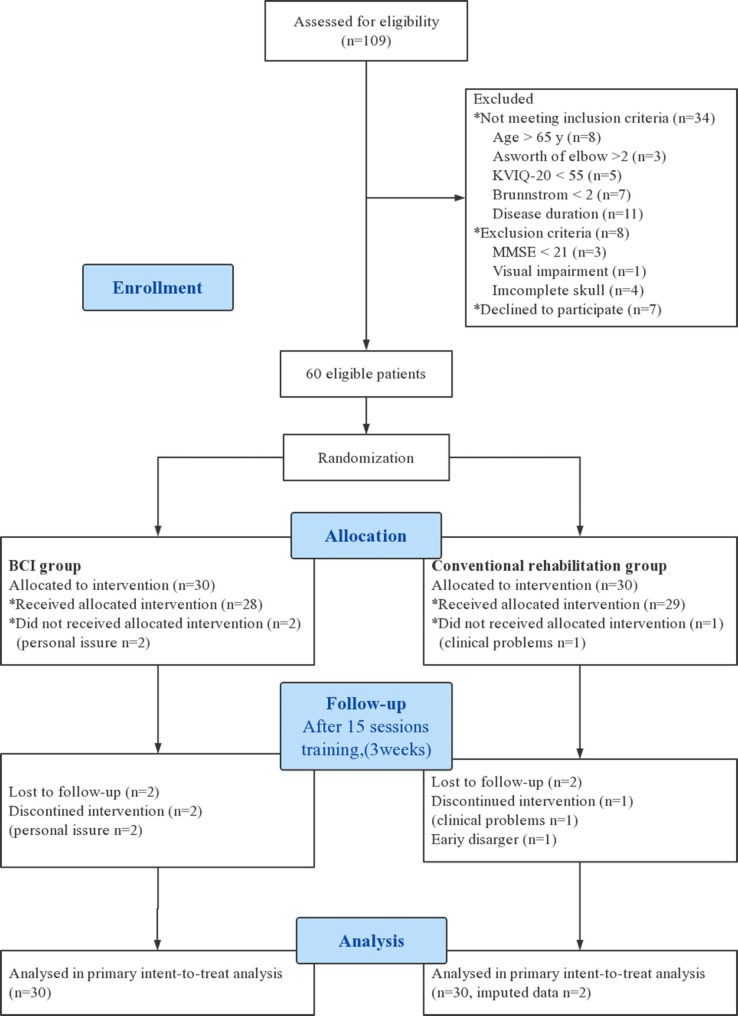
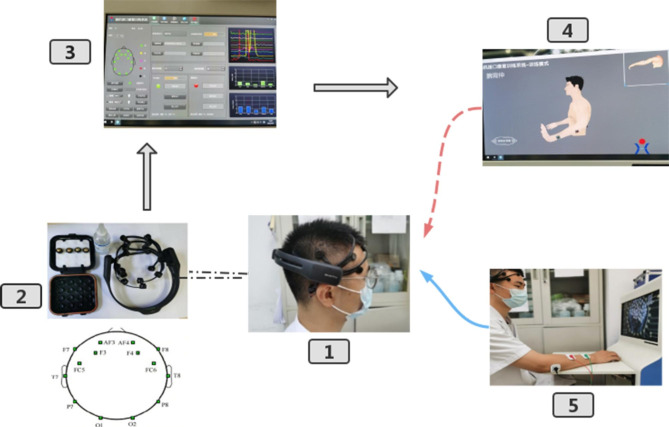
Sixty stroke patients with impairment of upper extremity function and decreased attention were randomly assigned to the control group (CR group) or the experimental group (BCI group) in a 1:1 ratio. Patients in the CR group received conventional rehabilitation. Patients in the BCI group received 20 min of MI-BCI training five times a week for 3 weeks (15 sessions) in addition to conventional rehabilitation. The primary outcome measures were the changes in Fugl-Meyer Motor Function Assessment of Upper Extremities (FMA-UE) and Attention Network Test (ANT) from baseline to 3 weeks.
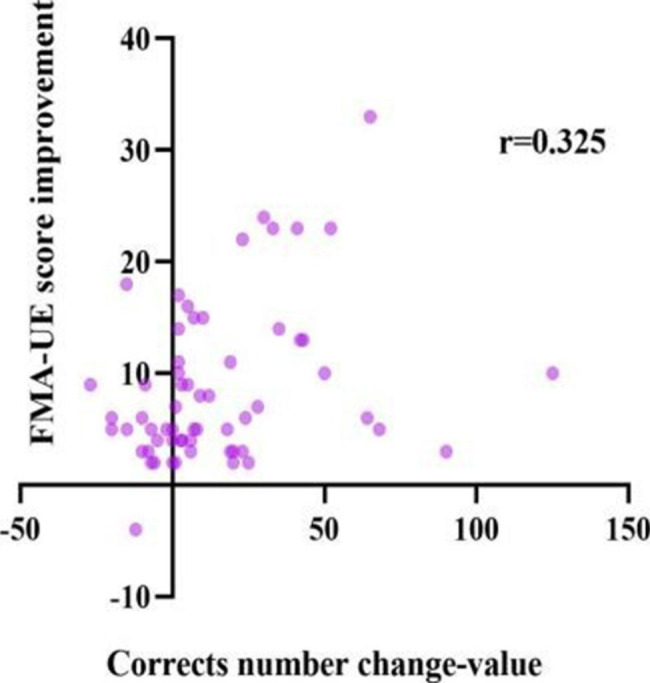
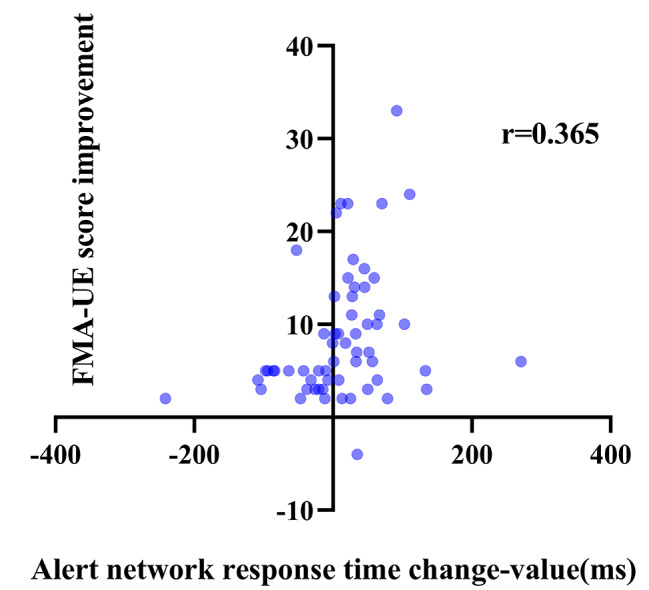
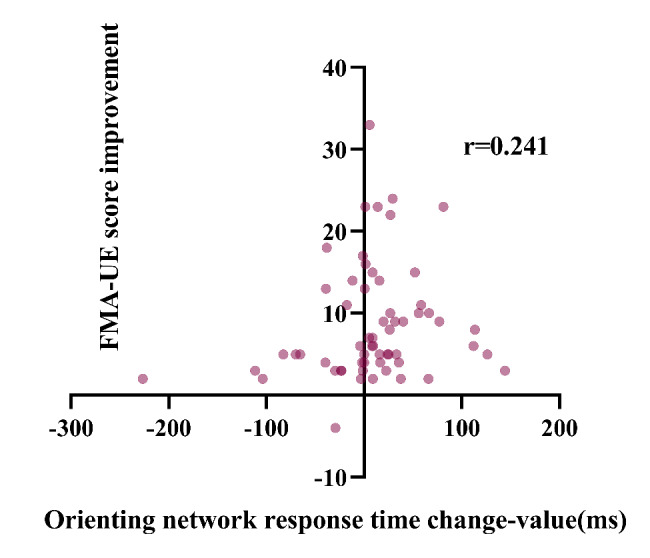
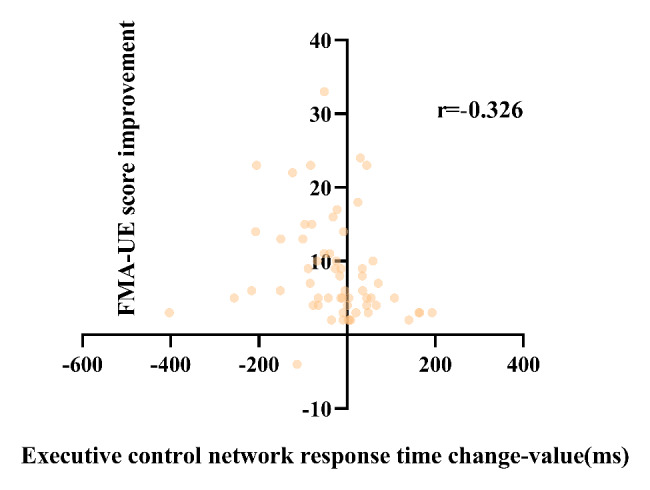
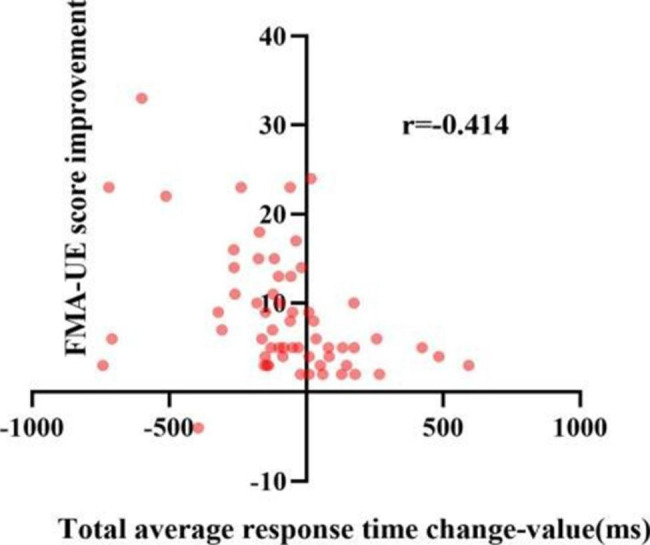
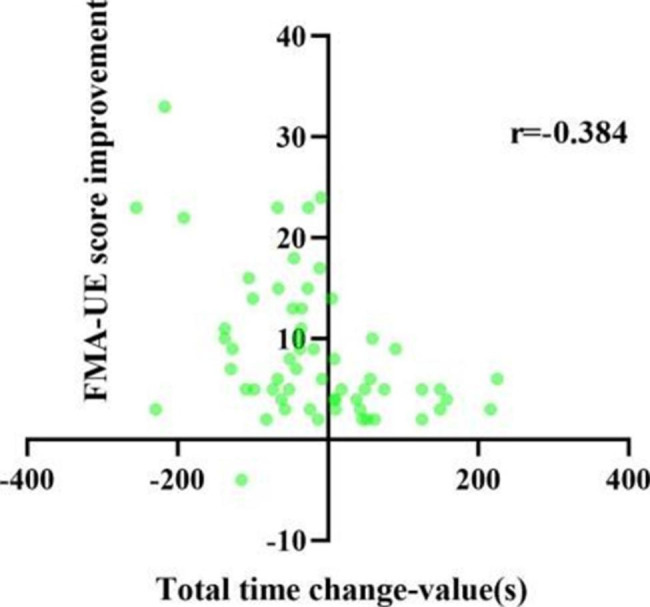
About 93% of the patients completed the allocated training. Compared with the CR group, among those in the BCI group, FMA-UE was increased by 8.0 points (95%CI, 5.0 to 10.0; P < 0.001). Alert network response time (32.4ms; 95%CI, 58.4 to 85.6; P < 0.001), orienting network response (5.6ms; 95%CI, 29.8 to 55.8; P = 0.010), and corrects number (8.0; 95%CI, 17.0 to 28.0; P < 0.001) also increased in the BCI group compared with the CR group. Additionally, the executive control network response time (- 105.9ms; 95%CI, - 68.3 to - 23.6; P = 0.002), the total average response time (- 244.8ms; 95%CI, - 155.8 to - 66.2; P = 0.002), and total time (- 122.0ms; 95%CI, - 80.0 to - 35.0; P = 0.001) were reduced in the BCI group compared with the CR group.
MI-BCI combined with conventional rehabilitation training could better enhance upper limb motor function and attention in stroke patients. This training method may be feasible and suitable for individuals with stroke.
This study was registered in the Chinese Clinical Trial Registry with Portal Number ChiCTR2100050430(27/08/2021).
寻找积极和全面的康复方法是中风后亟待解决的问题,这对改善中风患者的功能障碍非常重要。本研究旨在探讨基于运动想象的脑-机接口训练(MI-BCI)对偏瘫中风患者上肢功能和注意力的影响。
将 60 名上肢功能障碍和注意力下降的中风患者按 1:1 的比例随机分配到对照组(CR 组)或实验组(BCI 组)。CR 组患者接受常规康复治疗。BCI 组患者除了常规康复治疗外,每周接受 5 次、每次 20 分钟的 MI-BCI 训练,共 3 周(15 次)。主要结局指标为 3 周时 Fugl-Meyer 上肢运动功能评估(FMA-UE)和注意网络测试(ANT)的变化。
约 93%的患者完成了分配的训练。与 CR 组相比,BCI 组的 FMA-UE 增加了 8.0 分(95%CI,5.0 至 10.0;P<0.001)。警觉网络反应时间(32.4ms;95%CI,58.4 至 85.6;P<0.001)、定向网络反应(5.6ms;95%CI,29.8 至 55.8;P=0.010)和正确数(8.0;95%CI,17.0 至 28.0;P<0.001)也增加了。此外,与 CR 组相比,执行控制网络反应时间(-105.9ms;95%CI,-68.3 至-23.6;P=0.002)、总平均反应时间(-244.8ms;95%CI,-155.8 至-66.2;P=0.002)和总时间(-122.0ms;95%CI,-80.0 至-35.0;P=0.001)减少。
MI-BCI 联合常规康复训练能更好地增强中风患者上肢运动功能和注意力。这种训练方法可能是可行的,适合中风患者。
本研究在中国临床试验注册中心注册,注册号为 ChiCTR2100050430(27/08/2021)。