Tan Haidong, Zhou Ruiquan, Yu Hongwei, Teng Feng, Si Shuang, Liu Liguo, Yang Shiwei, Han Dongdong, Liu Xiaolei
Second Department of Hepatopancreatobiliary Surgery, China-Japan Friendship Hospital, 2 Yinghua Dongjie, Hepingli, Beijing, 100029, China.
Department of Radiology, China-Japan Friendship Hospital, Beijing, China.
Insights Imaging. 2023 Apr 1;14(1):56. doi: 10.1186/s13244-023-01410-z.
Hepatic epithelioid hemangioendothelioma (HEH) is extremely rare, and CT features have never been analyzed in a large group of patients.
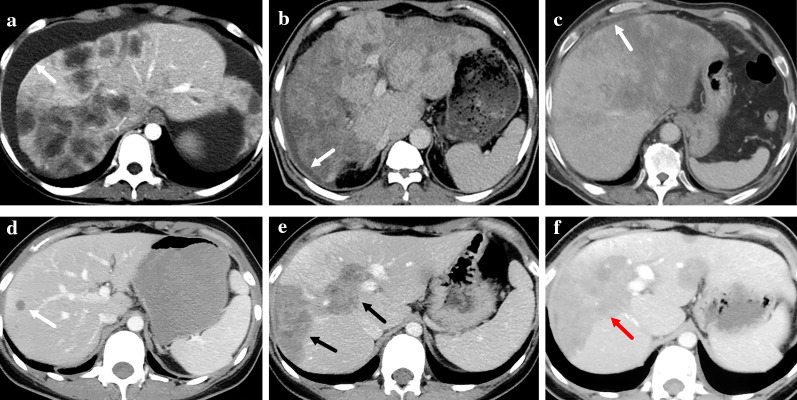
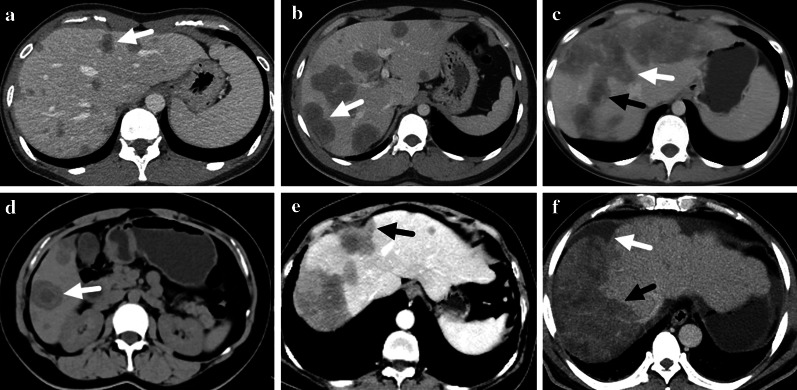
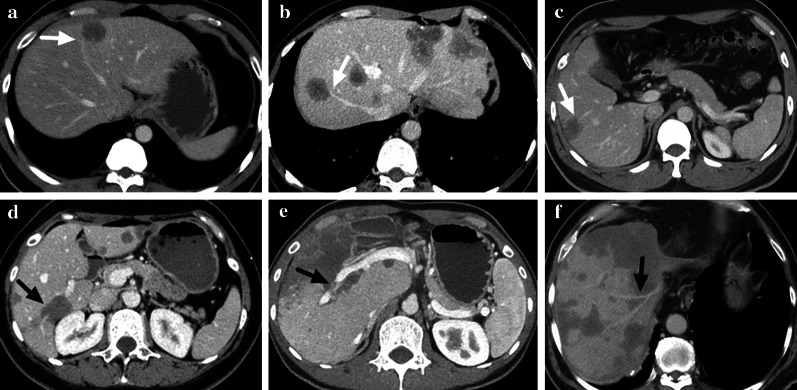
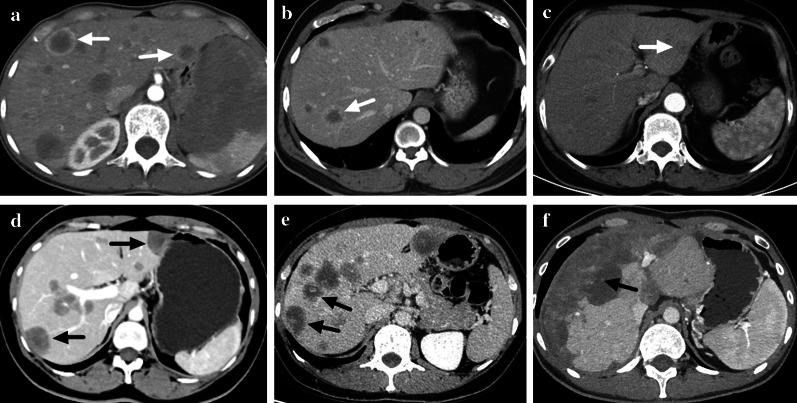
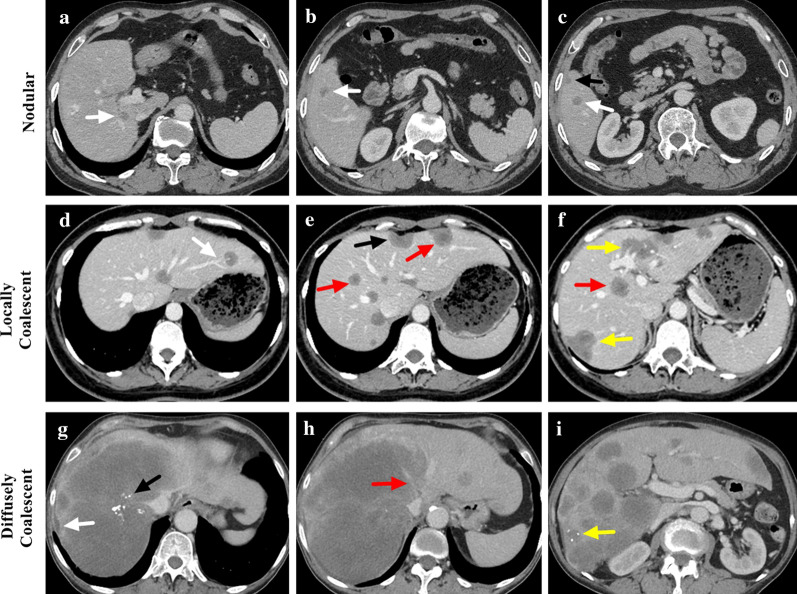
A retrospective study was designed to review the contrast-enhanced CT images of HEH patients. Intrahepatic lesions were categorized into three types: nodular, locally coalescent (coalescent lesion contained in one segment) or diffusely coalescent (coalescent lesion occupied more than one segment). CT features were compared among lesions of different sizes and patients with different lesion types.
A total of 93 HEH patients were included in this study, and 740 lesions were analyzed. The results of per-lesion analysis showed that medium lesions (2-5 cm) had the highest rate of lollipop sign (16.8%) and target-like enhancement (43.1%), while lesions in large group (> 5 cm) had the highest rate of capsular retraction (38.8%) and vascular invasion (38.8%). The differences on enhancement pattern and the rates of lollipop sign and capsular retraction were significant among lesions of different sizes (p < 0.001, respectively). The results of per-patient analysis showed that patients in locally coalescent group had the highest rates of lollipop sign (74.3%) and target sign (94.3%). All patients in diffusely coalescent group had capsular retraction and vascular invasion. CT appearances of capsular retraction, lollipop sign, target sign and vascular invasion differed significantly among patients with different lesion types (p < 0.001, p = 0.005, p = 0.006 and p < 0.001, respectively).
CT features variated among HEH patients with different lesion types, and radiological appearances of HEH should be classified into nodular type, locally coalescent type and diffusely coalescent type.
肝上皮样血管内皮瘤(HEH)极为罕见,且从未在一大组患者中分析过其CT特征。
设计一项回顾性研究,以回顾HEH患者的增强CT图像。肝内病变分为三种类型:结节型、局部融合型(融合病变局限于一个肝段)或弥漫融合型(融合病变占据一个以上肝段)。比较不同大小病变及不同病变类型患者的CT特征。
本研究共纳入93例HEH患者,分析了740个病变。单病变分析结果显示,中等大小病变(2 - 5 cm)的棒棒糖征发生率最高(16.8%)和靶样强化发生率最高(43.1%),而大病变组(>5 cm)的包膜回缩率最高(38.8%)和血管侵犯率最高(38.8%)。不同大小病变的强化方式、棒棒糖征及包膜回缩率差异有统计学意义(p均<0.001)。单患者分析结果显示,局部融合组患者的棒棒糖征发生率最高(74.3%)和靶征发生率最高(94.3%)。弥漫融合组所有患者均有包膜回缩和血管侵犯。不同病变类型患者的包膜回缩、棒棒糖征、靶征及血管侵犯的CT表现差异有统计学意义(p分别为<0.001、=0.005、=0.006和<0.001)。
不同病变类型的HEH患者CT特征存在差异,HEH的影像学表现应分为结节型、局部融合型和弥漫融合型。