Singapore Immunology Network (SIgN), Agency for Science, Technology and Research (ASTAR), Singapore, Singapore.
Immunology Translational Research Program, Department of Microbiology and Immunology, Yong Loo Lin School of Medicine, National University of Singapore (NUS), Singapore, Singapore.
Front Immunol. 2023 Mar 15;14:1127879. doi: 10.3389/fimmu.2023.1127879. eCollection 2023.
Ageing in the human bone marrow is associated with immune function decline that results in the elderly being vulnerable to illnesses. A comprehensive healthy bone marrow consensus atlas can serve as a reference to study the immunological changes associated with ageing, and to identify and study abnormal cell states.
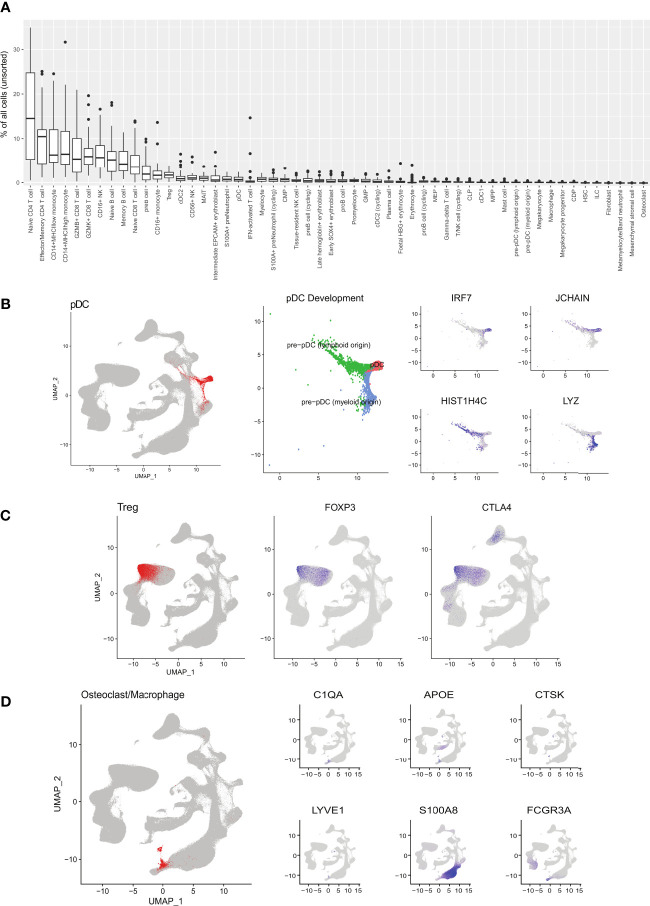
We collected publicly available single cell transcriptomic data of 145 healthy samples encompassing a wide spectrum of ages ranging from 2 to 84 years old to construct our human bone marrow atlas. The final atlas has 673,750 cells and 54 annotated cell types.
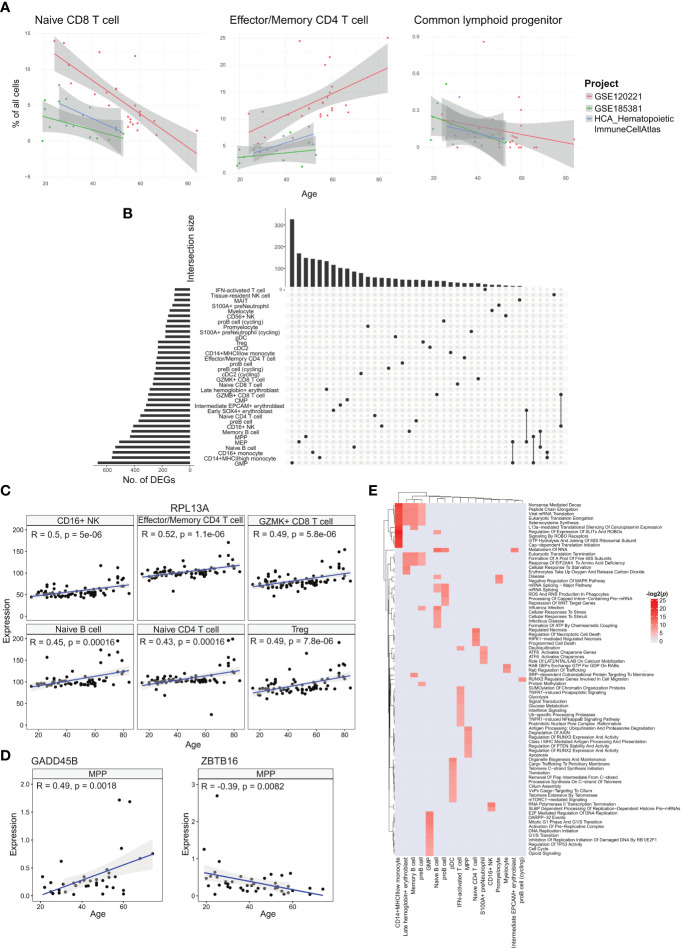
We first characterised the changes in cell population sizes with respect to age and the corresponding changes in gene expression and pathways. Overall, we found significant age-associated changes in the lymphoid lineage cells. The naïve CD8 T cell population showed significant shrinkage with ageing while the effector/memory CD4 T cells increased in proportion. We also found an age-correlated decline in the common lymphoid progenitor population, in line with the commonly observed myeloid skew in haematopoiesis among the elderly. We then employed our cell type-specific ageing gene signatures to develop a machine learning model that predicts the biological age of bone marrow samples, which we then applied to healthy individuals and those with blood diseases. Finally, we demonstrated how to identify abnormal cell states by mapping disease samples onto the atlas. We accurately identified abnormal plasma cells and erythroblasts in multiple myeloma samples, and abnormal cells in acute myeloid leukaemia samples.
The bone marrow is the site of haematopoiesis, a highly important bodily process. We believe that our healthy bone marrow atlas is a valuable reference for studying bone marrow processes and bone marrow-related diseases. It can be mined for novel discoveries, as well as serve as a reference scaffold for mapping samples to identify and investigate abnormal cells.
人类骨髓衰老与免疫功能下降有关,这使得老年人易患疾病。一个全面的健康骨髓共识图谱可以作为研究与衰老相关的免疫变化的参考,并识别和研究异常细胞状态。
我们收集了来自 145 个健康样本的公开单细胞转录组数据,这些样本涵盖了从 2 岁到 84 岁的广泛年龄范围,以构建我们的人类骨髓图谱。最终的图谱包含 673,750 个细胞和 54 个注释细胞类型。
我们首先描述了细胞群体大小随年龄的变化以及相应的基因表达和途径的变化。总的来说,我们发现淋巴谱系细胞的年龄相关性变化显著。幼稚 CD8 T 细胞群体随着年龄的增长而显著缩小,而效应/记忆 CD4 T 细胞的比例增加。我们还发现,常见淋巴祖细胞群体与年龄相关的下降与老年人造血中常见的骨髓偏向相一致。然后,我们利用我们的细胞类型特异性衰老基因特征来开发一种机器学习模型,该模型可以预测骨髓样本的生物年龄,然后我们将其应用于健康个体和患有血液疾病的个体。最后,我们通过将疾病样本映射到图谱上来演示如何识别异常细胞状态。我们准确地识别了多发性骨髓瘤样本中的异常浆细胞和红细胞,以及急性髓系白血病样本中的异常细胞。
骨髓是造血的场所,是一个非常重要的生理过程。我们相信我们的健康骨髓图谱是研究骨髓过程和骨髓相关疾病的有价值的参考。它可以用于挖掘新的发现,也可以作为映射样本以识别和研究异常细胞的参考支架。