Montero-Hernandez Samuel, Pollonini Luca, Park Lindsey, Martorella Geraldine, Miao Hongyu, Mathis Kenneth B, Ahn Hyochol
University of Houston, Department of Engineering Technology, Houston, Texas, United States.
University of Houston, Department of Electrical and Computer Engineering, Houston, Texas, United States.
Neurophotonics. 2023 Jan;10(1):015011. doi: 10.1117/1.NPh.10.1.015011. Epub 2023 Mar 31.
Knee osteoarthritis (OA) is a disease that causes chronic pain in the elderly population. Currently, OA is mainly treated pharmacologically with analgesics, although research has shown that neuromodulation via transcranial direct current stimulation (tDCS) may be beneficial in reducing pain in clinical settings. However, no studies have reported the effects of home-based self-administered tDCS on functional brain networks in older adults with knee OA.
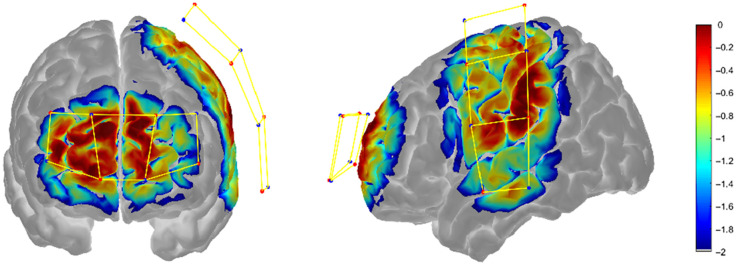
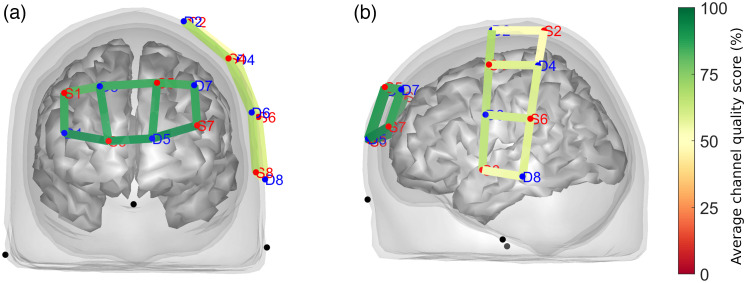
We used functional near-infrared spectroscopy (fNIRS) to investigate the functional connectivity effects of tDCS on underlying pain processing mechanisms at the central nervous level in older adults with knee OA.
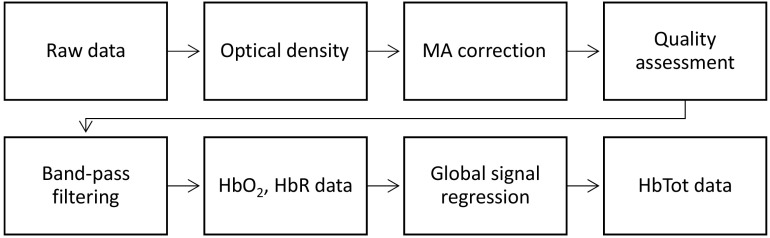
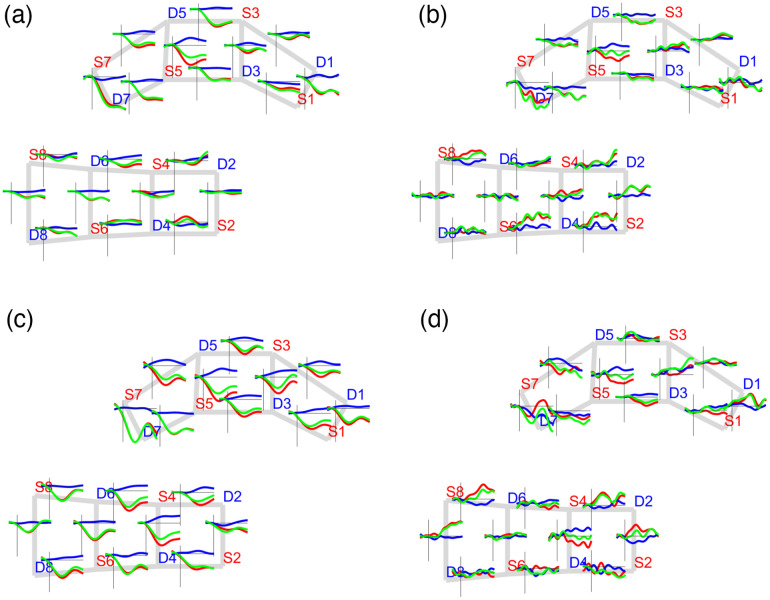
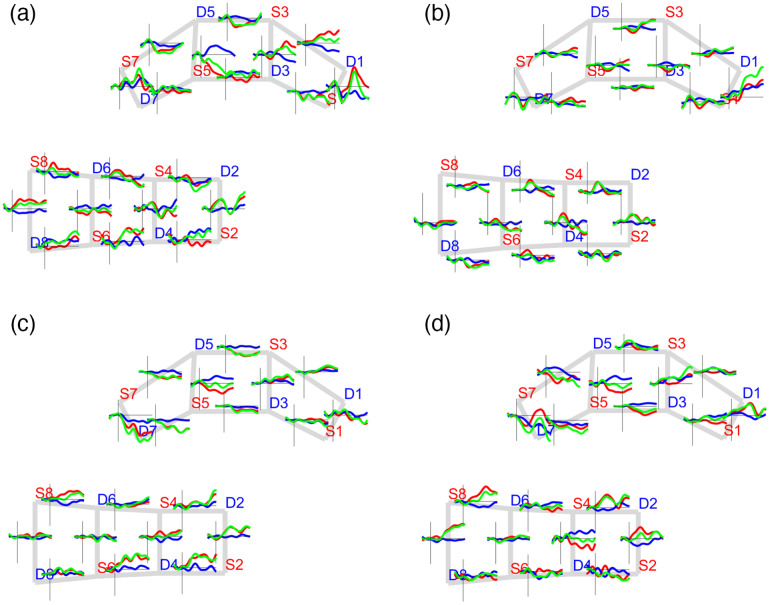
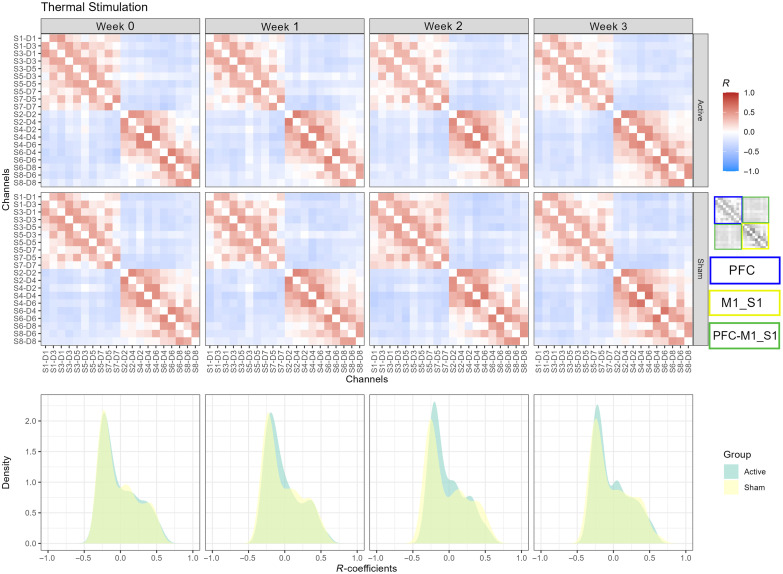
Pain-related brain connectivity networks were extracted using fNIRS at baseline and for three consecutive weeks of treatment from 120 subjects randomly assigned to two groups undergoing active tDCS and sham tDCS.
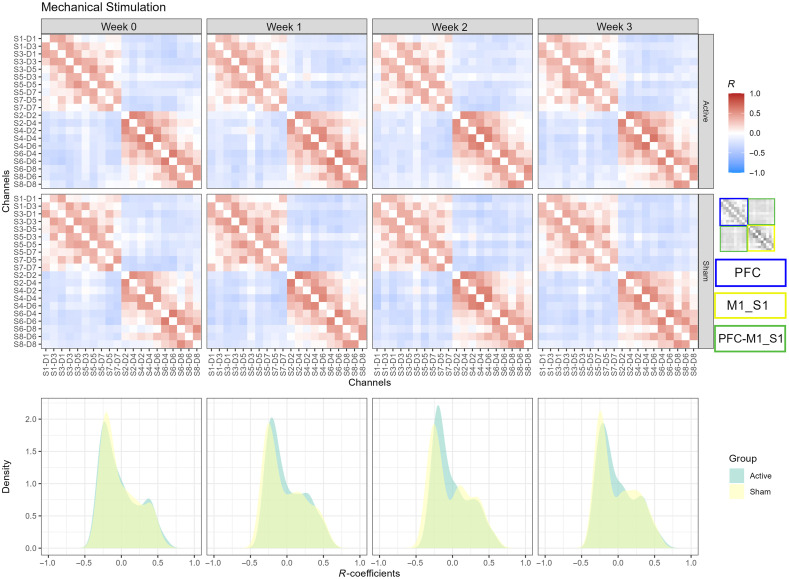
Our results showed that the tDCS intervention significantly modulated pain-related connectivity correlation only in the group receiving active treatment. We also found that only the active treatment group showed a significantly reduced number and strength of functional connections evoked during nociception in the prefrontal cortex, primary motor (M1), and primary somatosensory (S1) cortices. To our knowledge, this is the first study in which the effect of tDCS on pain-related connectivity networks is investigated using fNIRS.
fNIRS-based functional connectivity can be effectively used to investigate neural circuits of pain at the cortical level in association with nonpharmacological, self-administered tDCS treatment.
膝关节骨关节炎(OA)是一种在老年人群中引发慢性疼痛的疾病。目前,OA主要通过使用镇痛药进行药物治疗,尽管研究表明经颅直流电刺激(tDCS)进行神经调节在临床环境中可能有助于减轻疼痛。然而,尚无研究报道居家自行进行tDCS对膝骨关节炎老年人功能性脑网络的影响。
我们使用功能性近红外光谱技术(fNIRS)来研究tDCS对膝骨关节炎老年人中枢神经水平潜在疼痛处理机制的功能连接效应。
从120名随机分为两组接受主动tDCS和假tDCS的受试者中,在基线时以及连续三周的治疗期间,使用fNIRS提取与疼痛相关的脑连接网络。
我们的结果表明,tDCS干预仅在接受主动治疗的组中显著调节了与疼痛相关的连接相关性。我们还发现,只有主动治疗组在伤害感受期间,前额叶皮层、初级运动皮层(M1)和初级体感皮层(S1)中诱发的功能连接数量和强度显著减少。据我们所知,这是第一项使用fNIRS研究tDCS对与疼痛相关的连接网络影响的研究。
基于fNIRS的功能连接可有效用于研究与非药物、自行进行的tDCS治疗相关的皮层水平疼痛神经回路。