Florida State University College of Nursing, Tallahassee, FL, USA.
The University of Texas Health Science Center School of Medicine at Houston, Houston, TX, USA.
Brain Stimul. 2022 Jul-Aug;15(4):902-909. doi: 10.1016/j.brs.2022.06.003. Epub 2022 Jun 8.
Knee osteoarthritis (OA) is a leading cause of pain in older adults. Previous studies indicated clinic-based transcranial direct current stimulation (tDCS) was effective to reduce pain in various populations, but no published studies have reported the efficacy of home-based self-administered tDCS in older adults with knee OA using a randomized clinical study.
The purpose of this study was to evaluate the efficacy and feasibility of tDCS on clinical pain intensity in adults with knee OA pain.
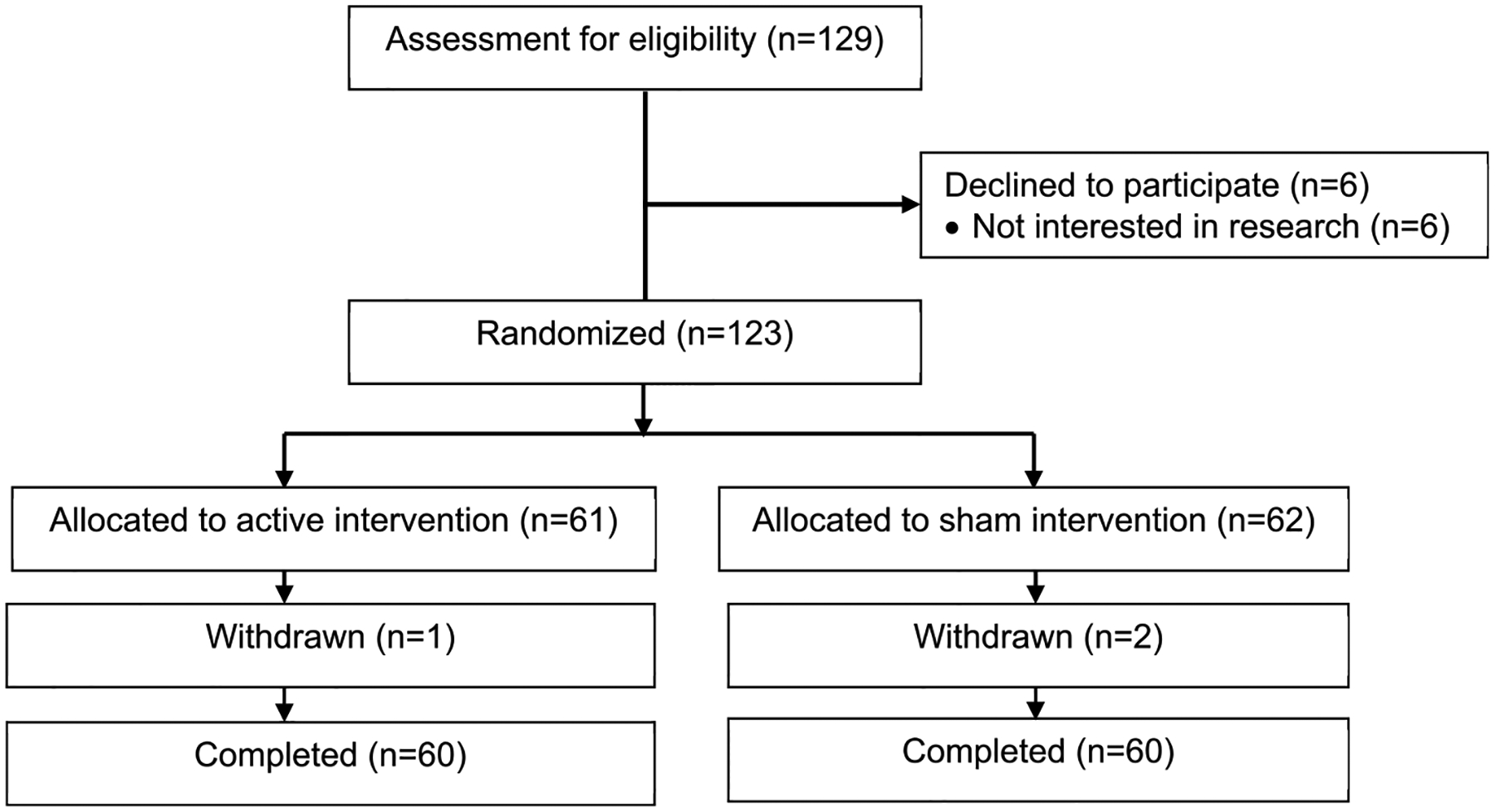
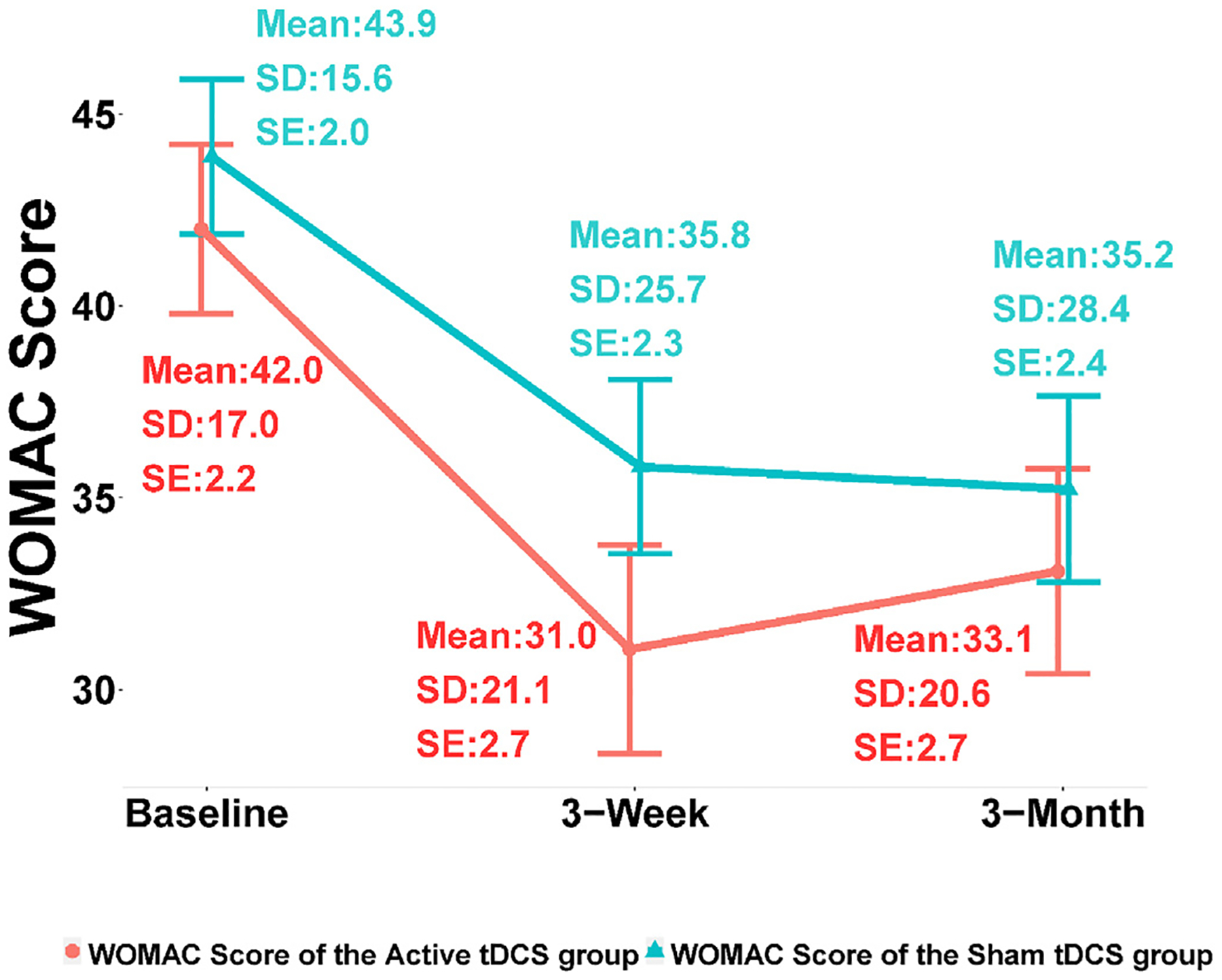
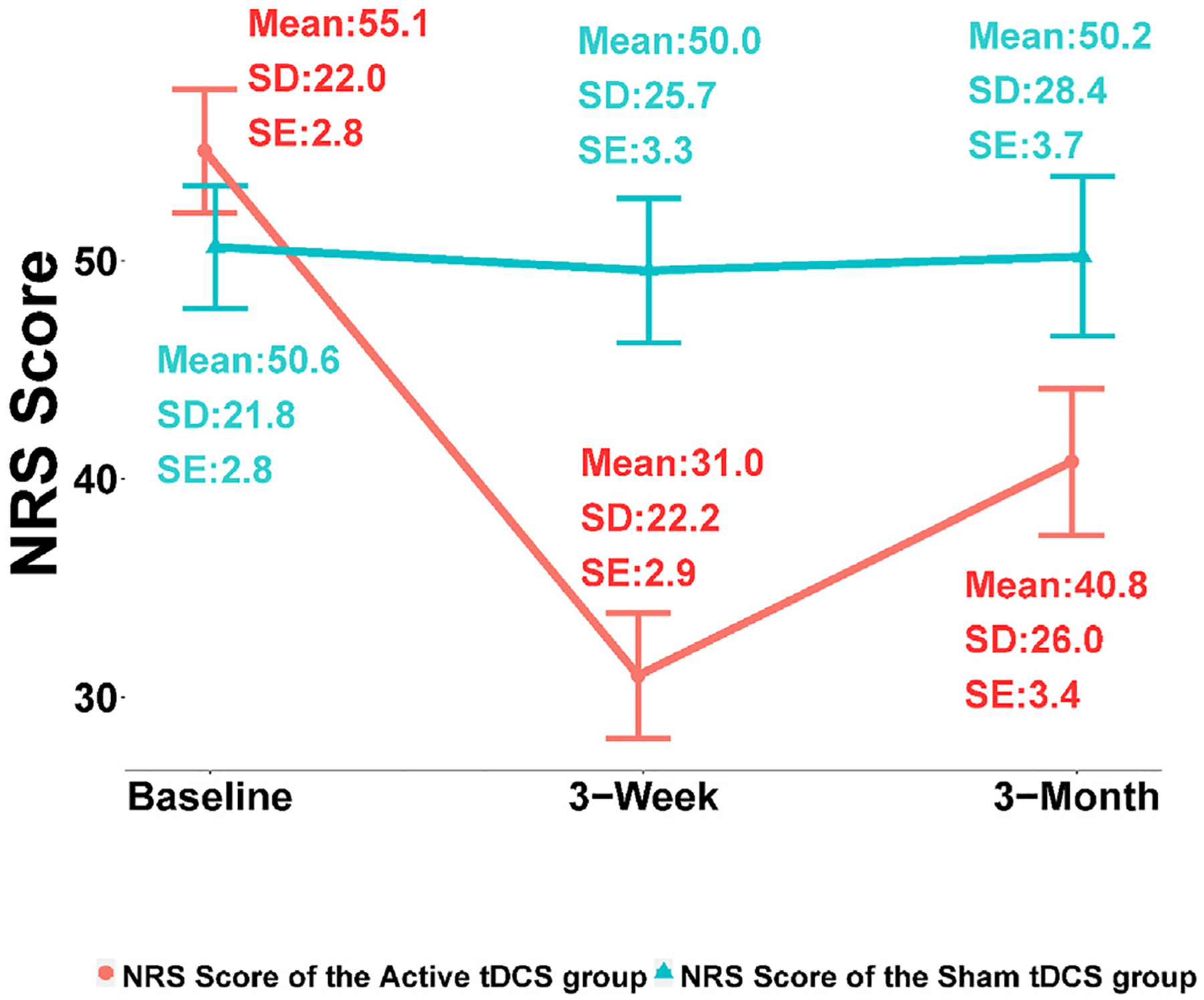
One hundred twenty participants aged 50-85 years with knee OA pain were randomly assigned to receive fifteen daily sessions of 2 mA tDCS for 20 min (n = 60) or sham tDCS (n = 60) over 3 weeks with remote supervision via telehealth. Clinical pain intensity was measured by the Numeric Rating Scale and Western Ontario and McMaster Universities Osteoarthritis Index. Also, we collected data on the tDCS experience via a questionnaire.
Participants (68% female) had a mean age of 66 years. Active tDCS significantly reduced pain intensity compared to sham tDCS after completion of the fifteen daily sessions (Cohen's d = 1.20; p-value < 0.0001). Participants showed high levels of satisfaction with their tDCS experience, and there have been no adverse events.
We demonstrated that home-based self-administered tDCS was feasible and reduced clinical pain intensity in older adults with knee OA, which can increase its accessibility. Future studies with multi-site randomized controlled trials are needed to validate our findings.
ClinicalTrials.gov Identifier NCT04016272.
膝骨关节炎(OA)是老年人疼痛的主要原因。先前的研究表明,基于诊所的经颅直流电刺激(tDCS)对各种人群的疼痛都有效果,但没有发表的研究报告过使用随机临床试验的家庭为基础的自我管理 tDCS 对膝骨关节炎老年人的疗效。
本研究旨在评估 tDCS 对膝骨关节炎疼痛成年人临床疼痛强度的疗效和可行性。
120 名年龄在 50-85 岁之间、有膝骨关节炎疼痛的参与者被随机分配接受十五次每日 2 mA tDCS 治疗,每次 20 分钟(n = 60)或 sham tDCS(n = 60),为期 3 周,并通过远程医疗进行远程监督。临床疼痛强度通过数字评分量表和西安大略和麦克马斯特大学骨关节炎指数进行测量。此外,我们还通过问卷收集了关于 tDCS 体验的数据。
参与者(68%为女性)的平均年龄为 66 岁。与 sham tDCS 相比,在完成十五次每日治疗后,tDCS 组的疼痛强度显著降低(Cohen's d = 1.20;p 值 < 0.0001)。参与者对他们的 tDCS 体验表现出高度的满意度,并且没有出现不良反应。
我们证明了家庭为基础的自我管理 tDCS 是可行的,可以减轻膝骨关节炎老年人的临床疼痛强度,从而增加其可及性。需要进行多中心随机对照试验的未来研究来验证我们的发现。
ClinicalTrials.gov 标识符 NCT04016272。