Beppi Carolina, Penner Marco, Straumann Dominik, Bögli Stefan Yu
Neuroscience Center Zurich, University of Zurich and ETH Zurich, Zurich CH-8091, Switzerland.
Department of Neurology, University Hospital Zurich and University of Zurich, Zurich CH-8091, Switzerland.
Brain Commun. 2023 Mar 15;5(2):fcad062. doi: 10.1093/braincomms/fcad062. eCollection 2023.
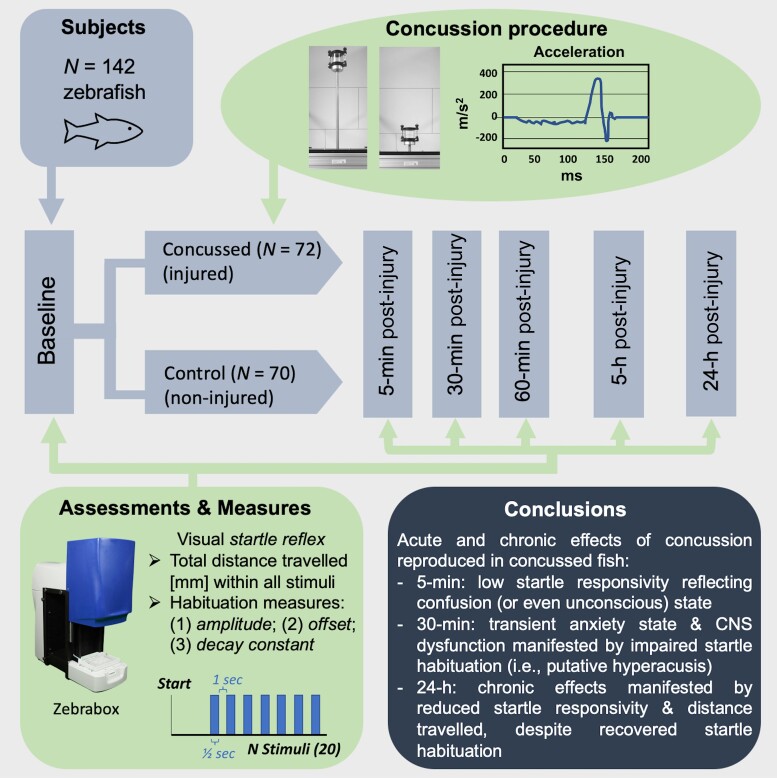
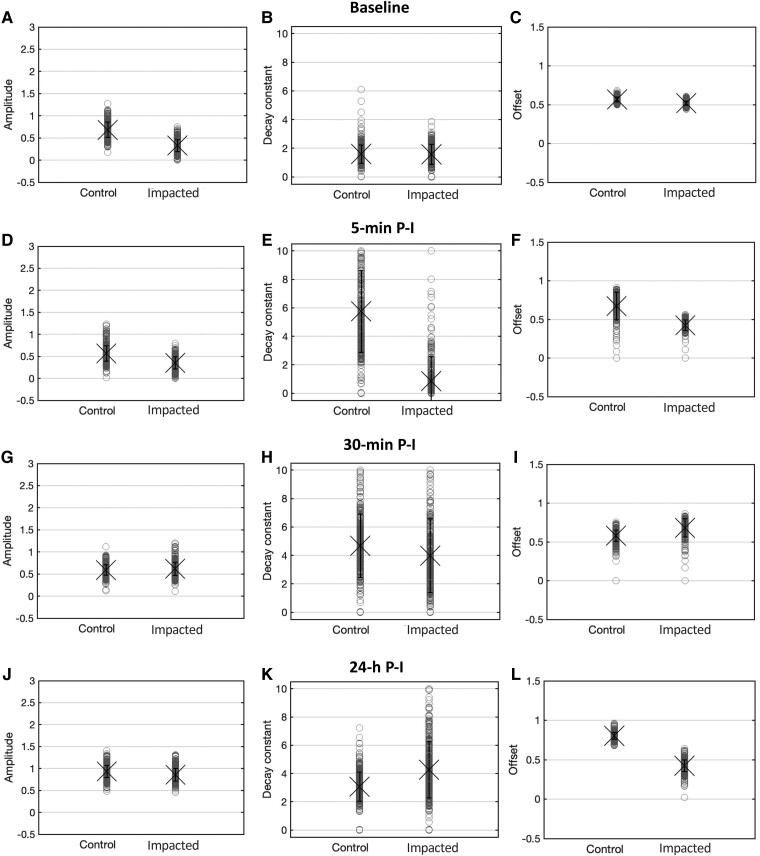
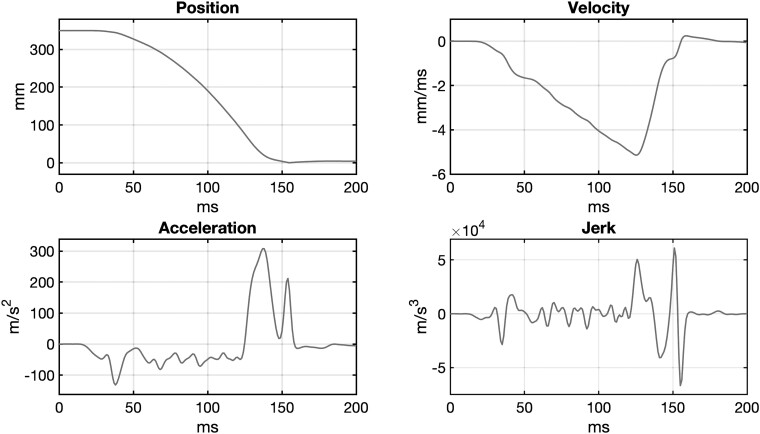
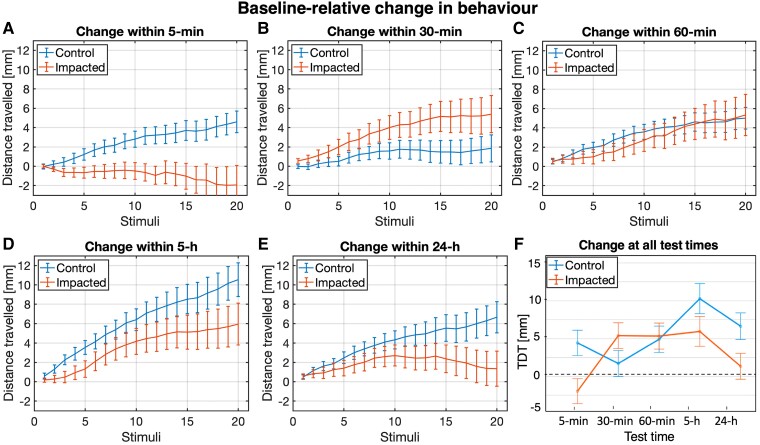
A mild traumatic brain injury is a neurological disturbance of transient or/and chronic nature after a direct blow of the head/neck or exposure of the body to impulsive biomechanical forces, indirectly affecting the brain. The neuropathological events leading to the clinical signs, symptoms and functional disturbances are still elusive due to a lack of sensitive brain-screening tools. Animal models offer the potential to study neural pathomechanisms in close detail. We recently proposed a non-invasive protocol for inducing concussion-like symptoms in larval zebrafish via exposure to rapid linearly accelerating-decelerating body motion. By mean of auditory 'startle reflex habituation' assessments-an established neurophysiological health index-we probed acute and chronic effects that mirror human concussion patterns. This study aimed at expanding our previous work by assessing the ensuing effects with visual-as opposed to auditory-'startle reflex habituation' quantifications, by using the same methodology. We observed that immediately after impact exposure, the fish showed impaired sensory reactivity and smaller decay constant, possibly mirroring acute signs of confusion or loss of consciousness in humans. By 30-min post-injury, the fish display temporary signs of visual hypersensitivity, manifested as increased visuomotor reactivity and a relatively enlarged decay constant, putatively reflecting human post-concussive sign of visual hypersensitivity. In the following 5-24 h, the exposed fish progressively develop chronic signs of CNS dysfunction, in the form of low startle responsivity. However, the preserved decay constant suggests that neuroplastic changes may occur to restore CNS functioning after undergoing the 'concussive procedure'. The observed findings expand our previous work providing further behavioural evidence for the model. Limitations that still require addressment are discussed, advancing further behavioural and microscopic analyses that would be necessary for the validation of the model in its putative relatability with human concussion.
轻度创伤性脑损伤是头部/颈部受到直接撞击或身体暴露于脉冲生物力学力后出现的短暂性或/和慢性神经功能紊乱,间接影响大脑。由于缺乏灵敏的脑部筛查工具,导致临床体征、症状和功能障碍的神经病理事件仍不明确。动物模型为详细研究神经病理机制提供了可能。我们最近提出了一种非侵入性方案,通过使幼体斑马鱼暴露于快速线性加速-减速的身体运动中来诱导类似脑震荡的症状。通过听觉“惊吓反射习惯化”评估(一种既定的神经生理健康指标),我们探究了反映人类脑震荡模式的急性和慢性影响。本研究旨在通过使用相同方法,用视觉而非听觉的“惊吓反射习惯化”量化来评估后续影响,从而扩展我们之前的工作。我们观察到,在受到撞击暴露后,鱼立即表现出感觉反应受损和衰减常数变小,这可能反映了人类的急性混乱或意识丧失迹象。受伤后30分钟,鱼表现出视觉超敏的暂时迹象,表现为视觉运动反应性增加和衰减常数相对增大,推测反映了人类脑震荡后视觉超敏的迹象。在接下来的5 - 24小时内,暴露的鱼逐渐出现中枢神经系统功能障碍的慢性迹象,表现为惊吓反应性降低。然而,保留的衰减常数表明,在经历“震荡过程”后,可能会发生神经可塑性变化以恢复中枢神经系统功能。观察到的结果扩展了我们之前的工作,为该模型提供了进一步的行为证据。讨论了仍需解决的局限性,推进了进一步的行为和微观分析,这对于验证该模型与人类脑震荡的假定相关性是必要的。